Prime Minister Keir Starmer hosts Donald Trump for State visit
Sir Keir Starmer’s meeting with President Trump showcased corporate diplomacy in action, delivering tone over treaties as questions linger about Britain’s real gains and what remains at stake.
If the best version of diplomacy is silence, as the famed British Prime Minister Benjamin Disraeli once said, Sir Keir Starmer will have adjusted his settings and come away from President Trump’s unprecedented second state visit breathing a sigh of relief – for now. Success measured by the yardstick of crises averted and bilateral ties assured, with a few bells and whistle announcements rather than any major agreements.The stakes going into the visit were high. Trump and his circle -led chiefly by his Vice President JD Vance- had hardly been restrained in offering up what they see as Britain’s free speech crisis on a platter for criticism. Paired with concerns over the state of its digital regulatory landscape, and the anticipated recognition by the UK government of Palestinian statehood, British officialdom was hoping that the President’s undeniable fondness for the UK would play its part in his restraint.
In the end, it did – and then some. The biggest risk for Starmer was not in the scripted words of Trump’s address at the royal state banquet, but his penchant for off-script antics where pomp and circumstance ended, and the political press conference ensued. And it appeared that Trump came prepared to play nice – by his standards anyways.
The president continued to frustrate the Labour leader’s critics by waxing lyrical yet again on the latter’s ‘tough negotiator’ skills in previously reaching an early trade deal that he insisted the UK was front of the queue for. The deal of course is only a provisional outline, with only marginal commitment gains relative to other US trading partners who have since struck their own framework agreements.
Perhaps most surprising, particularly given the visit’s announcement of a new MoU-grounded partnership on technology cooperation rather than any further progress on tariffs, was the relative lack of critical press conference questions on the trade front writ large. There has been ample grounds to date for the subject to be raised in the run up to the state visit.
Chief among US concerns relating to the UK has been around the latter’s Online Safety Act, albeit dreamed up and introduced by a previous Conservative government. In particular, Britain’s independent regulator Ofcom’s recent enforcement of it has drawn the ire of the Trump administration. Aimed at protecting minors from ‘harmful’ internet content, its extraterritorial reach has come into full effect as American tech firms complain of letters being sent to US websites with UK users warning of hefty fines in the absence of compliance.
This intersection between tech and trade policy has become an ever greater risk for governments and regulators the world round, as Washington ramps up its war on what it deems as unfair and discriminatory rules affecting its digital industries. Naturally, the domination of the global digital economy by US firms means they are first in line to feel the pinch of foreign tech regulation. And it’s hard to make the case that there isn’t some level of selective targeting at play.
Those firms who have long complained of what they see as expropriation now have strong ally in the Trump administration, and have been further backed by a recent letter from the Federal Trade Commission advising them not to comply with British and EU rules which could harm the privacy and data security of US consumers. A number of these companies were also in attendance alongside Trump for the state visit, complete with promises of new investment in the UK. A salutary reminder perhaps of the old adage that -certainly when brandishing bilateral ties- money talks.
Indeed, it would have had to, in the absence of progress announcements on the actual trade policy front. Questions followed on the airwaves following the end of the visit about whether pulling out all the taxpayer-funded royal stops had been worth it insofar as assessing what Britain actually got -substantively- in return.
Among the highlight reel, a restatement from Trump on why the UK had been first in line for its best-of-a-bad-bunch detail-lite “deal”, rather than any increased steps to pad it out and reduce tariffs further. No movement on Washington’s already-pledged commitment to create a quota for reduced duties on UK steel exports. Cooperation pledges on “pro-innovation” regulatory approaches artificial intelligence, bringing Britain closer into the US sphere on AI and drifting ever further away from the EU’s interventionist model.
And yet, the reality of course is that a state visit -with all the trappings of royalty- is rarely meant to move the dial on thorny policy challenges. Trade diplomacy takes the place of trade policy accordingly. And in truth, Starmer has leveraged Britain’s monarchy far enough in navigating political relations with Trump without politicising it entirely.
The invitation letter to Trump back in February was choregraphed to keep the UK positively in Trump’s sights as he mounted his tariff war. That King Charles...
Subscribe to The Mace
Join the member community shaping British politics and stay ahead of
what's really happening in the world of politics and public affairs,
with expert analysis, breaking news, and insider insights from
Westminster and Brussels. The Mace is the leading news source and
resource for the government affairs industry, offering required
reading and lobby intelligence for professionals.
To see what you are missing out on by not subscribing to The Mace, click here to download our full membership info-pack. This includes
having no paywall on op-ed content or profiles/interviews, allowing
professional profiles to be read with maximum impact and visibility by
government, special advisers, MPs, peers, civil servants, and policy
and political decision-makers.
The FTSE 100 hit a record 9,787 points as investors cheered progress in Washington towards ending the US government shutdown. Strong gains in Diageo, miners and financial stocks
The U.S. Army has asked leading private-equity firms to propose funding models for a roughly $150 billion infrastructure overhaul. By seeking land-swaps and equity-style arrangements instead of standard
The U.S. has announced 100 percent tariffs on Chinese imports in response to Beijing’s rare earth export controls. China called the measures illegal, while both sides prepare for
The UK government is reportedly prepared to allow higher NHS medicine prices to defuse U.S. threats of 100 percent tariffs on branded drugs. The shift comes as pharmaceutical firms
Donald Trump’s UK state visit yielded £150 billion in US investment promises across tech, energy and manufacturing sectors. The Tech Prosperity Deal centred on AI and nuclear cooperation. The
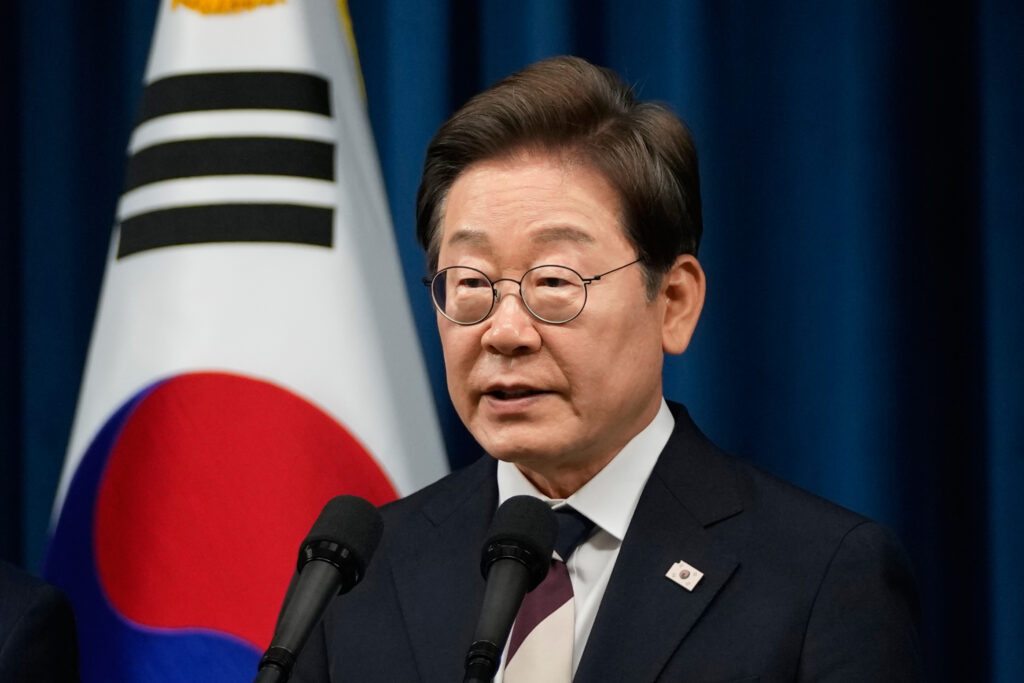
President Lee Jae Myung begins a visit to Washington on 23 August with fifteen senior executives from South Korea’s largest companies. The trip comes ahead of his 25
President Trump ruled out deploying U.S. ground troops to Ukraine but left air support on the table. Discussions are ongoing between U.S. and European planners to structure security
The IEA will reintroduce a “current policies scenario” in its upcoming energy outlook to reflect existing policy pathways. Facing criticism from Energy Secretary Chris Wright—who has threatened U.S.
The US government is considering taking a stake in Intel using Chips Act funds, boosting the company’s share price. Talks follow recent tensions between the president and Intel’s