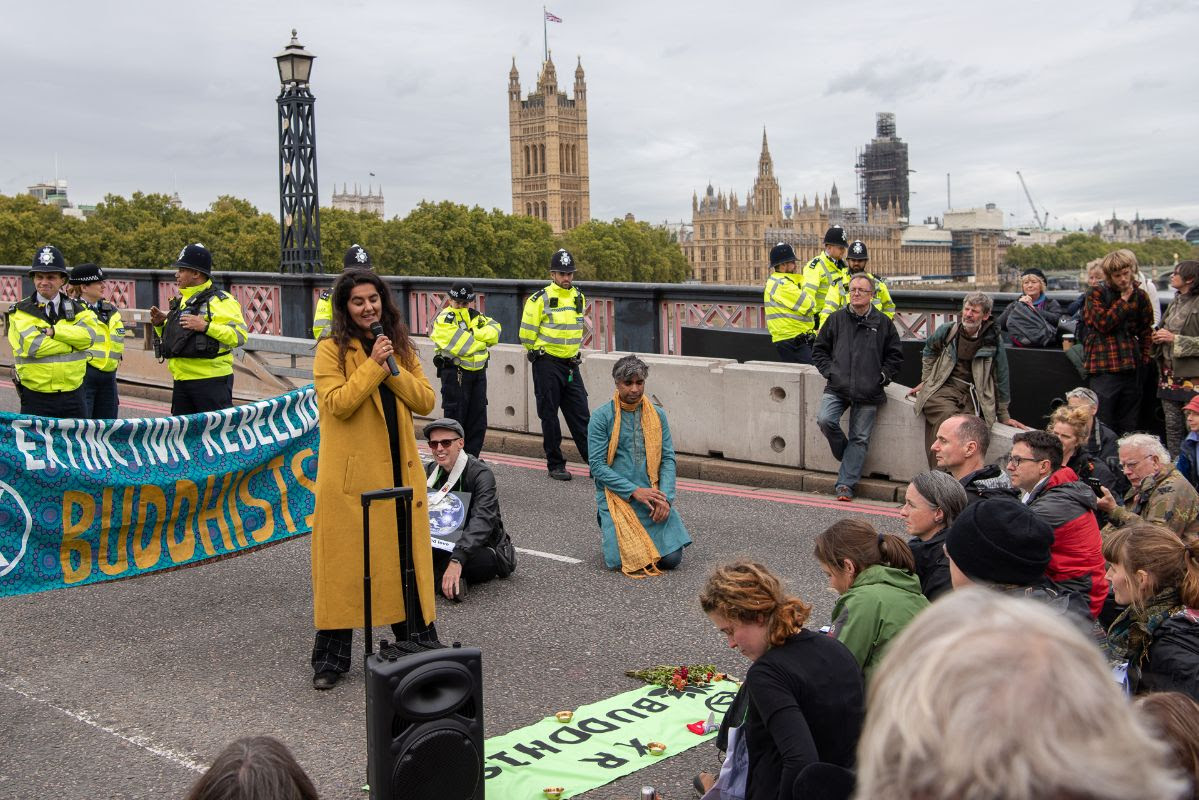
XR protestors on Lambeth Bridge in 2019. Credit: Stefan Müller
In her latest Jackdaw entry, Marie Le Conte argues Westminster politicians are forgetting about one very important issue.
There hasn’t been any oxygen in Westminster for a long time. From 2016 until 2020, anything that was not related to Brexit had little chance of becoming a prominent issue. Since then, anything that hasn’t been related to the pandemic has had even less of a chance of making a dent in the nation’s political discourse.
There was one exception, for a short while; in 2019, people suddenly started caring about the climate emergency. Like them or loathe them, Extinction Rebellion and their striking, original demonstrations captured the attention of the press and the public. Greta Thunberg and her school strikes helped, of course, and for a moment it felt like something was changing.
Polls showed that more and more people thought of the environment as a political priority, and discussions were being had about the drastic lifestyle changes required to keep our planet habitable for the foreseeable future. Different parties had different views, but there was a sense that people were coming together, and realising the scale of the problem.
Then - well, you know what happened. We got stuck indoors for three months and suddenly we ordered everything online, from Britain and abroad, and had it delivered to our homes. Once it was allowed, we went out and drank takeaway pints in single use plastic containers, complete with a single use plastic lid. Those who felt comfortable flying got away as soon as they could, and those who still felt anxious counted down the days until they could jump on a flight. In short: we moved on.
The question is, then: how do we bring back climate change at the top of the agenda, now the country is on the road to recovery? It is not clear that the government has it as a priority, as we saw in the Budget earlier this week.
Not a word was spoken about green policies in the first thirty minutes of Rishi Sunak’s speech, and when he finally got to the topic, it was underwhelming.
Well, the rhetoric was there. “When I look to the future of Teesside, I see old industrial sites being used to capture and store carbon, vaccines being manufactured, offshore wind turbines creating clean energy for the rest of the country”, he said. “I see innovative, fast-growing businesses hiring local people into decent, well paid, green jobs.”
Cynics may point to the party political convenience of making Teesside the centre of the government’s plans, but that is a side point. The issue is the lack of ambition, or rather the lack of bold policies underpinning the ambitious message. Brexit was meant to make Britain a green haven, until we all got distracted. Making these changes a major part of the Covid recovery feels like the last chance we have of acting in time.
This means the government’s opposition, both formal and informal, and in and out of Parliament, must push the topic onto the front pages again. XR managed to alienate most of their soft supporters in the last few months before the pandemic, but there are other players. Labour, most obviously, could and should talk about it as much as possible.
The Liberal Democrats, still wounded by Brexit, could do worse than making it their priority. Campaigners also need to get smart, and fast: they cannot annoy the public into caring about the climate emergency, but the early days of XR showed that street movements can still shift political opinion. If Westminster cannot find it in itself to be radical in pursuit of green policies, the push for change must come from the outside. Time is running out....
Subscribe to The Mace
Join the member community shaping British politics and stay ahead of
what's really happening in the world of politics and public affairs,
with expert analysis, breaking news, and insider insights from
Westminster and Brussels. The Mace is the leading news source and
resource for the government affairs industry, offering required
reading and lobby intelligence for professionals.
To see what you are missing out on by not subscribing to The Mace, click here to download our full membership info-pack. This includes
having no paywall on op-ed content or profiles/interviews, allowing
professional profiles to be read with maximum impact and visibility by
government, special advisers, MPs, peers, civil servants, and policy
and political decision-makers.
Meta agrees to overhaul its EU ad model, offering clearer data-sharing choices for users after regulators ruled its previous system breached competition rules.
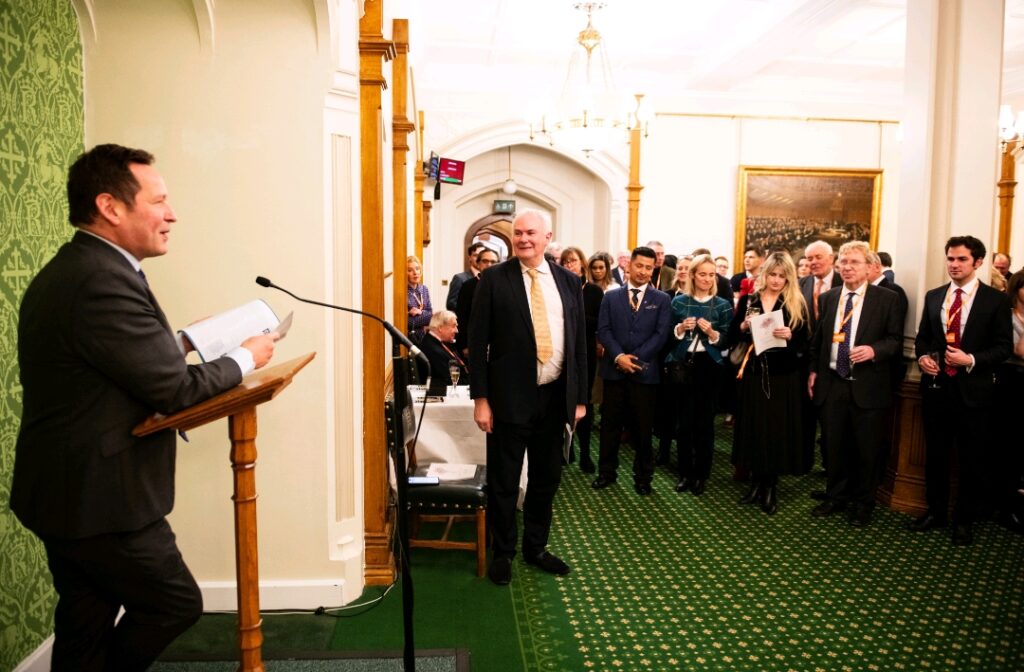
MACE marked its 5th anniversary with a high-profile Commons reception of politicians, diplomats, media figures and lobbyists, launching its influencers report
From self-lacerating memoir to by-election madness and a Labour Together takedown, The Mace’s literary editor Christopher Silvester rounds up the latest political books.
From self-lacerating memoir to by-election madness and a Labour Together takedown, The Mace’s literary editor Christopher Silvester rounds up the latest political books.
Three former Conservative MPs, including ex-deputy chair Jonathan Gullis, defect to Reform UK as the party capitalises on Tory unrest and declining support.
The government plans to end most taxi travel for asylum seekers attending medical appointments, replacing it with public transport and tightening Home Office oversight.
The resignation of Andriy Yermak after anti-corruption raids disrupts Ukraine’s leadership and triggers uncertainty across Europe during a critical phase of the war.
After weeks of tax rumour and expectation-setting, the 26 November Budget landed as a welfare-first package that lifts the benefits cap but tightens the screw on household incomes,