Wiliam Cash reflects on how the myth of Clacton and its reality has created media distortion when it comes to reporting on Farage’s seaside spiritual HQ.
I was in Clacton-on-Sea for polling day on Thursday. The result – Nigel Farage winning with 22,349 votes, a larger majority than in 2024, and Binface receiving 27% of the vote – was hardly a surprise. Farage won 63% of the vote but did not turn up for the count. Nobody is quite sure where he was at 6am on Friday but at 6pm on polling day I did see a tanned and confident-looking Farage, wearing a smart teal-striped blazer, enjoying a pint and holding court outside The Black Boy pub in Weeley, not far from Reform’s polling day HQ.
No sooner had Farage been declared the victor, the parliamentary standards watchdog announced that it would resume its investigation into accusations that the Reform leader failed to declare gifts and donations. The investigation into Farage’s £5m gift from a crypto-billionaire as well as his support from convicted fraudster George Cottrell had been paused when Farage resigned as MP for Clacton and sought re-election.
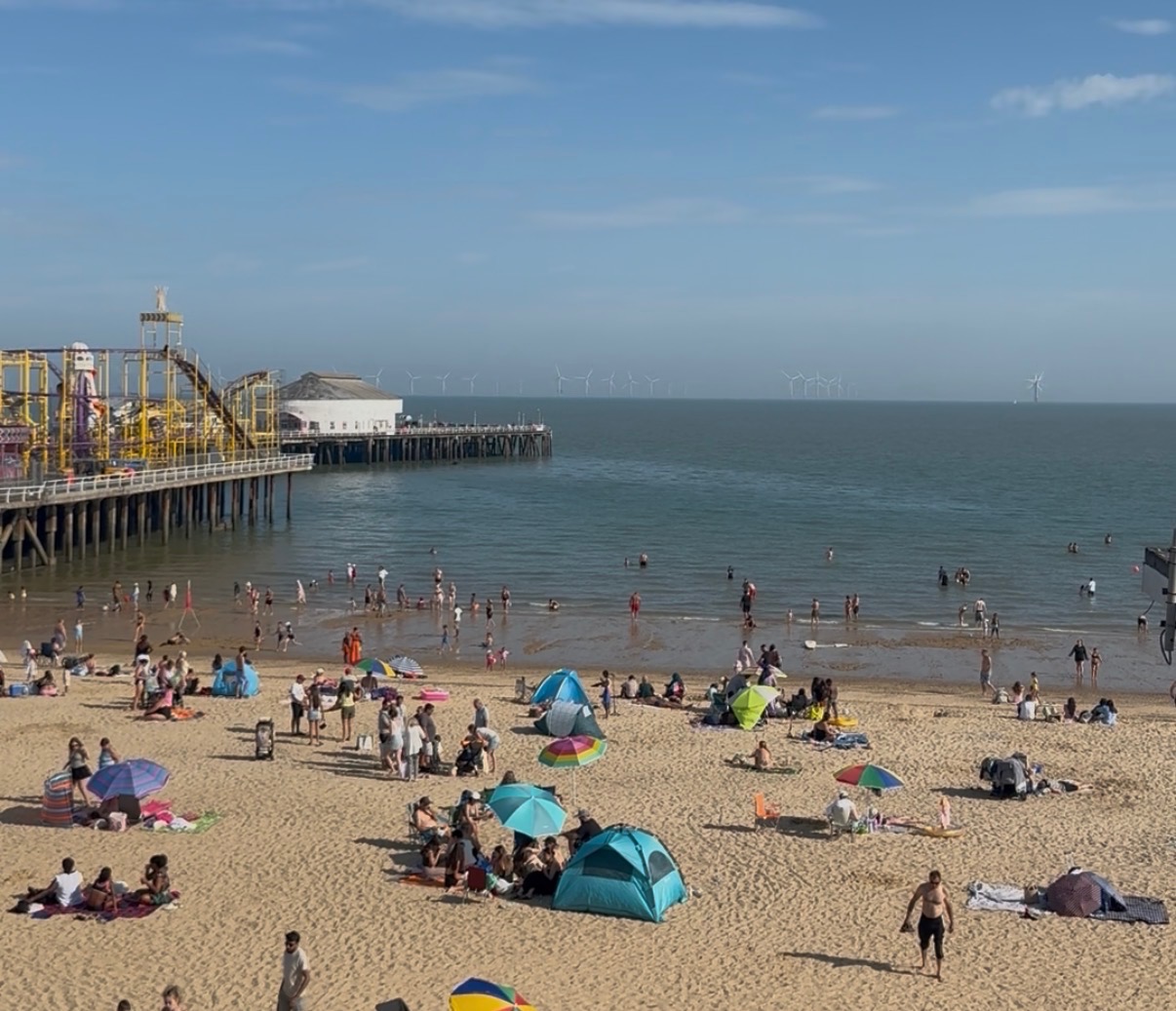
What was a surprise to me, as a first-time visitor to Clacton, was how the reality was quite different from the depressing media image of Clacton as a deprived town of down-and-outs that has been left behind. Once I saw the reality, with my own eyes, many of the popular media misconceptions about Farage’s silly season by-election can be better understood. If the media can get Clacton so wrong – such as naively thinking Count Binface might give Farage a bloody nose; or thinking that a petition for another by-election would somehow return a different result – then perhaps there is distortion about what else is written about Reform, including its recent set-backs. In truth, many in the media can’t help using Clacton as a metaphor for doom-mongering when the reality is very different.
“Clacton is not the grim coastal town that time forgot.”
First, Clacton is not the grim coastal town that time forgot. Much of the seaside town and its surrounding coastal hamlets, such as Frinton-on-Sea, where I swam after a couple of hours talking to voters in the sweltering heat, are very pleasant. I spotted the odd Bentley and Aston Martin parked on streets close to Holland-on-Sea beach. A lot of the area has a faded art deco charm which comes from some wonderful village names like Walton-on-the-Naze, Kirby-le-Soken and St Osyth. On the beach at Frinton are not traditional rusting Mr Whippy vans but chic stands selling local designer ice-cream.
Many of the army of Reform members who descended on the coastal community to canvass voters and work as by-election volunteers came to Clacton in camper vans, caravans and tents to enjoy a bit of a seaside holiday in August.
The popular seedy image of Clacton – in particular neighbouring Jaywick – as a place to avoid was perpetuated in 2014 by Matthew Parris in an infamous Times column entitled, “Tories should turn their backs on Clacton”. He described the Essex town as “Britain on crutches” and “all-our-yesterdays Britain” that was “going nowhere”. He argued that the Conservative Party should be careless of the political opinions of such declining coastal areas rather than chasing their grievances.
Admittedly, I didn’t spend much time in Jaywick, which has been listed in government reports as the most deprived neighbourhood in England. But I did meet with some Reform volunteers who had stayed in a holiday park in Jaywick and they reported it was “not nearly as bad as we expected”. In a recent Spectator article, Flora Watkins said that as a beach, she preferred Jaywick Sands to posh Wells-on-Sea.
My point is that Jaywick is not really Clacton and the media obsession with this negative myth is also reflected in the sort of stereotypical coverage handed out to Farage. Jaywick is a strange planning and architectural anomaly having been built in the 1930s as an affordable holiday destination of temporary summer chalets and unpaved plots for working-class Londoners. After World War II, many of these flimsy holiday shacks were converted into permanent, year-round homes, despite never being built for long-term habitation.
So it’s hardly surprising that the area went into decline in the 1970s and ’80s when the UK domestic holiday trade collapsed due to cheap overseas travel, followed by the closure of nearby major holiday camps like Clacton’s Butlin’s.
“Much of the town and its trading community have been thriving commercially thanks to the by-election”
The reality is that the media has helped propagate a downbeat myth that Clacton is some kind of faded dump when it’s actually a slightly raffish and scruffy old-fashioned seaside town with a charming old pier and Ferris wheel. What’s more, much of the town and its trading community have been thriving commercially thanks to the by-election. As with Margate, gentrification is encroaching, notably in Frinton-on-Sea. Just as it’s lazy to write Clacton off because of some run-down housing estates that are a planning hangover from the 1950s, so it’s lazy to write off Reform just because they have flagged in the polls. They are still ahead of the Tories and if there is one take-away from Clacton it’s that its voters don’t seem to care much about Farage’s finances, despite continued investigation by the Sunday Times.
One lesson from Clacton was that, as with Makerfield in May, voters are suffering by-election burnout. Locals have felt overwhelmed by the sheer number of media and party canvassers who descended on the town in the last month, stuffing leaflets through letterboxes and repeatedly knocking on doors. Some residents were so fed up they swerved the ballot box altogether or cast a vote for a comedian – Binface received a substantial 9,455 votes – out of annoyance that their lives have been disrupted. As one Reform volunteer said: “We are marshalled around in teams and often there are a dozen people doing one street – it seems like overkill.”
Still, the by-election frenzy was good news for local traders, as Mace’s Lucy Carrier-Pilkington and Ella Beadman reported for us. They notes that the by-election brought a surge in tourism to the area which, combined with the record heatwave, means business is booming for many – a very different picture of a bustling seaside economy than the usual misery about clapped-out Clacton.