The Strategist: at home in DC with Steve Bannon
In an exclusive from DC, William Cash finds Steve Bannon in combative form as he reveals what he’s learnt about strategy from Thucydides

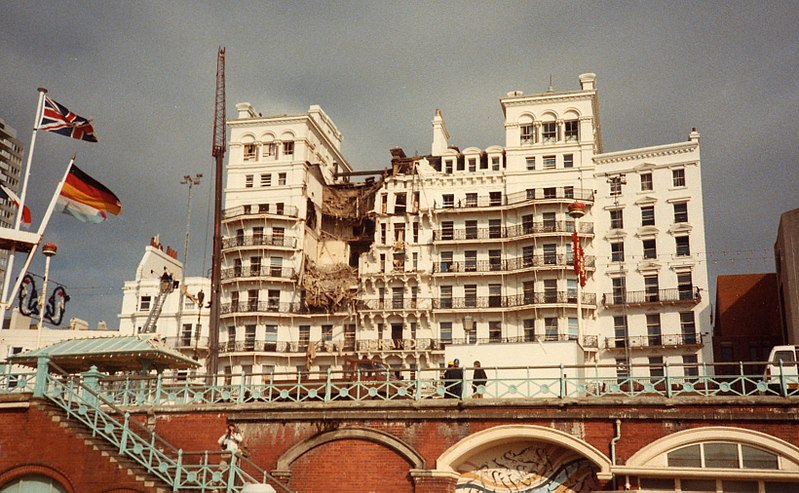
William Cash asks whether the PM can learn from how Thatcher handled the IRA bombing of exactly 36 years ago
<!-- -->
-->
I’ve scoured the papers today – October 12th – and there’s no mention of Brighton or the Brighton Grand. That’s despite it still being the week of party conference ‘season’ which was traditionally known by hacks and ministers alike as ‘politics-by-the-sea’ and was an annual form of political pilgrimage.
It was at 2.54 a.m on October 12th 1984 that Margaret Thatcher was nearly assassinated by a bomb planted by the IRA’s Patrick Magee in an act of invisible political terrorism that killed five (including a Conservative MP) and injured 31.
Today, of course, the main threat to our country today is not a hidden bomb in a hotel suite but a disease that threatens to blow up the economy, as well as nearly killing our PM.
But are there any lessons to be learnt from how the two Tory governments handled the existential autumn crisis, albeit 36 years apart?
With this year’s party conference season cancelled (and the Tories once again -pre-Covid – booking out the Birmingham Hyatt and Labour heading to Liverpool), I decided to visit Brighton instead and check into the Brighton Grand.
Indeed, my wife and I stayed in a sea-front room on the sixth floor just a few doors down from room (629) in which IRA agent Patrick Magee stayed in 1984 during the weekend of 14-17th Sept 1984, a month before Thatcher and her cabinet were to stay in the hotel.
Instead of walking the pier or visiting …
In an exclusive from DC, William Cash finds Steve Bannon in combative form as he reveals what he’s learnt about strategy from Thucydides
Over the last year we’ve seen dozens of MPs switch parties or go independent. But how does such an unexpected move affect their hard-working staff?

Still finding your way around the Palace? Not sure where to sit in the Chamber? Former minister Brooks Newmark is here to assist

Damian Collins remembers his election victory and rejoices at the new Commons term