Bayer Poised to Gain as EU Relaxes Rules on Gene Edited Crops

Mace | 10th January 2026 | Brussels
Bayer_in_Berlin_04

Bayer’s crop science ambitions gain momentum as the EU eases regulation of gene edited plants, opening pathways for agricultural innovation

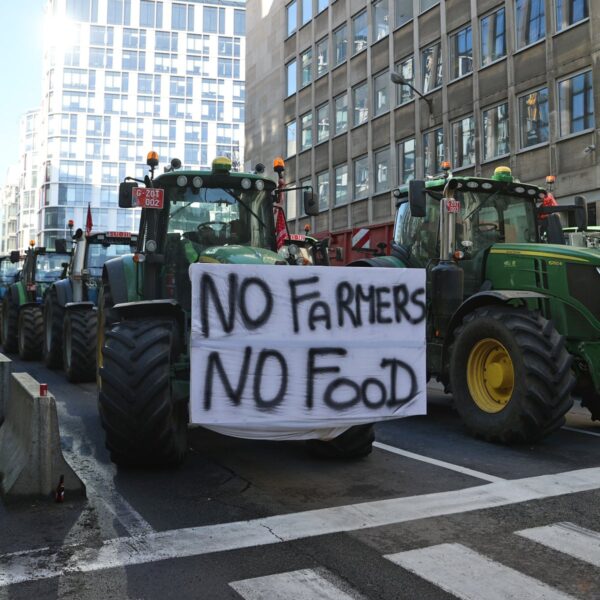
Bayer’s corporate strategy received renewed focus this week after the European Union moved to relax its regulations on gene-edited crops. The change, agreed by EU institutions following lengthy negotiations, creates a new regulatory distinction that could have significant implications for agricultural biotechnology firms operating in Europe. The new framework classifies plants with edits made solely to their own genomes differently from plants modified with foreign DNA, meaning some gene-edited crops will no longer fall under the strict genetically modified organism rules. This shift marks the first major loosening of EU policy on gene editing in more than two decades. The regulatory update comes as Brussels and the European Parliament push to modernise oversight of new genomic techniques so that they reflect scientific advances since the EU’s original GMO legislation was adopted in 2001. A provisional agreement reached late last year sets out a tailored framework for New Genomic Techniques, designed to protect health and the environment while enabling innovation in plant breeding. Under the proposed rules, plants developed using genome editing methods comparable to natural mutations will be regulated differently from those involving more extensive genetic modification, though all will still be subject to safety assessments. Bayer, the German life sciences company that owns one of the world’s largest crop science businesses, has for years lobbied for regulatory clarity on gene editing in the EU. The company’s 2018 acquisition of Monsanto for $63bn was intended to secure its position as a global leader in seeds and crop science, but it was followed by legal challenges related to Monsanto’s herbicide products and persistent European resistance to genetically modified crops. The new EU rules are seen by the company as a strategic moment that could vindicate its long-term investments in genetic data and breeding technologies. The change in the regulatory regime does not deliver an immediate commercial payoff for Bayer or its peers. Gene-edited crops requiring only internal genome edits will still need to undergo approval by EU member states and the European Parliament, and commercial introductions are not expected until nearer the end of the decade. Until then, field trials and product development will continue to shape the pipeline of potential offerings for European farmers and markets. Europe’s seed market, valued at around €6bn, has long operated under stricter conditions than markets in the United States, Brazil and Japan, where gene-edited plants have already been deployed without the same regulatory burdens. The new EU approach is intended to align regulatory treatment more closely with international peers, potentially making it easier for European breeders to compete on innovation and market access. This change follows two decades in which EU rules effectively banned most gene-edited crops by treating them the same as traditional GMOs. The EU’s shift on gene-edited crops arrives amid broader debates over agricultural policy and innovation in the bloc. Farmers across Europe have called for updated approaches that help them meet climate challenges and reduce dependency on imported inputs, while policymakers weigh the need for environmental safeguards and consumer confidence. The new regulatory pathway for gene editing is part of that broader conversation about the future of Europe’s agrifood system and its resilience to global pressures. Bayer’s crop science division accounts for a significant proportion of the company’s sales, and gene editing technologies are central to its research into traits such as nitrogen use efficiency and disease resistance. The company has emphasised that its extensive genetic datasets and breeding platforms could be more fully utilised under the updated EU rules, enabling it to expand its offerings within the ordered regulatory framework now emerging in Brussels. Rival agribusiness firms and smaller European seed breeders have also expressed interest in the regulatory shift. These companies stand to benefit from the more nuanced treatment of gene-edited products, which could make it easier to bring innovative crop varieties to market without the cost and delay of full GMO assessments. The regulatory change might also influence global competitiveness by reducing barriers to research and commercialisation in Europe relative to other regions. Critics of the regulatory reform remain vocal about their concerns over gene-edited crops and the role of biotechnology in food systems. European public sentiment on genetically modified foods has historically been cautious, with debates on safety, labelling and corporate influence shaping political discourse. The new rules attempt to address these concerns while creating space for scientific development, and debate is ongoing as the formal legislative process proceeds. The formal adoption of the revised regulations still requires final appr...

Subscribe to The Mace

Join the member community shaping British politics and stay ahead of what's really happening in the world of politics and public affairs, with expert analysis, breaking news, and insider insights from Westminster and Brussels. The Mace is the leading news source and resource for the government affairs industry, offering required reading and lobby intelligence for professionals.

To see what you are missing out on by not subscribing to The Mace, click here to download our full membership info-pack. This includes having no paywall on op-ed content or profiles/interviews, allowing professional profiles to be read with maximum impact and visibility by government, special advisers, MPs, peers, civil servants, and policy and political decision-makers.

Brussels Diary by Konstantinos Bogdanos: ‘The local bistros are half-empty as the Belgian middle class finds even a weekend meal an unaffordable luxury”

Konstantinos Bogdanos | May 26, 2026

Konstantinos Bogdanos, our regular Brussels Diarist, on how the bills for Europe’s political class are finally coming due in a city where the Belgian middle-class can't afford to

Are Labour eyeing a return to the EU? Mace investigates the key players involved 

Lucy Carrier-Pilkington | May 19, 2026

Recent comments by the former health secretary have plunged Brexit back into national conversation, but what does Labour actually think?

EU likely to shelve chemical reform amid industry pressure 

Lucy Carrier-Pilkington | May 6, 2026

The reform concerns a pre-existing law on the Regulation, Authorisation and Restriction of Chemicals (REACH) and has been in place since June 2007.  

US defence industry launches lobbying offensive against EU’s ‘Buy European’ push

Oliver Dean | February 20, 2026

As European policymakers push a 'Buy European' line, lobbyists and officials in Washington are keen to maintain dominance over the European arms market

Aviation trade bodies warn of four-hour queues unless changes are made

Mace | February 12, 2026

Trade bodies warn that biometric entry requirements will lead to massive delays for travellers

Britain must take full advantage of trade outside the EU

Ted Newson | February 12, 2026

Five years since leaving the European Union, Britain has not yet taken advantage of the levers of free trade, writes Ted Newson

EU delays high-stakes industrial policy tool

Oliver Dean | January 23, 2026

EU institutions have postponed the release of a long-anticipated industrial policy instrument, a move that has frustrated several national governments and delayed work on broader competitiveness initiatives. Reporting

EU Parliament backs Critical Medicines Act, prompting warnings over Africa supply shocks

Oliver Dean | January 22, 2026

The European Parliament has backed its negotiating position on the EU’s proposed Critical Medicines Act, a flagship attempt to curb shortages and reduce reliance on external suppliers for

Farmers flood Strasbourg as EU Mercosur trade deal nears parliamentary vote

Mace | January 21, 2026

Thousands of farmers descended on the streets of Strasbourg and other European cities this week ahead of a key vote in the European Parliament on the controversial trade

Davos 2026 in the Age of Power Politics

William Cash | January 20, 2026

Davos is meant to be the place where the global public affairs class can compress a year of stakeholder management into five days, with a badge, a diary,