The channel that piqued my interest in politics could reduce youth disengagement - if given a chance
Political divisions are more burning than ever. Switch on BBC Parliament and the debates in the Palace of Westminster, Welsh Senedd and Scottish Parliament confirm that. Yet this channel, at its best, is a key solution for one solitary area of political agreement, where no politician dares to dissent: more people should be interested in politics. More people should vote. Especially young people.
How to pique their interest? By showing - not telling - them how the system works. That was certainly my experience. Watching BBC Parliament as a teen provoked my interest in politics. BBC Parliament, if you don’t already know, broadcast live and uninterrupted coverage of the House of Commons. It was an important tool for me to learn the basics of parliamentary procedure. I accumulated knowledge - such as why MPs called one another “honourable members”, would frequently bob up and down, and jeer to no end. Sure, it wasn’t quite as intensely nerdy as devouring the dense scripts of Hansard (like the teenage William Hague ), but BBC Parliament was certainly vital for my formative political understanding.
The channel itself still remains on air, but it is, sadly, a shadow of its former self. Alongside the live and recorded coverage of parliamentary proceedings, BBC Parliament used to broadcast other programmes in which a presenter explained specific aspects of Parliament. For example, In House delved into parliamentary definitions while Laying Down the Law highlighted just how exactly a bill becomes law. This may seem inconsequential, but we know that politics can be exclusionary and such shows were vital programmes for making Parliament more accessible and open to all.
Indeed, BBC Parliament was unique in its remit for covering all aspects of debate. Often, news channels will devote little time to the chamber except for Prime Minister’s Questions and a major statement from the Prime Minister. But this channel showed how a debate, Private Member’s Bill or Urgent Question was relevant in framing the political weather. When so much of political debate is reduced down to its simplest form (who’s up and who’s down) and when many consume opinionated or subjective news, a channel that lets politics breathe was - if you pardon the pun - a breath of fresh air.
In July 2018, the BBC first announced that BBC Parliament’s output would be significantly cut back and closed entirely during the summer months when Parliament was not sitting. Due to immense criticism, the BBC initially shelved such plans in October 2018. But the summer of 2021 saw widespread changes. The Day/Week in Parliament were brought to an end, alongside Mark D’Arcy’s BOOKtalk, where new authors would be interviewed about their works. Similarly, Politics Europe concluded and the Washington Journal were cancelled.
Steve Richards, one of the UK’s best political commentators, used to present a series of 30-minute unscripted reflections covering different topics from “UK Prime Ministers we never had” to political turning points. It was classic BBC Parliament: a small budget but long form analysis.
During the party conference season, BBC Parliament broadcast coverage of key speeches from the different parties. These are really important, as politicos know, in shaping party direction and leadership. But only clips of the prime minister and leader of the opposition’s speeches are broadcast on BBC News.
The BBC claim they need to make cutbacks. With the licence fee frozen for two years, despite rising inflation, director-general Tim Davie needs to make the balance sheet add up. But surely this should provide a chance for the BBC to work out what their priorities as a broadcaster really are? Bringing back BBC Three as a terrestrial channel seems at best deeply unwise, not least given younger audiences are already excellently served in the entertainment capacity by the commercial sector.
No, where the BBC can really shine is its public service broadcasting by investing in avenues commercial broadcasters may shy away from. I can’t imagine a channel simply devoted to Parliament and parliamentary proceedings being profitable.The BBC should return BBC Parliament to screens and make the case for improving political engagement through education. Akin to the closure of BBC Four, a beacon of highbrow intelligence, it seems the corporation’s priorities are skewed.
...
Subscribe to The Mace
Join the member community shaping British politics and stay ahead of
what's really happening in the world of politics and public affairs,
with expert analysis, breaking news, and insider insights from
Westminster and Brussels. The Mace is the leading news source and
resource for the government affairs industry, offering required
reading and lobby intelligence for professionals.
To see what you are missing out on by not subscribing to The Mace, click here to download our full membership info-pack. This includes
having no paywall on op-ed content or profiles/interviews, allowing
professional profiles to be read with maximum impact and visibility by
government, special advisers, MPs, peers, civil servants, and policy
and political decision-makers.
Meta agrees to overhaul its EU ad model, offering clearer data-sharing choices for users after regulators ruled its previous system breached competition rules.
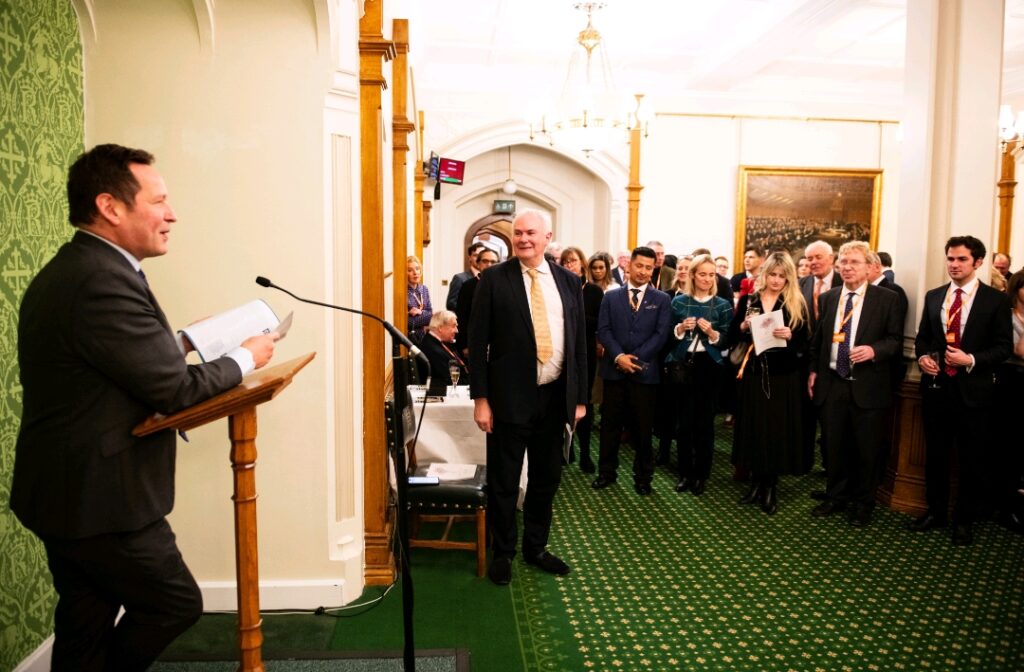
MACE marked its 5th anniversary with a high-profile Commons reception of politicians, diplomats, media figures and lobbyists, launching its influencers report
From self-lacerating memoir to by-election madness and a Labour Together takedown, The Mace’s literary editor Christopher Silvester rounds up the latest political books.
From self-lacerating memoir to by-election madness and a Labour Together takedown, The Mace’s literary editor Christopher Silvester rounds up the latest political books.
Three former Conservative MPs, including ex-deputy chair Jonathan Gullis, defect to Reform UK as the party capitalises on Tory unrest and declining support.
The government plans to end most taxi travel for asylum seekers attending medical appointments, replacing it with public transport and tightening Home Office oversight.
The resignation of Andriy Yermak after anti-corruption raids disrupts Ukraine’s leadership and triggers uncertainty across Europe during a critical phase of the war.
After weeks of tax rumour and expectation-setting, the 26 November Budget landed as a welfare-first package that lifts the benefits cap but tightens the screw on household incomes,