Who are the key players in justice today?

Christopher Jackson | Issue 2 | Magazine, Uncategorised

From the Archive

courts

Christopher Jackson provides an update of a department about to enter a period of considerable flux.

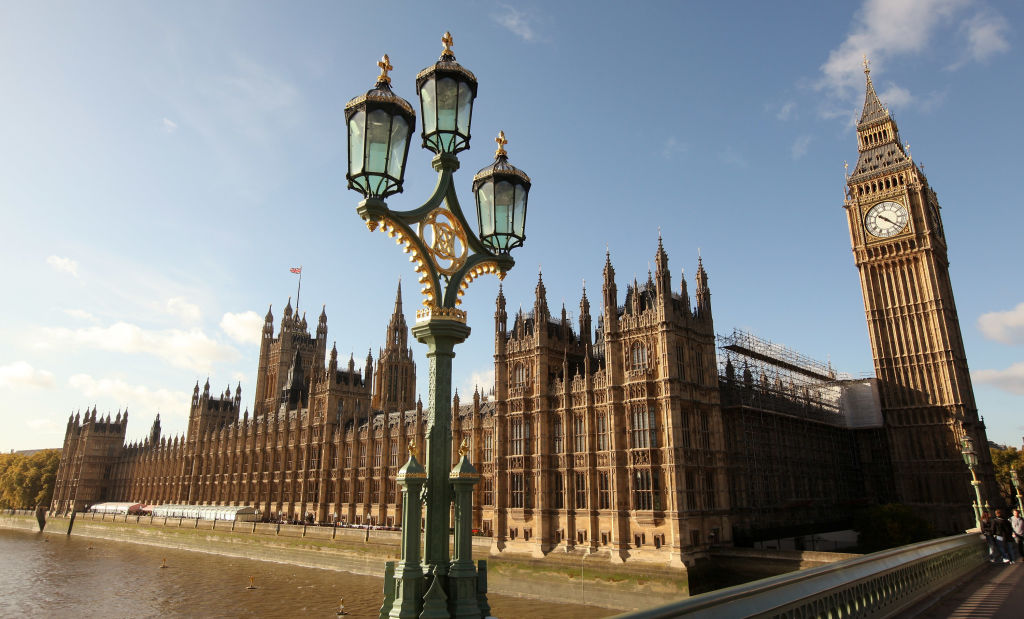
In February 2019, I happened to have lunch with Gina Miller and her husband Alan near Berkeley Square. We talked about politics, of course, and I recall myself saying, “We’re about to find out where power resides in our system.” I didn’t know then that I was sitting opposite the person who would go on to stress-test that idea in such vivid terms, as Gina would with Miller II. But I was thinking more generally about the referendum result and its ramifications – indeed, about politics in general. In the UK, does power reside in parliament or in the civil service? Or is it really to be found in the court system? Might it even – strange notion – be said to reside in us, the people? That lunch came back to me as we began compiling our justice research – to be published this year as part of the Westminster Index – outlining the most influential people within this field. Who wields influence and to what degree? How did they acquire it? And what do we need to know about them in order to engage with them, and move our democracy in the direction it should go? It’s an exciting time to be doing this, as rumours swirl around Whitehall about the nature of Dominic Cummings’ reforms. The very nature of justice in this country, and how it is administered, is now under debate. It seems possible that by 2021 Tony Blair’s 2005 constitutional reforms may have been reversed. How will this look? Reports suggest that we will see a new-look Ministry of Justice devoted only to crime, with the prison system hived off into a Home Office, which will in turn have surrendered its oversight of the borders and immigration departments. Resistance is to be anticipated – especially when the transition towards Brexit will present simultaneous challenges. But it might be that we shall see different animals roaming Whitehall: a lord chancellor, for instance, who isn’t simultaneously a justice secretary. Or perhaps professional external chairs might replace the justice secretary on the department board. Such is the fluidity of our politics. To take justice as an example: even when providing listings of a system where the judges of the land still have reference to common law principles dating back to 1066, contemporary events have impinged. The volatility of Brexit has led to an almost amusing turnover in lord chancellors. Since 2010, we have seen no fewer than seven: Kenneth Clarke, Chris Grayling, Michael Gove, Liz Truss, David Lidington, David Gauke and Robert Buckland. It is not yet clear whether Buckland himself will survive the feared Valentine’s Day massacre. Perhaps the ceremony that gives us the best indication as to where power currently lies in the justice system can be found in the swearing-in ceremony of the new lord chancellor. At Buckland’s swearing in, Baron Burnett of Maldon, the Lord Chief Justice, found much humour in Buckland’s Instagram account: “There is then a fetching photograph of our Lord Chancellor training to do the Swindon half-marathon in September 2019.” He added: “It is not clear whether it is a staged photograph or a real action shot.” Here is found not only that Rumpole-ish humour of the law, but also the collision between the here-today-gone-tomorrow predicament of the professional politician and the longevity of the judge. Can we really call Buckland more powerful than Burnett if his sell-by date might prove short? Another revealing moment was the attorney-general Geoffrey Cox’s impassioned speech (“This is a dead parliament”) after parliament was recalled following the 11-0 Miller II judgment on 24 September 2019. Here, Cox was rebuked but defiant. Power was in flux – it was under dispute. But, of course, there are few politicians so steeped in the law as Cox – he was the co-founder in 1992 of the Thomas More Chambers, no less. And the justices who had riled him are themselves subject to change. Lady Brenda Hale, who a few months ago might have topped this list, is now obligatorily retired, and replaced by her former deputy, Lord Reed. Again, power isn’t static. Even while a given office might seem a continuum, the power of its holder will fluctuate according to the competence of that individual. Longevity is another factor.Permanent secretary Sir Richard Heaton has seen four lord chancellors come and go, and – who knows – he may see off more in this parliament. In addition, he oversees 70,000 staff, and an annual budget of £7 billion. Heaton represents the best of the civil service. Not one to be steamrollered by ministers, he has stated that he values “strong collaborative relationships with ministers” and aims to “hold them to account”. But that budget figure turns out to be a measly sum with which to dispense justice to the nation in a complex time. In this special report, we explore issues such as legal aid (see pages 98-99), the fight for no-fault divorce (see page 111) and child sexual abuse (see page 112). Following Gina Miller’s case, one might have said that the key judicial roles in the Supreme Court...

Subscribe to The Mace

Join the member community shaping British politics and stay ahead of what's really happening in the world of politics and public affairs, with expert analysis, breaking news, and insider insights from Westminster and Brussels. The Mace is the leading news source and resource for the government affairs industry, offering required reading and lobby intelligence for professionals.

To see what you are missing out on by not subscribing to The Mace, click here to download our full membership info-pack. This includes having no paywall on op-ed content or profiles/interviews, allowing professional profiles to be read with maximum impact and visibility by government, special advisers, MPs, peers, civil servants, and policy and political decision-makers.

Russell Group turns to public policy veteran for next phase of university lobbying

Thomas Edwards | January 21, 2026

The Russell Group has picked Professor Libby Hackett, an Australia based public policy specialist, as its next chief executive, handing the UK’s most influential research university lobby to

Brussels Opens EU Arctic Policy Review With Public Consultation

Mace | December 29, 2025

The European Commission launches a public consultation to update EU Arctic policy amid climate pressures and rising geopolitical stakes.

China slaps dairy levies of up to 42.7 percent on EU exports

Mace | December 23, 2025

Beijing imposes provisional anti subsidy duties on EU dairy products, deepening trade tensions and hitting exporters across the bloc

Germany calls for overhaul of EU foreign subsidy rules

Mace | December 23, 2025

Berlin urges a full rethink of EU foreign subsidy controls, warning current rules impose heavy burdens and risk harming investment.
EU Council signs off delay and simplification of deforestation law

Mace | December 23, 2025

EU governments approve targeted revisions delaying the deforestation regulation, easing compliance demands while keeping core environmental safeguards in place
EU moves to expand carbon border levy to shut loopholes in polluting imports

Mace | December 19, 2025

Brussels plans to widen its carbon border levy, targeting downstream goods and loopholes to prevent carbon leakage and protect EU industry

Thai baht surge to multi year highs tightens squeeze on exporters

Mace | December 16, 2025

Thailand’s baht hits multi year peak, squeezing exporters and forcing policy makers to juggle currency stability, trade competitiveness and fragile economic recovery

Italy Joins Belgium in Challenging EU Plan to Use Frozen Russian Assets

Mace | December 15, 2025

Italy aligns with Belgium to oppose Brussels’ plan to deploy frozen Russian assets for Ukraine, complicating efforts ahead of key EU summit.

Democratic Led States Sue Trump Over $100,000 H-1B Visa Fee

Mace | December 13, 2025

Twenty US states challenge Trump’s $100,000 H-1B visa fee, arguing it exceeds presidential authority and threatens labour markets.

EU Buy European Push Put on Ice as Member State Divisions Stall Plan

Mace | December 12, 2025

Deep splits among EU capitals force Brussels to delay its Buy European procurement push amid fears of protectionism and higher costs.