Don’t Mention the Vaccine

John Kampfner | 22nd April 2021 | Uncategorised
Cartoonist: Christian Adams

Why bragging about our jab success will win Britain neither friends nor influence in Germany

During the first referendum on Europe in 1975, those campaigning to leave likened the Treaty of Accession to Chamberlain’s Munich Agreement and appeasement. The year before, as he was preparing to address the Labour Party conference, the West German chancellor Helmut Schmidt asked his cabinet what he might say in his speech that would help convince voters to stay in the EEC. One of his ministers, who had just met her British counterpart, Barbara Castle, told him: “The only way to keep Britain in the European Community is not to remind it that it is already in.” This memo formed part of an exhibition at the German House of History in Bonn in 2019 entitled “Very British: A German Point of View”. This was one of the museum’s most popular shows. It had been devised before the referendum, but its contents were amended to include a room focused on Brexit. Hoffman admitted Germans’ fixation with Britain’s travails had boosted visitor numbers. Germans have devoured British subculture, pop music, TV shows (they too found Fawlty Towers funny in a self-deprecating way), the glamour of Emma Peel and the Avengers. Many can recount holidays to Cornwall, Scotland and the Lake District in their camper vans. They are glued to Premier League football. They obsess about the royal family (Germans, from Hanover, they like to note). They love English traditions, even when they make them up. Every New Year’s Eve, the entire country, young and old, watches Dinner for One. First aired in 1963, it is the most repeated TV programme in history, the 90th-birthday dinner of Miss Sophie, a bejewelled English aristocrat. Germans know every line. No Briton I have met has ever heard of it. The show is funny, informative – and painful. It is about an unrequited love. That love has faded fast since 2016. Britain, on the other hand, never seems to know what it wants of Germany. When its economy struggles, as it did in the mid-1980s and mid-’90s, it is derided as the “sick man of Europe”, over-regulated and hidebound. When Deutschland AG corners global markets, it is over-weaning and rapacious. The British don’t want Germany to throw its weight around the world, yet they do want it to pull its weight.

And all that, before the “battle” of the vaccines. The many failures of the European Commission have pained Germans. Some wondered why they bothered handing jurisdiction to Brussels in the first place. Early on in the pandemic, in a group with the French, Italians and Dutch, they were making good headway with the pharmaceutical companies. They were furious with the Commission and its (German) president, Ursula von der Leyen. After all, the successful trial the previous November of the first vaccine, Pfizer- BioNTech, had been heralded as a very German success story. The Commission’s efforts to offset blame were bad enough. Its panicked attempt to interfere with the newly-erected Irish protocol caused considerable, perhaps irreparable, damage. Immediately, the DUP went on the rampage, seeking legal advice on removing the protocol. Many Brits enjoyed watching Von der Leyen’s hapless attempts to explain the bureaucratic sludge. They relished her description of the UK as the speedboat and the EU as the tanker. The worse it has got, the more Germans have indulged in their favourite pastime – self-criticism, thinking the worst of themselves. Locked down, like pretty much everyone else in Europe, Germans had already begun the year with trepidation. Towards the end of 2020, the relative consensus on dealing with the pandemic began to fray. Covid-deniers and anti-vaxxers mounted vocal, if small, demonstrations. The government responded with less precision than earlier in the crisis. Some of the regions became more fractious. Rules were not adhered to as strongly as they should have been. Britain, alongside Israel and even the US, has been faster and nimbler on the vaccine. Even the most ardent Johnson critic is required to concede that. This was the first instance of the Johnson government doing anything right during the pandemic. Much of the British media went into instant schadenfreude, and “told you so” mode over Brexit. Who needs solidarity when you can be nimble? Might Johnson emerge the “victor”, some wondered? Might he “get away with” whatever criticisms a public inquiry on the pandemic might throw at him. After all, hadn’t his team scored the winning goal in the final minute of the game?

Politics reduced to sport or a game. A very British way of looking at things.

People were encouraged to forget that, throughout 2020, Britain’s response to the pandemic was a study in failure. Every development was hailed by Boris Johnson as “world beating”, only to fall apart. The contrast with Germany’s relative success in the early stages made it all the more painful for Brits who are often frightened to look at their own country through a clear lens. Announcing 100,000 deaths in Britain, Johnson said it was “hard to compute the sorrow contained in that...

Subscribe to The Mace

Join the member community shaping British politics and stay ahead of what's really happening in the world of politics and public affairs, with expert analysis, breaking news, and insider insights from Westminster and Brussels. The Mace is the leading news source and resource for the government affairs industry, offering required reading and lobby intelligence for professionals.

To see what you are missing out on by not subscribing to The Mace, click here to download our full membership info-pack. This includes having no paywall on op-ed content or profiles/interviews, allowing professional profiles to be read with maximum impact and visibility by government, special advisers, MPs, peers, civil servants, and policy and political decision-makers.

Kemi’s true blue purge, with help from Sir Philip May

William Cash | July 26, 2026

The news that former Home Secretary Sir Grant Shapps has failed to make the new Tory candidate list has put fear into dozens of former Conservative MPs. Whether

UK ‘global investor’ visa proposed by lobby group to bring back UK’s non-doms

Lucy Carrier-Pilkington | April 23, 2026

New 'global investor visa' proposed by lobby group as UK struggles to attract the super-rich

London Elections latest polling: Green gains and Labour out

Lucy Carrier-Pilkington | April 22, 2026

Latest polling from YouGov suggests major gains for Greens and Reform UK in the capital.

Greens win Gorton and Denton

Oliver Dean | February 27, 2026

The Green's victory reflects a changing mindset in British politics
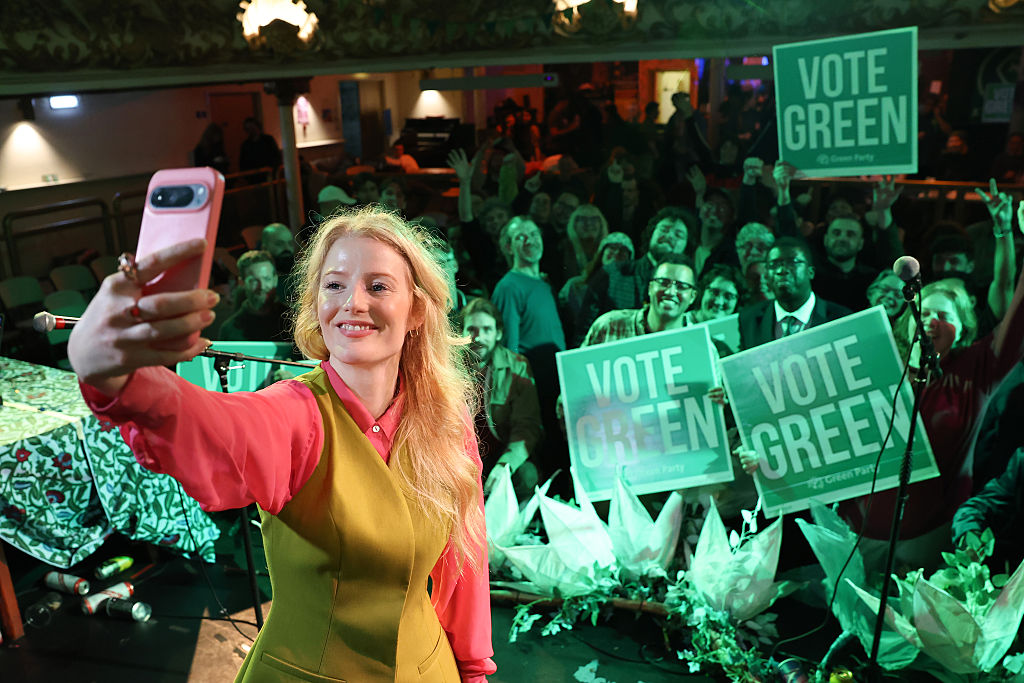
Green Party leader gets new communications advisor

Oliver Dean | February 17, 2026

Polanski's new communications advisor shows that the Green Party leader is serious about his public image.

Trade body describes the Government’s new electric HGV plan as a ‘monumental challenge’

Oliver Dean | February 17, 2026

With only 1 in 70 new HGV's being electric, the government must assist with infrastructure investment says industry leader

Blakeney bolsters its team with new additions

Madeline Dabbah | February 13, 2026

Blakeney has welcomed former drinks company Oatly managing director Tim Knight and pro-Brexit MEP Lucy Harris, in an effort to strengthen their position, the public affairs and strategic

Hanbury goes global

Oliver Dean | February 13, 2026

Hanbury's decision to erect offices in Washington and Sydney showcases the firms' strong public image.

Mandelson’s lobbying firm in disarray as CEO departs

Oliver Dean | February 6, 2026

Benjamin Wegg-Prosser, who co-founded the lobbying firm Global Counsel alongside Peter Mandelson has today resigned following significant backlash regarding the firm’s link to Jeffrey Epstein.

Russell Group turns to public policy veteran for next phase of university lobbying

Thomas Edwards | January 21, 2026

The Russell Group has picked Professor Libby Hackett, an Australia based public policy specialist, as its next chief executive, handing the UK’s most influential research university lobby to