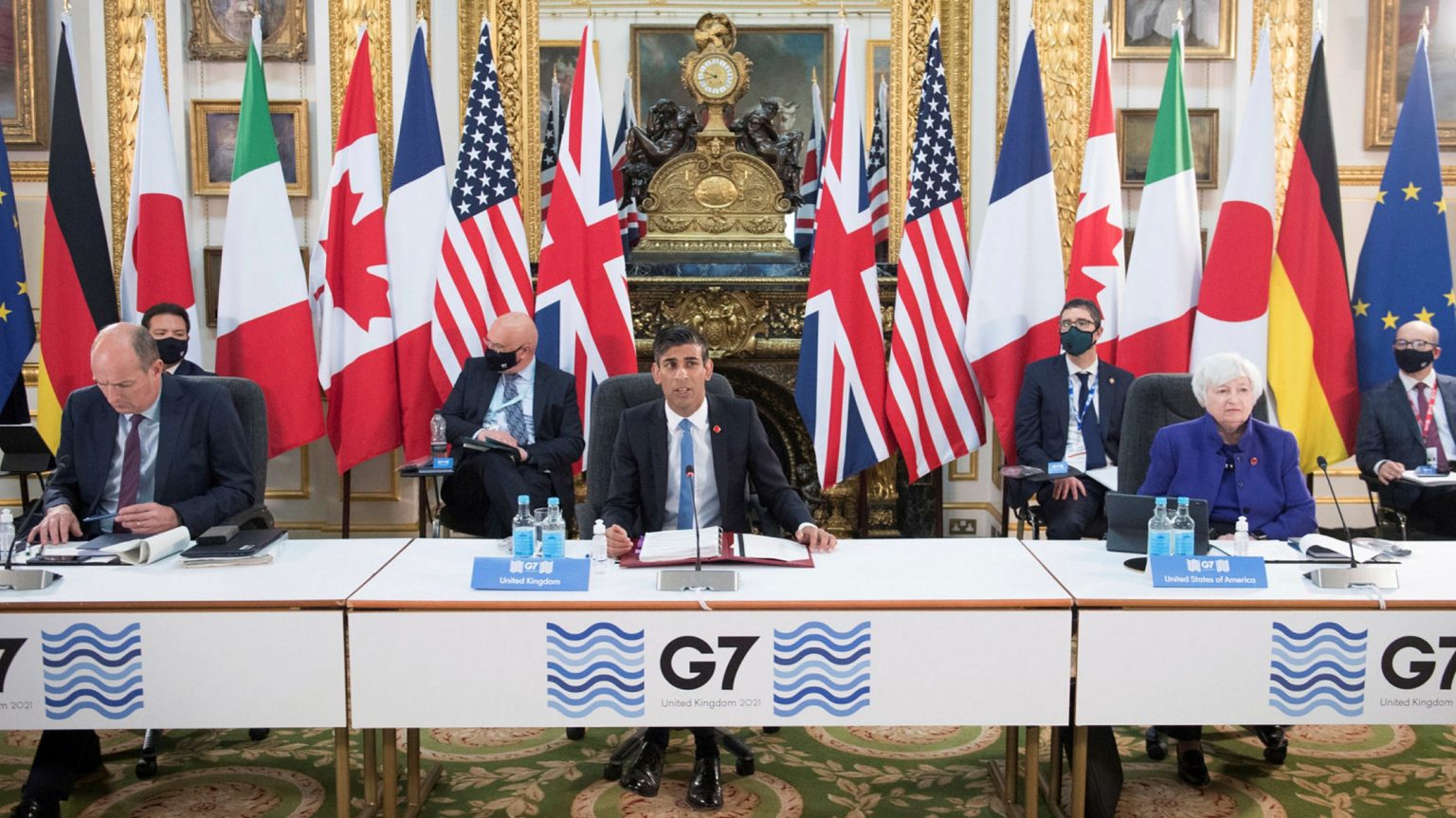
The G7 agreement on the minimum tax of 15 percent is a small step, but it is not yet clear in which direction.
The decision is not binding per se, and there is still a long way to go before it translates into actual changes in the international tax regime. More importantly, governments still keep their cards covered, so it is not clear what the outcome of the process might be. In fact, tax rates are only a feature, however relevant, of the tax system: the actual amount of taxes depend on many other parameters that have not been taken into consideration so far.
The agreement relies on two pillars. Pillar one is concerned with the distribution of tax revenues: if the agreement becomes binding, large multinationals that have a global profit margin higher than 10% will have to pay taxes on at least 20% of the profits in excess of that threshold in the countries where the revenues have been generated. This is a significant deviation from the principles that have hitherto governed the international tax system, under which taxes are paid in the country where value is created. At the same time, this move is instrumental to stopping the chaotic reaction of several countries to the alleged tax avoidance (or at least tax optimization) by multinational companies, particularly in the digital realm. Hence, countries such as Italy, France and the UK, as well as the European Union itself, should eventually remove the existing digital transaction taxes or abandon their projects to that end.
The second pillar of the agreement has attracted more heated reactions. The G7 committed to a global minimum tax of at least 15% (down from the level of 21% originally proposed by US President Joe Biden). To put this in perspective, the average OECD (marginal) corporate tax rate is around 24%. Ireland, that has long been accused of practicing unfair tax competition, has 12.5%. In the US, Mr Biden announced a plan to raise today’s 21% to 28% (but the tax rate was 35% until a few years ago).
This is where the goal is clear but the means are not. Ideally, governments would like multinationals to pay more taxes. It is not obvious that imposing a global minimum rate of 15% will translate into higher revenues. The amount of taxes due by a company depend on a variety of parameters, of which the tax rate is just one. Other parameters include the determination of the tax base, deductions, tax credits, and subsidies. If these are not covered by the agreement, setting a minimum rate will result in little change. To put it simply, tax competition will shift from lowering tax rates to narrowing the tax base – something that is already happening. Incidentally, traditional tax havens have been severely cracked down and blacklisted, but that has only marginally solved the alleged problem.
Without these details, it is literally impossible to tell who winners and losers are, both among states and multinationals. It is also impossible to tell whether we are facing an attempt to rationalize international taxation, which might be desirable per se, or a coordinated effort to raise more tax revenue. In the latter case, which appears very likely at least as regards the intentions, the further question is who will ultimately pay the bill. If the promoters of the global agreement try to answer this question, they may face a few inconvenient truths. In fact, from a formal point of view tax competition has been a driver of tax reductions in many jurisdictions that had traditionally (and still have) high taxes. This a long-term trend that dates back to at least the 1980s. The average OECD tax rate of 24% has been declining by about 5% per decade since 1980. The reduction in corporate tax rates may have been motivated by the will to attract multinationals, but it eventually benefitted small and medium enterprises too, that pay lower taxes than before. From a substantial point of view, however, no tax affects businesses: the ultimate wallet always belongs to individuals (shareholders, consumers and workers). The paradox, therefore, is that a reform which is supposed to prevent "profit shifting" could result in an increase in the price of goods and services to the detriment of citizens in the same countries that waved the flag of tax justice.
Carlo Stagnaro is Research and Studies Director at Istituto Bruno Leoni. An earlier version of this article was published by the Italian daily Il Foglio....
Subscribe to The Mace
Join the member community shaping British politics and stay ahead of
what's really happening in the world of politics and public affairs,
with expert analysis, breaking news, and insider insights from
Westminster and Brussels. The Mace is the leading news source and
resource for the government affairs industry, offering required
reading and lobby intelligence for professionals.
To see what you are missing out on by not subscribing to The Mace, click here to download our full membership info-pack. This includes
having no paywall on op-ed content or profiles/interviews, allowing
professional profiles to be read with maximum impact and visibility by
government, special advisers, MPs, peers, civil servants, and policy
and political decision-makers.
Meta agrees to overhaul its EU ad model, offering clearer data-sharing choices for users after regulators ruled its previous system breached competition rules.
MACE marked its 5th anniversary with a high-profile Commons reception of politicians, diplomats, media figures and lobbyists, launching its influencers report
From self-lacerating memoir to by-election madness and a Labour Together takedown, The Mace’s literary editor Christopher Silvester rounds up the latest political books.
From self-lacerating memoir to by-election madness and a Labour Together takedown, The Mace’s literary editor Christopher Silvester rounds up the latest political books.
Three former Conservative MPs, including ex-deputy chair Jonathan Gullis, defect to Reform UK as the party capitalises on Tory unrest and declining support.
The government plans to end most taxi travel for asylum seekers attending medical appointments, replacing it with public transport and tightening Home Office oversight.
The resignation of Andriy Yermak after anti-corruption raids disrupts Ukraine’s leadership and triggers uncertainty across Europe during a critical phase of the war.
After weeks of tax rumour and expectation-setting, the 26 November Budget landed as a welfare-first package that lifts the benefits cap but tightens the screw on household incomes,