Voters look set to hand the president a drubbing in today's vote across the USA. The harder question is what he does with the two years that remain, asks Mace editor-in-chief William Cash, reporting from California.
Referendum day for Trump
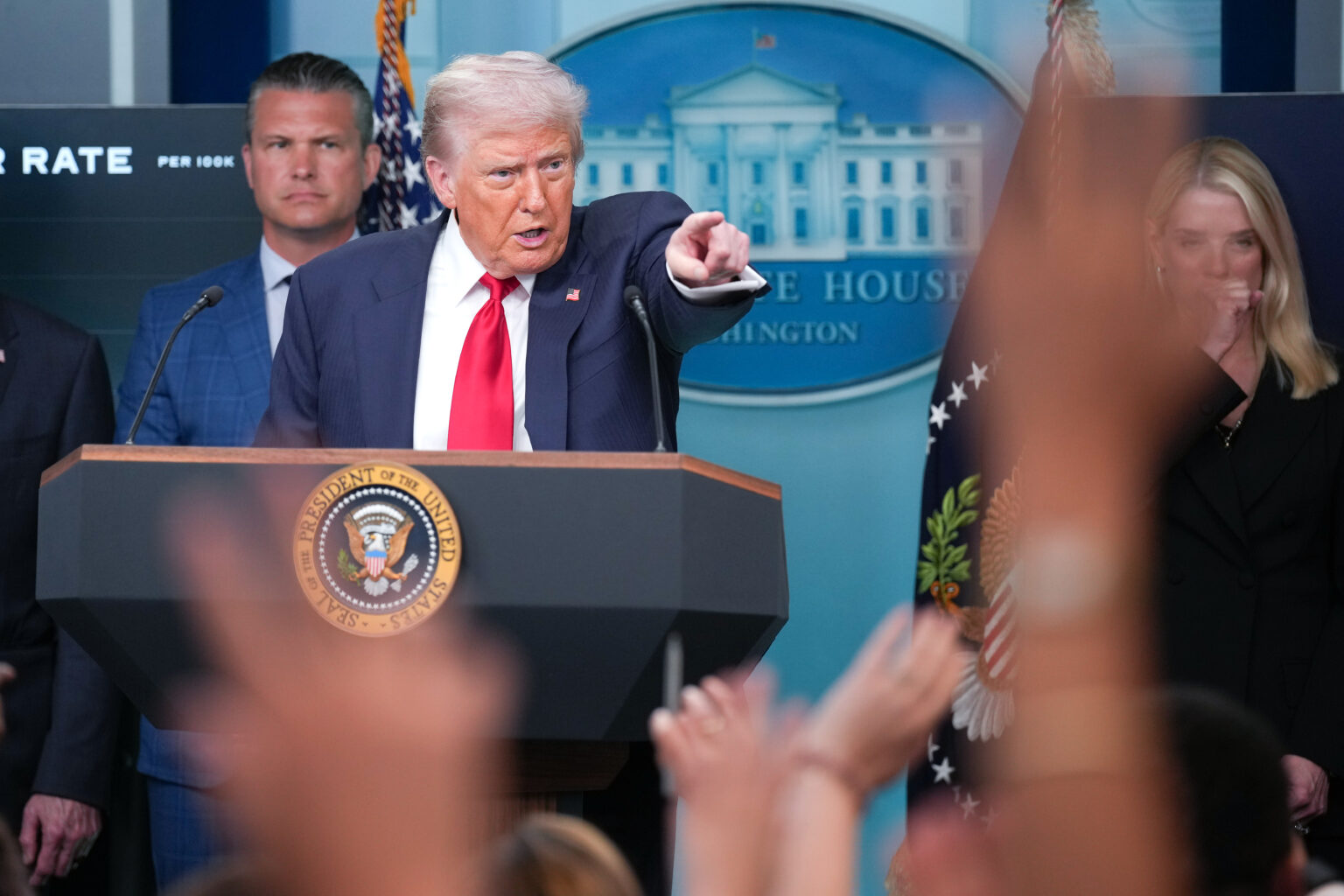
Donald Trump spent the closing weeks of the campaign urging supporters to vote as if his name were on the ballot. They may oblige, though not in the way he hoped. As Americans vote on November 3rd, the midterms have become what midterms usually are—a verdict on the man in the White House—only more so. Nearly eight months of war with Iran, diesel prices near record highs and a stubborn cost-of-living squeeze have left the president weaker than at any point in either term. He has begun rehearsing his excuses. “For some reason, the sitting president doesn’t win the midterms,” he mused on the eve of the vote.
Inside the White House, the talk has reportedly moved from how to win to how to survive losing. Officials fret about two years of hostile subpoenas; some, it is said, have asked about pardons, some apparently just walking into the room with their requests.
This is not how it was meant to have been, and perhaps wouldn’t have been had it not been for Trump’s reckless warmongering in Iran, along with other foreign policy excursions, leading to sharply rising gas prices, the ire of his NATO allies over various flip-flops over Ukraine. Along with a cost of living domestic crisis, all this is likely to receive punishment at the polls today. Stephen Miller, the deputy chief of staff, has spent months drafting plans for the president to govern without Congress.
The numbers
The polls point one way. The Silver Bulletin average puts Mr Trump’s approval at 38%, with 59% disapproving—a net rating of minus 21, far worse than at this stage of his first term. Reuters/Ipsos has him at just 32%. On the cost of living, the issue voters care about most, 70% disapprove. Democrats lead the generic congressional ballot by nearly nine points, more than the 7.3-point lead that won them 41 House seats in 2018.
The House looks lost for Republicans. Democrats need a net gain of only three seats, and on the eve of the vote traders on Kalshi, a prediction market, gave them a 94% chance. The Senate, where Democrats must gain four seats to overturn a 53-47 deficit, is closer but has tilted their way; Kalshi put their odds at 74%. Final New York Times/Siena polls showed Democrats ahead in five of seven battlegrounds, including Texas and Kansas, which have not sent a Democrat to the Senate since 1988 and 1932 respectively. Polls underestimated Mr Trump in all three of his presidential races. Whether that holds when he is not on the ballot is another matter; undoing a lead this size would take a big miss.
Subpoenas, not statutes
For America’s boardrooms and the lobbyists of K Street, a Democratic House is less a legislative threat than an investigative one. Mr Trump keeps his veto, so little Democratic legislation would become law. What a majority brings is the subpoena. Hakeem Jeffries, the likely next speaker, promises to “hold the crooks accountable beginning on Day One”. Democrats have already written to Amazon, Apple, Meta, Microsoft and Nvidia about donations to Mr Trump’s White House ballroom; to big retailers about tariff refunds; to airlines and grocers about “surveillance pricing”; and to Blackstone and KKR about data centres. Robert Kelner of Covington & Burling, a law firm, says corporate clients see “a dark cloud looming”.
The fear is less of lawbreaking than of spectacle. Bosses remember the grillings of tobacco executives in 1994 and of Wells Fargo’s chief in 2016. “The most damaging allegations are allegations of a quid pro quo,” says Matthew Miller of Vianovo, a consultancy. Firms that courted the administration—through ballroom gifts, drug-pricing deals or handing the government equity stakes—are most exposed. Many have hired crisis advisers already. “The smart companies have not been waiting for the election results,” says Brian Bartlett of Kekst CNC, a communications firm.
Business also dreads drift. The crypto industry, which has poured more than $200m into these elections, fears its long-sought market-structure law will stall. Every spending deadline would become a stand-off, with shutdowns a recurring risk.
The nightmare scenario
Losing the Senate too would be far worse for Mr Trump. The Senate confirms judges, cabinet members and ambassadors; a Democratic majority could freeze his appointments for two years, including any Supreme Court vacancy. Together with the House, it could pass resolutions to curb the war with Iran or roll back tariffs, forcing the president to veto measures that many voters like. Every spending bill would require Democratic votes in both chambers.
Then there is impeachment. A House majority alone can impeach; conviction needs two-thirds of the Senate, which no plausible result delivers. Yet a third impeachment would still consume much of his final stretch, and Mr Trump has already warned that one is coming.
The White House’s answer is executive power. Mr Miller and Will Scharf, the White House counsel, have studied how far the president can push on his own—new tariffs on critical minerals, tighter visa rules, orders to cut housing and construction costs—and how to defend such moves in court. That points to two years of government by decree and litigation by reflex. For business, which prizes predictability above almost everything, this may be the worst outcome of all: the caprice of executive orders, compounded by the subpoenas of a hostile Congress.
The succession
Tuesday’s vote also fires the starting gun on the contest to succeed him. The constitution bars a third term, so whoever takes the oath for the Republicans in January 2029, assuming one does, will not be Mr Trump. JD Vance is the front-runner: a Morning Consult poll for the Deseret News and the Hinckley Institute gives him 51% of Republicans to 31% for Marco Rubio, the secretary of state. But both men are bound tightly to the administration, and prediction markets have marked both down since the summer. Mr Vance recently allowed that there was “of course” a chance he would not run at all.
A rout would hurt the vice-president most. He has campaigned hard for the party’s candidates and, as heir apparent, will own its defeat. Strong Democratic results could “take some of the wind out of the MAGA sails”, argues Peter Loge of George Washington University, pushing Mr Vance to put distance between himself and his boss—a perilous move with a base still loyal to Mr Trump. A narrow result, with Republicans clinging to the Senate, would let him run as the continuity candidate. A drubbing would embolden rivals who argue that Trumpism without Trump cannot win.
For a president who prizes loyalty and dreads irrelevance, that may be the cruellest prospect of all: a lame duck whose party has started looking past him.