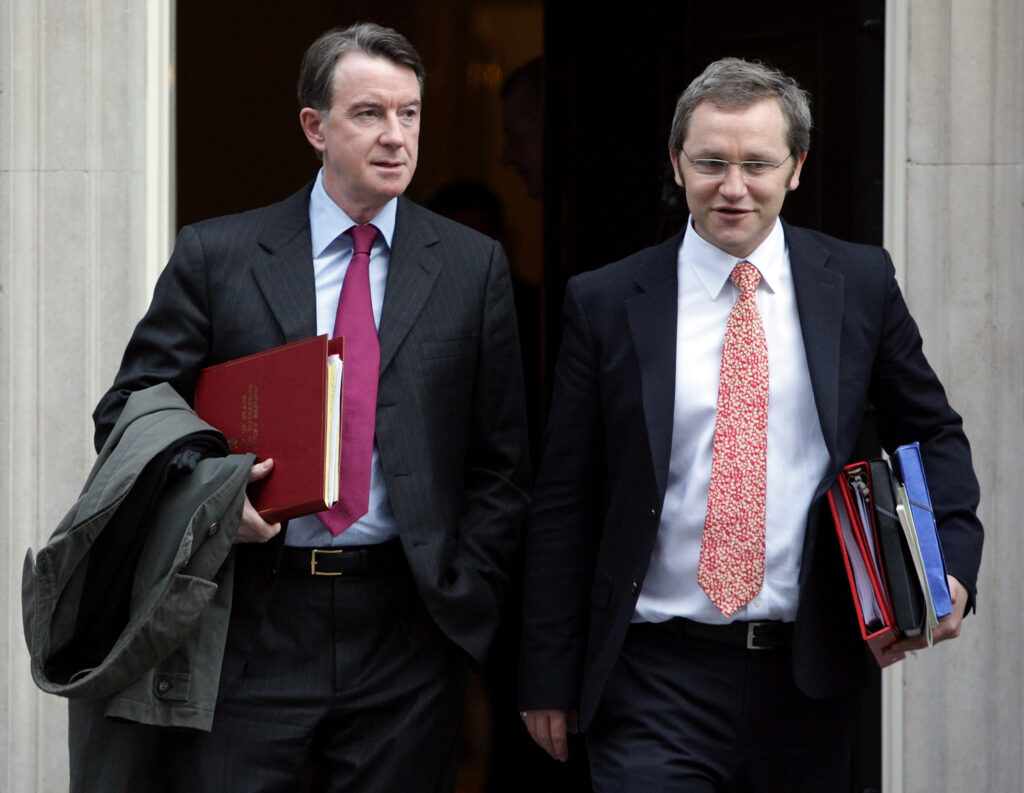
The continuing political Whydunnit of the murder of Ann Widdecombe
The strangely guilty way that the media, and some politicians have reacted to Widdecombe’s shocking death shows the double standards that can operate when a politician of the

A former Downing Street strategist is standing to be elected as the first Republican governor in 20 years. He's campaigning as if the polls are wrong.
A former Downing Street strategist who once rebranded Britain’s Conservatives with a scribbled tree is asking America’s most populous state to elect its first Republican governor in 20 years. The polls say he will lose. He is campaigning as if they are wrong.
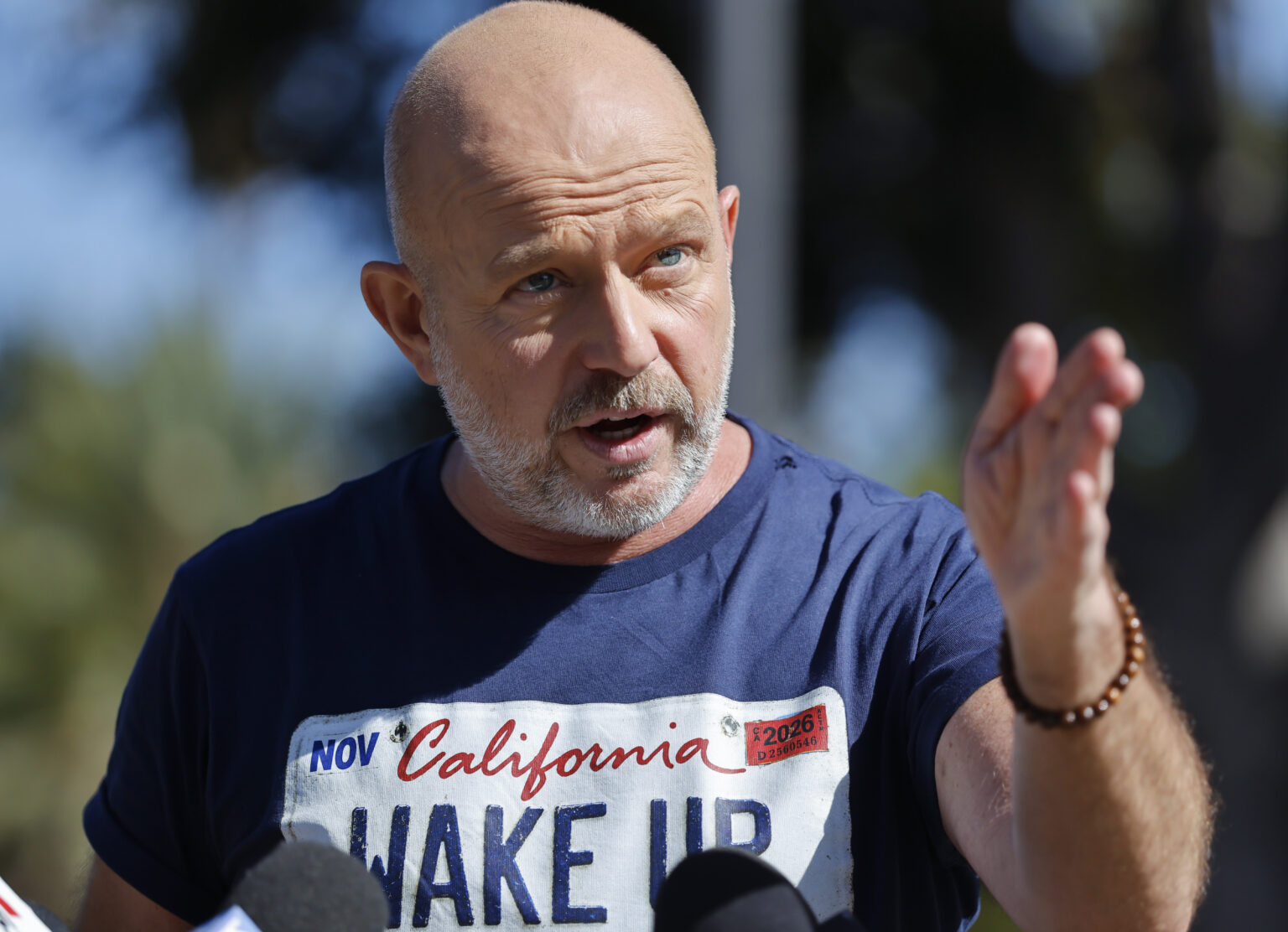
On a Thursday morning in the Central Valley town of Sanger, the sign over the Loma Vista gas station read $5.69 a gallon. By lunchtime it read $3, and a queue of cars snaked down the road. At the pump, in a T-shirt reading “$3 Gas Is On Me”, stood Steve Hilton, the Republican candidate for governor of California. His campaign paid the $2.69-a-gallon difference for the first 150 drivers.
It was, as Laurel Rosenhall of The New York Times wrote from the forecourt, “the latest stunt in Mr. Hilton’s lively campaign, a long-shot bid to win in this heavily Democratic state.” Hilton was unapologetic. “You absolutely have to be creative to get attention, but also, simple,” he told her.
When Californians vote on November 3, Hilton, 57, will attempt something no Republican has managed since Arnold Schwarzenegger’s re-election in 2006. His opponent is Xavier Becerra, the former state attorney general and Biden administration health secretary. Win or lose, Hilton’s journey to this ballot is one of the stranger political odysseys of the age.
Hilton was born in London in 1969 to Hungarian parents who fled the 1956 revolution; his father had kept goal for Hungary’s national ice hockey team. A bursary took him to Christ’s Hospital school, then to PPE at New College, Oxford.
He made his name at Conservative Central Office, working with Saatchi & Saatchi on the 1996 “New Labour, New Danger” campaign, whose “demon eyes” poster of Tony Blair won an industry award. He later co-founded the consultancy Good Business with Giles Gibbons.
His real influence came with David Cameron. Hilton was the modernising mind behind the Tory rebrand: the torch logo swapped for a tree, “vote blue, go green”, and the “Big Society”. From 2010 to 2012 he was Cameron’s director of strategy in No 10.
Whitehall never quite knew what to make of him. He cycled to work, reportedly padded about Downing Street barefoot, and fired off blue-sky ideas that collided with the coalition’s spending priorities. The Liberal Democrat business secretary Vince Cable has dismissed his economic ideas as a sideshow. Critics on the left saw the Big Society as cover for cuts. The BBC’s The Thick of It immortalised him as Stewart Pearson, the jargon-spouting, herbal-tea-sipping strategist. Cameron’s own memoir calls him “a disruptive force”.
His parting memo urged deep cuts to spending and civil service numbers, and drew fierce criticism. The journalist Isabel Oakeshott, co-author of an unauthorised Cameron biography, has called him “deeply divisive” while crediting his restless appetite for reform, and likened him to a later No 10 insurgent, Dominic Cummings. The Conservative communications strategist Giles Kenningham argues that an age hungry for outsider “disruptors” makes this Hilton’s moment.
In 2012 he left for California, where his wife, Rachel Whetstone, had taken a senior role at Google. Four years later he flew back to campaign for Brexit, against his old boss.
In America, Hilton reinvented himself several times over. He taught at Stanford, co-founded the political crowdfunding start-up Crowdpac, and from 2017 to 2023 hosted The Next Revolution on Fox News, preaching what he called “positive populism”. That platform drew him into Donald Trump’s orbit. He called for an audit of the 2020 election and amplified attacks on Anthony Fauci.
He became a US citizen in 2021 and has since renounced his British citizenship, a step that cost him £492, as he told The Spectator in March. In the same interview he said Britain was “run by socialists” and that “California reminds me of 1970s Britain”. His pitch: “I don’t want this state that I love to become the country I left.” The Telegraph reported him calling Britain’s tech tax “vindictive”.
He insists he barely follows British politics now, though he told the magazine he “really like[s]” both Kemi Badenoch and Nigel Farage, and blamed the rot on “the second half of the Conservative years” — the years after he left.
CalMatters’ Jeanne Kuang has described a serial rebrander who is hard to pin down. His 2015 book, More Human, backed a living wage, generous family leave and caps on chief executive pay. None features in his manifesto. “I’m not an ideologue, I’m very pragmatic in my approach,” Hilton told her.
Hilton launched his campaign in April 2025 with a line Californians have heard many times since: “California means to America what America means to the world.” Trump endorsed him in April 2026. In June’s top-two primary, a 61-candidate free-for-all upended by the collapse of the Democrat Eric Swalwell’s campaign, Hilton took about 26 per cent to Becerra’s 28.
His platform is built for bumper stickers: no state income tax on the first $150,000 of earnings, $3 gas through more drilling and fewer environmental rules, ten new cities, and an end to the troubled high-speed rail project. Writing in The Wall Street Journal, he argued that a state leading the nation in poverty and the cost of living “needs a pro-business governor”. The paper’s Tunku Varadarajan, profiling him, described an “uphill battle” to revive the “rebel spirit” that once made California great.
The style is pure Hilton. He has cooked dinners in voters’ homes, turned up at lowrider cruise nights and promised an “Office of Fun and Freedom”, whose first act would legalise flavoured nicotine pouches. He told Rosenhall he was inspired by Zohran Mamdani’s New York mayoral campaign: “I liked the freshness and simplicity.”
He has also courted hostile audiences, from the left-leaning Pod Save America to a candidate forum co-hosted by the Los Angeles Times, where its political writers Mark Z. Barabak and Seema Mehta pressed him on housing, homelessness, climate change and how he would deal with Washington. His housing answer is characteristically bold: build on California’s open land. “We have got so much space that we could be building in,” he said at the CNN debate in September.
His riskiest moment was “Just Try It, California”, an innuendo-laden ad in which one young woman dares another, in front of a Pride flag, to vote Republican. The Los Angeles Times reported furious conservatives; Pastor Jack Hibbs called it “grotesque”. One consultant told the New York Times it was “too clever by half”. Becerra simply replied: “Steve, just try it!”
Becerra’s camp portrays Hilton as all noise. His spokesman, Jonathan Underland, told the Times that Hilton “is just kind of throwing anything he can against the wall to see what sticks”, while Becerra prefers to “listen, sit down with folks”.
The charge that sticks hardest is Trump. At that debate, the only one Becerra agreed to, he warned: “You’re going to end up with Trump results if you follow Steve Hilton’s plans.” The sharpest exchange came on immigration. “You seem to welcome immigrants who look like you, but deport immigrants who look like me,” Becerra said. Hilton called the remark “disgraceful”. But he had earlier praised Trump’s deportation drive as “perfect” on Fox News, CalMatters noted. On the night he would only promise to “turn down the temperature”. The Irish Times judged it a weak performance when he needed a breakout.
The Republican strategist Mike Madrid argues that Hilton’s messaging sounds out of touch: “He’s literally saying, ‘I’m not one of you.'” British observers voice older doubts. Writing in The New World, Matthew d’Ancona called Hilton’s lifelong disdain for officials “glib”: “policies, however well-designed, do not deliver themselves.”
Yet even sceptics concede his energy. “He’s run a good race,” said the GOP consultant Tim Rosales. And d’Ancona noted that Hilton has mostly steered clear of Trump’s culture wars and courted Latino voters.
The numbers are stark. An Emerson College poll of 1,000 likely voters, taken October 17–19, put Becerra on 60 per cent and Hilton on 33, with 7 per cent undecided. Among independents, the voters Hilton most needs, Becerra led by ten points. Only a third of Californians approve of Trump; 63 per cent disapprove. Becerra has also out-raised his rival, roughly $40 million to $33.6 million, according to KPBS.
The national mood offers Hilton little shelter. Trump’s immigration raids, tariffs and the war in Iran have made the state harder still for Republicans, Rosenhall noted. Hilton blames Sacramento’s regulations for California’s pump prices; Becerra blames the president’s war, which choked oil shipments through the Strait of Hormuz. Voters, Emerson found, now blame Trump more than Governor Gavin Newsom for the economy, by 44 per cent to 38.
Becerra has run the quiet front-runner’s campaign that Hilton mocks, spending recent weeks helping fellow Democrats down the ballot. Hilton has spent his criss-crossing the state, from Orange County town halls to Central Valley forecourts.
For Britain, the race is a curiosity with an edge. A man who once tried to make the Conservatives greener and gentler is now Trump’s candidate in the president’s least favourite state. D’Ancona sees something larger: a possible template for a populist right offering “less rage, more delivery”. “Hilton may not win himself,” he wrote. “But he could be on to a winning formula.”
Back in Sanger, the pastor Jacob Zailian, who brought five church vans to fill up at $3, put the Hilton theory of politics most simply. “The loudest person who is doing the most should be the one that wins,” he told the Times. On Tuesday night, California will decide whether loud is enough.
The strangely guilty way that the media, and some politicians have reacted to Widdecombe’s shocking death shows the double standards that can operate when a politician of the
The ruthlessness of Andy Burnham’s purge has taken the country back to Macmillan's Night of the Long Knives. Media reaction has been predictably partisan, with the choice of

To date, Reform is yet to appoint a foreign affairs spokesperson. Jonathan Singh looks at Reform's new approach to international affairs with the appointment of Dr Alan Mendoza

The death of Ann Widdecombe raises serious questions about the security of high-profile politicians. The shocking episode seems out of Midsomer Murders with the former Tory minister being turned into
Overhauling the Tory candidates list is a shrewd political move which will allow her to put her own stamp on the party, and more importantly, shape its future,

Before he has even begun, Burnham has incisively communicated his plan for the country. As MPs are scrambling for positions in cabinet, his comms team are assembling.

Farage says ‘the people of Clacton should be the judges of my actions’, but is this his most reckless move yet?
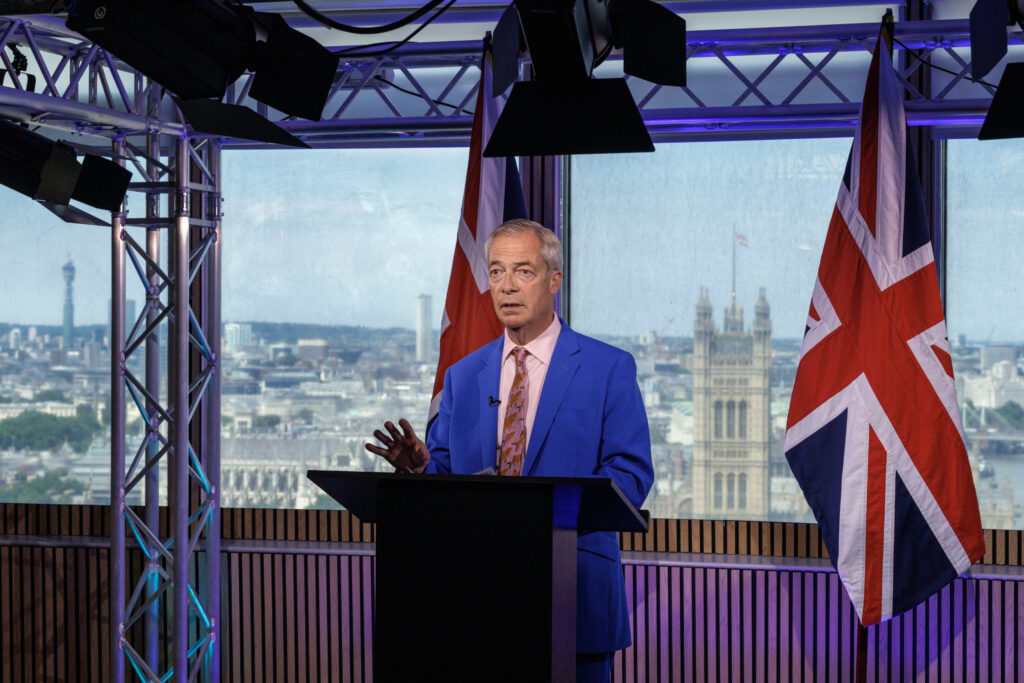
Britain cannot afford to fall behind its NATO allies on defence spending, writes Jasset Harlech.
How Angela Merkel Weakened the West and Handed Putin and Xi Leverage

Flint Global CEO James Purnell's expected appointment as Andy Burnham's chief of staff is just the latest Westminster merry-go-round job move from Public Affairs back into Downing Street.