“English Tourism Week” this year in March was overshadowed by proposed legislation for a so-called “Tourism tax” that is proving highly unpopular with both staycation tourists and UK tourism trade bodies. If it makes it into the King’s Speech for May 13th or the next parliamentary session, it will allow mayoral authorities in such Labour controlled mayoral cities as Manchester, Liverpool and London to add a 5% ‘overnight visitor levy’ on stays in the UK.
This punitive tax comes off the back of Edinburgh City Council starting to impose the Edinburgh Visitor Levy, from 24th July, with the rest of the UK set to follow. Most absurdly, even caravan owners who attend Edinburgh Festival in August will be subject to the ‘overnight levy’. That’s paying to stay in their own caravan.
The reality is that UK’s tourism sector – supporting over 2 million jobs and £127 billion to the economy – is becoming a poster example of a sector whose government policies are increasingly anti-growth. The new holiday tax will hit business travellers as well as domestic travel to see family. The tax will affect all hotels, pubs with accommodation, B&Bs, holiday lets and Airbnb locations in the devolved areas.
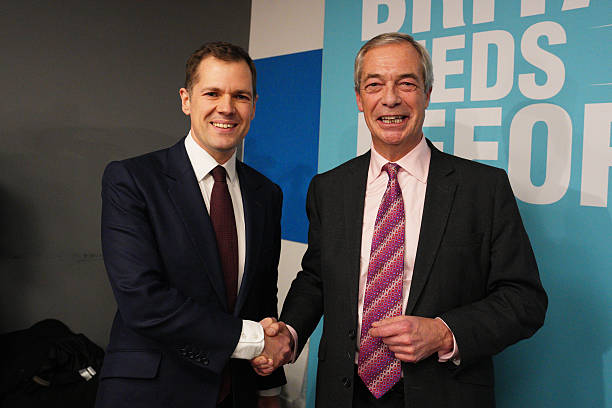
Whilst Labour and the Lib Dems support the soi disant ‘holiday tax’ both the Tories and Reform are against it thus turning the already loathed tax into a politically divisive issue. On May 4th, Robert Jenrick, Reform’s “Shadow Chancellor” used the first May Bank Holiday to launch a strongly worded assault on the Tourism Tax policy saying: “There appears to be nothing that Labour won’t tax. This will be the death knell for many seaside resorts and will stop up to one in five Brits holidaying in England.
No Reform UK mayors will enforce this terrible tax. We want people to be able to have fun and enjoy themselves without being clobbered by the taxman. This latest ploy from Labour shows they have completely giving up on serving hard-pressed people.”
Trade bodies fear that the tax will only further cripple the marginalised UK tourism sector at a time when it is already over-taxed, reeling from an increased minimum wage, National Insurance, hikes in business rates and other inflated costs from insurance, energy and broadband.
During ‘Tourism Week’ I attended a reception in the House of Commons hosted by the Tourism Alliance during which Labour’s tourism minister, Stephanie Peacock, made some generalised platitudes about the importance of the tourism sector to the economy. We heard the usual ministerial jargon about jobs and growth. “Tourism is not a peripheral issue” she likes to tell the industry. “It is a powerful driver of growth across every nation and region of the UK.’
Yet for the government to back this punitive holiday tax at a time when the industry is already on its knees thanks to NI hikes, crippling business rates, a higher minimum wage, rocketing fuel and energy costs, is proving counter-productive. Tourist trade bodies are turning up the volume of dissent.
The idea is to fund and improve local infrastructure – such as cleaner streets and more buses – but it’s unclear how the money will be ring fenced for tourism purposes. But those in the tourism trade – such as myself who runs a heritage and accommodation business in the West Midlands – regard it as a stealth tax with tourism used as a political football to appease Labour big city mayors who are desperate for funding and to make it look like the idea of ‘devolved powers’ is working.
Tourism trade associations are still hoping to de-rail the measures, which they have successfully done before. Ben Spier, director of public affairs at the Association of Self-Caterers and head of regulation and policy at Forge Holidays told The Mace: ‘Tourism provides accessible, flexible and meritocratic jobs often in areas with few other economic drivers, perfect for lowering the welfare burden’.
The industry is now pushing back with trade body leaders such as Spier noting that the government has previously backtracked on measures that would likely damage any growth prospects in the sector. He cites an example of industry advocacy when back in 2025, the Government launched consultations proposing that a minimum EPC rating of C could apply to holiday lets. By engaging with ministers, MPs, members of the Energy Security and Net Zero select committee, the press and the tourism sector through an iParl which led to 20+ Parliamentary questions, Spier and other industry figures succeeded in setting out why a minimum rating was unnecessary and potentially damaging.
‘To receive the news in January this year that the government wouldn’t proceed was a big relief to the sector as the measure would have required thousands to be spent by micro-businesses for very little environmental benefit when those businesses are already heavily incentivised to operate as energy efficiently as possible’ says Spier.
Trade bodies in the tourism sector will be hoping that as we enter Tourism Week, the government might also re-think the tourism tax by not putting it into the King’s Speech. Both the Tories and Reform are opposed to the tourism tax with Labour and the Lib Dems support the controversial policy.
Part of the problem with the UK’s £140 billion tourism industry is that the challenges are split across various ministerial portfolios – DCMS, Employment, Business and Trade, DEFRA – which means issues often do not have a single minister taking responsibility at the top seat of government.
The lack of pro-growth help that the UK tourism sector is receiving is also at odds with the government’s own Visitor Economy Growth Strategy which aims to welcome 50 million international visitors annually by 2030, supported by a 40% business rate relief for tourism businesses. The plan focuses on boosting investment, enhancing the visitor experience, supporting local destinations through Local Visitor Economy Partnerships (LVEPs), and driving year-round, sustainable growth across the UK.
‘There’s too much ‘scatter gun’ thinking’ a former Tourism Alliance Director said in an interview. ‘Tourism is much bigger than both the automative and pharmaceutical industries but we are given little support. Tourism could be contributing so much more to the economy’.
The current head of the Tourism Alliance, Eddy Leviten, agrees that the proposed new tourism tax is a ‘disappointment’ when government messaging had previously stated they had no intention to introduce anything. A senior trade body figure told The Mace: ‘We think there needs to be a lot more done by government. Tourism sits way down the list of priorities despite it making up over 5% of the economy, it could be as much as 7%, so it’s important that we are heard’.
David Sheen, head of public affairs at UK Hospitality, sent a strongly worded response paper to the government arguing that the proposed tax will produce negative growth, employment and investment outcomes; it will make England ‘less internationally competitive’; it is a ‘poor form of devolution’ that overlooks alternatives and worsens the cost-of-living crisis of the domestic population. It will also negatively affect domestic travellers as much as in-bound international visitors. ‘Business and events travel will be caught by this levy, hitting small businesses across construction, engineering, sales and many more’ the trade body wrote.
Hospitality is a major part of the UK economy, employing 3.5 million people, generating over £140 bn in economic activity and paying nearly £60 billion in taxation. Yet as a result of Government policy, hospitality employment levels have decreased over the last 18 months after successful growth, damaging Government’s employment targets, particularly among young people,’ added Sheen.
But with industry figures admitting privately that they do expect to see the levy in the King’s Speech, senior tourism industry figures are now trying to ‘make it the least bad policy’ for hospitality businesses, holiday makers, business travellers and the wider economy.
The key point being stressed by the industry in an attempt to get the government to row back are showing how the proposed ad-valorem (%) tax is ‘unworkable and opposed by the sector’ with a flat fee is preferable, with a tiered approach based on price, that is nationally capped and banded – to avoid being regressive.
In addition, says Sheen, there should be a consistent approach to this legislation across the country with the use of levy revenues should be limited ‘solely to the promotion of the visitor economy’ and levy payers should have significant input as to how they are spent. Admin costs should be minimal with no levy should be charged until at least 12 months after the decision has been formally ratified at mayoral level.
Another part of the problem is that ever since the success of the London Olympic Games tourism has been seen to be doing well enough on its own. But as historian and restauranteur Loyd Grossman warned when he was chair of the Heritage Alliance: ‘The Government might think we are doing OK despite the disproportionate cuts and a virulent fiscal policy. But laissez faire is not the answer. It takes positive measures by government to improve the operating environment so that the benefits of heritage – social, economic, educational and environmental – are realised by Government, communities and individuals’.
Alas, such sentiments still rings true of the much of the embattled tourism sector a decade later.