Leader in UK Public Affairs: Robert Forrester, Chief Executive, Vertu Motors plc, “Leaders need to cast a vision and hold people accountable”
Mace | 6th August 2026 | In-House Public Affairs, Westminster Index
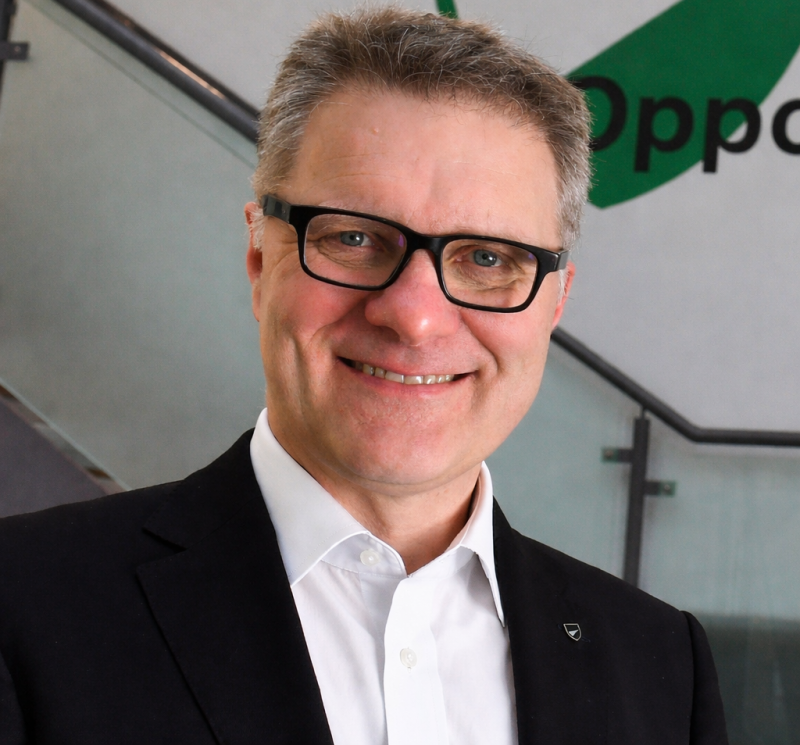
Robert Forrester reflects on his achievement in helping to found a company 20 years ago that now generates £5bn in revenue and employs more than 7,500 people.
“It has become a natural extension of my role… due to necessity,” says Robert Forrester. “I am a bit shocked to find myself in public affairs.” After nearly two decades as CEO of a publicly listed automotive retailer, advocacy was not a career move but an operational reality — one that emerged as policy began to shape the industry more directly.
That perspective is important. Forrester does not approach public affairs as a discipline in its own right, but as something embedded within leadership. “It is a key part of my CEO role to change Government policy and quickly,” he says — a line that captures both urgency and intent.
Vertu Motors is one of the UK’s largest automotive retail groups, operating hundreds of dealerships across the country and representing a wide range of manufacturers. With billions in annual revenue and thousands of employees, the business sits at the frontline of consumer demand, regulatory change and industrial transition — particularly as the shift to electric vehicles accelerates.
That transition is where his focus lies. “The UK ZEV mandate is putting immense pressure on every level of the automotive industry,” he says. From parts suppliers to retailers, the system is under strain. “The targets are completely delusional and there will be a crunch.” It is a characteristically direct assessment — and one that reflects the scale of the challenge facing the sector.
Forrester’s approach to advocacy is equally direct. “In-house advocacy works for us since it relates to an authentic need for change and action,” he says. The emphasis is on immediacy — identifying pressure points and responding quickly. In that sense, public affairs becomes less about positioning and more about intervention.
Recent activity reflects that mindset. Rather than relying solely on centralised engagement, the company mobilised its own network. “Our Group’s General Managers wrote to their local MPs,” he says, triggering “a cascade of letters to and from Ministers” and a series of local meetings. “Old school, but effective.” It is a decentralised model of influence — using operational leadership to drive political engagement.
That approach aligns with his broader leadership philosophy. “Leaders need to cast a vision and hold people accountable,” he says, alongside “treating colleagues with respect and upholding integrity in every decision.” He places particular emphasis on recognition — often writing handwritten letters to acknowledge strong performance — a small but deliberate act in a large organisation.
His own career achievement is framed in similarly practical terms. “To help found a company 20 years ago, which now has £5bn revenue and employs over 7,500 people,” he says. The scale is significant, but the emphasis is on sustainability and values — “a Group that is built on the right values.”
The advice that has stayed with him is equally concise. From mentor Bill Teasdale: “Man who chases two rabbits, catches none.” It is a principle that runs through his answers — focus, clarity and execution over diffusion.
His view of agencies reflects that same emphasis. “Be explicit about objectives, success measures, and how the agency will integrate efficiently,” he says. When used well, they bring “specialist insight,” but only if aligned tightly with the business.
On public affairs more broadly, his perspective is stripped back. “Effective public affairs has to be about subjects that are just and matter,” he says — rejecting the idea of influence as an end in itself.
Outside work, his routine is structured and disciplined. Running, swimming and the gym “to stay focused and energised,” alongside time on the Northumberland coast — “an opportunity to recharge and approach challenges with clarity.” There is also a more unexpected outlet: playing in a local brass band.
His experience of media and public exposure has been extensive. Regular appearances across major broadcasters are part of the role, but one moment stands out. Taking part in Undercover Big Boss, he describes the experience as “fantastic” — an opportunity to connect with colleagues across the business in a different way, albeit “sporting an interesting disguise.”
Quick-fire Q&A
How did you start in public affairs?“It became a natural extension of my role… I was a bit shocked to find myself in it.”
What policy issue keeps you up at night?“The UK ZEV mandate… immense pressure… there will be a crunch.”
What’s the appeal of in-house advocacy?“An authentic need for change and action… part of the CEO role.”
Proudest achievement?“Founding a company… now £5bn revenue and 7,500 employees.”
Best piece of advice?“Man who chases two rabbits, catches none.”
Recent campaign work?“General Managers writing to MPs… a cascade of ministerial engagement.”
Advice for agencies?“Be explicit about objectives, success measures and integration.”
Leadership philosophy?“Cast a vision… hold people accountable… recognise performance.”
What do people get wrong about public affairs...
Subscribe to The Mace
Join the member community shaping British politics and stay ahead of
what's really happening in the world of politics and public affairs,
with expert analysis, breaking news, and insider insights from
Westminster and Brussels. The Mace is the leading news source and
resource for the government affairs industry, offering required
reading and lobby intelligence for professionals.
To see what you are missing out on by not subscribing to The Mace, click here to download our full membership info-pack. This includes
having no paywall on op-ed content or profiles/interviews, allowing
professional profiles to be read with maximum impact and visibility by
government, special advisers, MPs, peers, civil servants, and policy
and political decision-makers.
David Sheen pushes back against common perceptions about public affairs, but argues instead that it is about hard work, marshalling arguments, and building coalitions.
After heading the Makerfield by-election comms team, Grace Pritchard was singled out by Andy Burnham as being a key part of his northern campaign team. The self-styled 'Yorkshire
Living Streets’ Zak Viney speaks to The Mace about moving from engineering into advocacy, making the case for walkable streets across political divides and securing practical progress on
From navigating regulation and trade policy to aligning advocacy with commercial strategy, Diageo’s Zara Harington's career in public affairs has been about understanding how political decisions translate into
PepsiCo UKI’s Lucy Gilchrist does some of her best policy thinking on the running machine. She tells The Mace why public affairs must turn intelligence into action, how
As one of Westminster's most effective public affairs strategists, Sonia Khan tells Mace how she bridges the gap between high-stakes politics and global corporate strategy.
With a career spanning sustainability, property and now EngineeringUK, Beatrice discusses her drive to work in policy areas that align with her principles.
Joe Chapman, head of public affairs at the Manchester Airport Group, reveals his support for reform in the public affairs industry and why he loves being a leading