Rebuilding Ukraine’s future with music and memory

Sophia Ibrahim | 9th October 2025 | International, Uncategorised
e97bdda2-51b8-4f6d-99d8-358f0272d6ee

As Ukraine rebuilds from war, music is emerging as a vital force for healing, unity and national renewal.

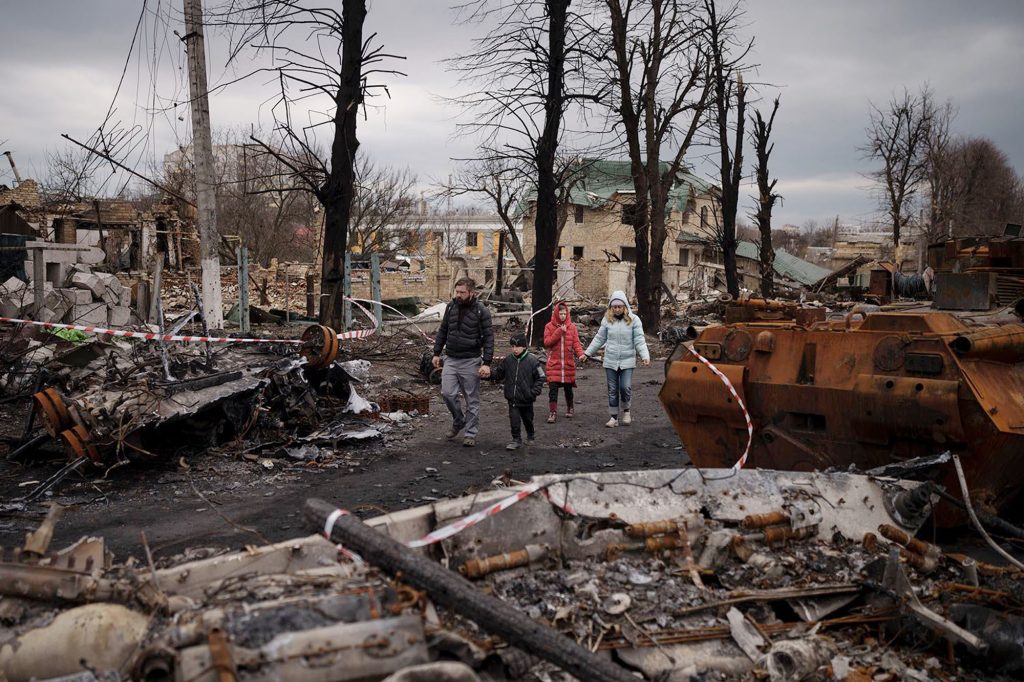
As Europe turns its attention to the colossal task of rebuilding Ukraine, the emphasis has largely been placed on physical infrastructure such as roads, hospitals and housing. Yet the deeper challenge lies in restoring a fractured social fabric. For Ukraine’s long-term stability, arts and culture must be elevated from a luxury to a central component of reconstruction policy. Music offers a powerful case study of how culture can cultivate social cohesion, resilience and democratic values. In the corridors of Brussels and Kyiv, aid packages often prioritise tangible deliverables. But culture, and music in particular, should be seen as social infrastructure rather than decoration. Music bridges linguistic divides, heals trauma and reweaves the bonds between communities fractured by conflict. The European Commission’s Directorate-General for Education and Culture and UNESCO are well positioned to provide leadership in this area. Embedding culture into recovery plans would transform it from a marginal add-on into a central pillar of rebuilding Ukrainian society. After the Balkan wars, Bosnia utilised music to repair divisions. Initiatives such as interfaith choirs and youth ensembles brought together communities that had once been violently opposed to one another, and in the process demonstrated music’s capacity to foster trust and a shared sense of identity. The Pontanima choir in Sarajevo brought together Catholics, Orthodox Christians and Muslims in shared sacred music. The House of Good Tones in Srebrenica created ensembles for Bosniak and Serb children to perform side by side. These experiences remind us that cultural initiatives are not mere symbolism but practical interventions that can rebuild trust in communities torn apart by violence. Ukraine can draw lessons from this experience by investing in community-based music centres in frontline cities such as Mariupol, Kharkiv and Chernihiv, and by launching a National Youth Peace Orchestra that draws talent from all regions, including Donbas and Crimea. Ukraine will emerge from this war with divisions that go beyond the frontline. There will be rifts between refugees and those who stayed, between families who lost relatives and those who did not, between communities who lived under occupation and those who did not, and between Ukrainian and Russian speakers. These are precisely the kinds of divisions that cultural programmes can address by offering indirect, non-confrontational settings in which people can engage with one another. A children’s choir or youth orchestra that mixes displaced families with those who remained can offer something that no official reconciliation commission ever could: shared experiences and memories forged in creativity rather than conflict. The empirical evidence supporting this approach is strong. Studies in post-war Bosnia found that participation in interethnic choirs improved trust levels and reduced prejudice among young people. In Northern Ireland, youth music programmes were shown to decrease hostility and foster cross-community friendships. Clinical research from the World Health Organization has demonstrated that music therapy significantly reduces symptoms of post-traumatic stress disorder, anxiety and depression. In refugee camps in the Middle East, programmes using music and drumming circles have been linked to measurable improvements in emotional regulation and social bonding. These findings are not abstract theories but concrete evidence that music can help societies heal. For Europe, supporting this agenda requires deliberate policy choices. It is not enough to hope that culture will flourish organically. Funding must be earmarked specifically for cultural peacebuilding, even if it is a small percentage of larger reconstruction budgets. Dedicated resources will signal that arts and culture are integral to recovery, not an afterthought. Training programmes for music therapists should be established in partnership with universities and health institutions, and schools should be equipped to use music and other creative tools to address the trauma that children carry. A National Youth Peace Orchestra could serve as a flagship initiative, uniting the next generation of Ukrainians across geographic and linguistic divides while sending a message of renewal to the wider world. Europe already has mechanisms that can deliver this vision. The Creative Europe programme can back cross-border projects, while the European Parliament’s Committee on Culture and Education, chaired by Sabine Verheyen, can champion cultural recovery as part of EU policy. UNESCO can help protect and restore heritage, while the European External Action Service can support cultural diplomacy initiatives linking Ukrainian artists with counterparts across the continent. Partnerships with organisations in post-conflict countries such as Bosnia and Kosovo can transfer practical know-how to Ukrainian practitioners. International musicians, ensembles and festi...

Subscribe to The Mace

Join the member community shaping British politics and stay ahead of what's really happening in the world of politics and public affairs, with expert analysis, breaking news, and insider insights from Westminster and Brussels. The Mace is the leading news source and resource for the government affairs industry, offering required reading and lobby intelligence for professionals.

To see what you are missing out on by not subscribing to The Mace, click here to download our full membership info-pack. This includes having no paywall on op-ed content or profiles/interviews, allowing professional profiles to be read with maximum impact and visibility by government, special advisers, MPs, peers, civil servants, and policy and political decision-makers.

Kemi’s true blue purge, with help from Sir Philip May

William Cash | July 26, 2026

The news that former Home Secretary Sir Grant Shapps has failed to make the new Tory candidate list has put fear into dozens of former Conservative MPs. Whether

Merkel’s Legacy is in Tatters

Azeem Ibrahim OBE | June 30, 2026

How Angela Merkel Weakened the West and Handed Putin and Xi Leverage

‘Never bet against America’ SpaceX debut makes millions for the UK  

Lucy Carrier-Pilkington | June 16, 2026

The most highly anticipated stock market debut of the year, perhaps of all time, has delivered a huge win for UK investors.

EU likely to shelve chemical reform amid industry pressure 

Lucy Carrier-Pilkington | May 6, 2026

The reform concerns a pre-existing law on the Regulation, Authorisation and Restriction of Chemicals (REACH) and has been in place since June 2007.  

King Charles: The real ‘special ingredient’ in our relationship with the USA 

Lucy Carrier-Pilkington | April 29, 2026

King Charles’s address to Congress was designed to steady a strained special relationship. Twelve standing ovations later, the Palace had given Downing Street something politics could not: a

UK ‘global investor’ visa proposed by lobby group to bring back UK’s non-doms

Lucy Carrier-Pilkington | April 23, 2026

New 'global investor visa' proposed by lobby group as UK struggles to attract the super-rich

London Elections latest polling: Green gains and Labour out

Lucy Carrier-Pilkington | April 22, 2026

Latest polling from YouGov suggests major gains for Greens and Reform UK in the capital.

Maritime trade bodies warn of citizens being caught in Iranian crossfire

Oliver Dean | March 12, 2026

As the Iranian conflict continues, maritime trade bodies have warned of the significant loss of human life thus far.

Britain faces a crisis of statecraft – not power.

Azeem Ibrahim OBE | March 9, 2026

Despite being criticised for its dwindling position on the world stage, Britain is not lacking in power. What it really needs is statesmanship.

Greens win Gorton and Denton

Oliver Dean | February 27, 2026

The Green's victory reflects a changing mindset in British politics