For 10 months, ex-army officer James Jeffrey trekked 3500 km across Europe by foot. The scale of migration he witnessed may not have been as dramatic as the storming of Ceuta. But this exclusive account of his solo odyssey is a wake-up call to how the Europe he knew growing up in Germany has vanished as a result of open borders and illegal crossings.
Walking over 3500 km through the heart of Europe alone, from the summer of 2025 to the late spring of 2026, I trekked through former East and West Germany into France and then down to the border with Spain and onward to the latter’s northwestern outreaches to Santiago in Galicia. Through those 10 months in total, witnessing an entirely changed Europe from my years in Germany growing up, I couldn’t shake the sense that my old friend the death’s-head was accompanying me step by step.
In a former life I served with the Queen’s Royal Lancers, a British Army cavalry regiment whose striking cap badge comprised a death’s-head and whose motto was “Death or Glory”. Unfortunately, while the landscapes during my long pilgrimage were often glorious, it was another sense of death that kept haranguing me. Not my own mortality – though that occasionally came to mind – but rather a far more important loss: the silent death of the closely bonded social communities of old western Europe as its inhabitants have known for centuries.
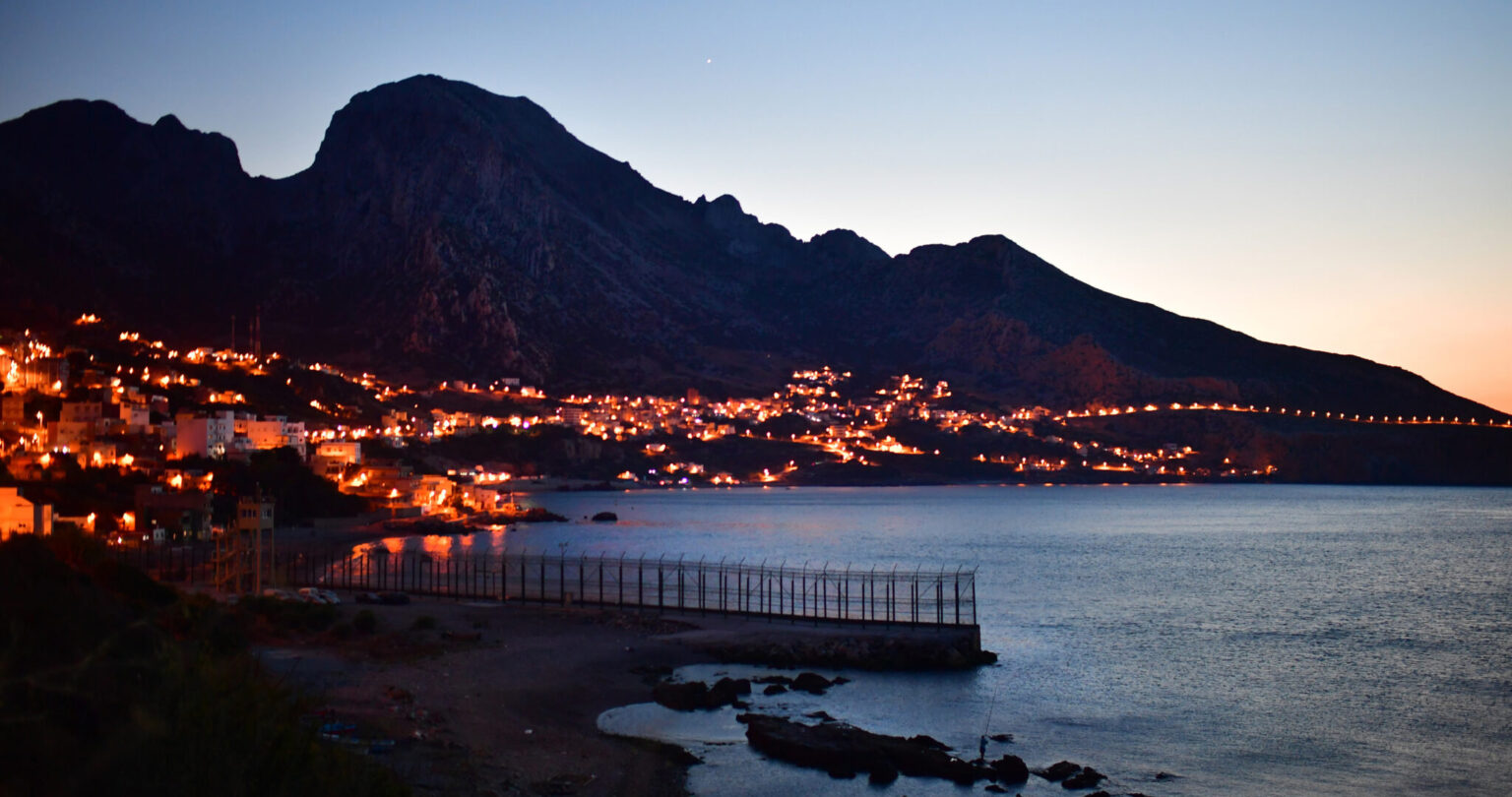
That we have now entered such a “death throe” moment in Europe’s post-war history was shockingly dramatized when more than 50,000 illegal migrants – mostly young Moroccan men – deployed swimming as an invasion tactic into the Spanish territory of Ceuta in northern Africa, just across the Straits of Gibraltar. On July 31st, thousands of Africans traversed the Tarajal breakwater to enter the Spanish territory from Morocco, while others stormed the border fence.
So serious is the issue, that EU interior ministers are holding emergency talks today (Tuesday, 4th August) about the political problem of border security. Ursula von der Leyen, president of the European Commission, has called for “united action” on the issue. Mrs von der Leyen has said that the flux of migrants from Morocco into Ceuta showed that “we must do more to further strengthen our borders.”
The wave of migrant immigration that I witnessed, on the ground, in my journey by foot was not so headline grabbing. But nearly 10 years after the publication of Douglas Murray’s seminal book, The Strange Death of Europe, my odyssey confirmed his pessimistic conclusion that Europe’s continent and culture was self-destructing with its border policies, declining birth-rates and embrace of multi-culturalism amounting to a form of “suicide.”
“We must do more to further strengthen our borders” Ursula von der Leyen
At the end of his book, Murrayends with two alternative visions of Europe – one optimistic, one highly depressing. Alas, my travels by foot over the last year – a decade on from Murray’s award-winning research and diagnosis – has only confirmed the latter more apocalyptic vision which the recent pictures of Ceuta being overrun by a swimming army of young and paperless Moroccan men in flip-flops has brought home to the public with vivid unambiguity.
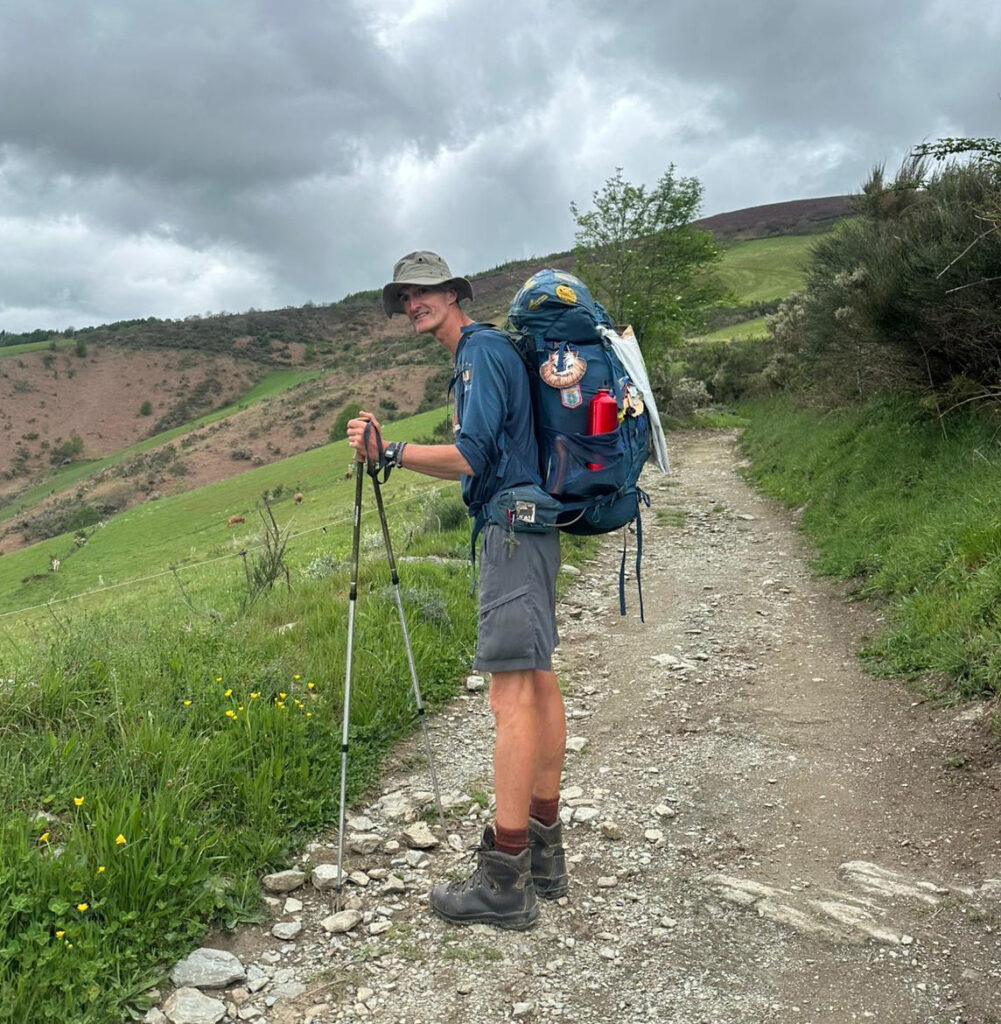
James Jeffrey on the Racing the Sunset Trail
Much of the time, I found myself walking through the winter months – I crossed the border between Germany and France (and Luxembourg) at the so-called “three-country point” on 1 December 2025 – and so had to “race the sunset” in the late afternoon to get where I needed to be and find a hostel bed or dormitory mattress before I was plunged into the pitch black and freezing cold.
As I trekked solo, with a pack on my back, through three of Europe’s more advanced Western countries, the evidence of the effects of large-wave immigration and “multi-culturalism” that I witnessed on the ground – with many old German and French villages, suburbs and cities unrecognisable today from 50 years ago – made clear that Europe’s old culture was being hollowed out right before my eyes, and that this now post-Christian continent is dying as a civilisation.
Technically I was walking as a pilgrim – a pilger in German, a pelerin in French and a peregrino in Spanish – through the heart of Europe toward the pilgrimage city of Santiago de Compostela. But I was also walking as a mix of amateur anthropologist and journalist. I spent numerous years growing up in Germany due to my father being posted there multiple times as a British Army officer (dentist), while my brother later settled in Berlin with a family.
My subsequent visits to their home in former East Berlin, combined with those earlier years in Germany as a military “pad brat” living in the shadow of the Berlin Wall and Cold War, left me with a desire to reconnect with the country. I also wanted to see “the rest of Germany” – or, as some Germans put it to me, the “real Germany” that lies beyond Berlin – and to find out how it had changed since my teenage efforts in the 1990s to sneak into its bars and clubs, a period I remembered through the typical nostalgic haze (though maybe they really were better days back then?).
When I set out from Berlin on a sparkling summer’s morning in late July 2025, heading into north-eastern Germany’s surrounding Bradenburg region, with its scenic pine forests and lakes, I had a part-time online editor’s job at the Catholic Herald which brought in some welcome income to pay for my pilgrim’s board and keep (usually around 20-30 euros a night). But I never set out as any sort of political pilgrim of any shade. That rather goes against the spirit of on-the-road pilgrimage, to say the least.
My model, if any, was George Orwell who wrote so honestly about changing and depressed social conditions in the 1930’s, both in Spain and north-west England. In those early weeks, I loved exploring and traversing across Germany on foot. Despite the basic German I learnt growing up being rusty, the country still reminded me of my boyhood and formative years.
After all, I had first encountered the Federal Republic of Germany – West Germany, as it was known at the time before the Berlin Wall came down – as long as I could ever remember. Certainly, I knew Germany better than England as my parents drove me bundled up in the car as a baby to Germany for one of my father’s postings.
Those assignments in Germany continued through the 1980s and into the early 1990s. My younger brother was born in the small town of Detmold. In Verden I remember playing at a game of “spin the bottle” with fellow early teen German acquaintances.
Sundays in Germany hold a special place in my memories. All the shops closed, locals wearing their best Sunday clothes for church; afternoon walks along the river and into the centre of town; the sort of sense of peacefulness and order that one might find in a painting by Ludwig Knaus, the 19th century German painter known for his harmonious depictions of everyday rural and village life.
“I enjoyed hopping on my bicycle to explore around the local German area…it was foreign but also not foreign, for both England and Germany shared very similar cultures deep down”
Germany seemed at ease with itself. Wherever my family was posted, the German towns seemed comprised of close-knit communities, with family run shops, pubs, cafes and restaurants. Yes, I can recall the high-proportion of Turkish immigrants as a result of Germany’s Gastarbeiter (guest worker) program in the 1960s to address labour shortages during the country’s economic boom.
But to me they seemed an intrinsic component of the Germany I knew; on the whole they dressed the same as everyone else, spoke fluent German and appeared to participate in all aspects of national life (though the issue of their assimilation has been more complicated and fraught than I realised at the time).
Because my father was an officer, we were always housed outside the barracks on a normal German street. I enjoyed hopping on my bicycle to explore around the local area. In many ways it felt and looked similar to the UK. But it was also very Germanic at the same time – I treasured that hybrid feeling: it was foreign but also not foreign, for both countries shared very similar cultures deep down. We were both deeply assimilated in western cultures that had roots back to the middle-ages and felt no sense of alienation or outside threat.
Every summer, accompanied by hours of Radio Niedersachsen, we’d drive south for about 9 hours from northern Germany to a hotel by Lake Chiemsee, Bavaria’s largest lake, which was run by the US military. British military personnel and their families were allowed to use. It was idyllic. The hotel’s dining hall was plastered with giant murals of traditional Bavarian life. We had German friends, German babysitters, German Christmases, New Years and festivals. If it wasn’t for Berlin, where my parents met, none of it would have been happening for me and my siblings in the first place.
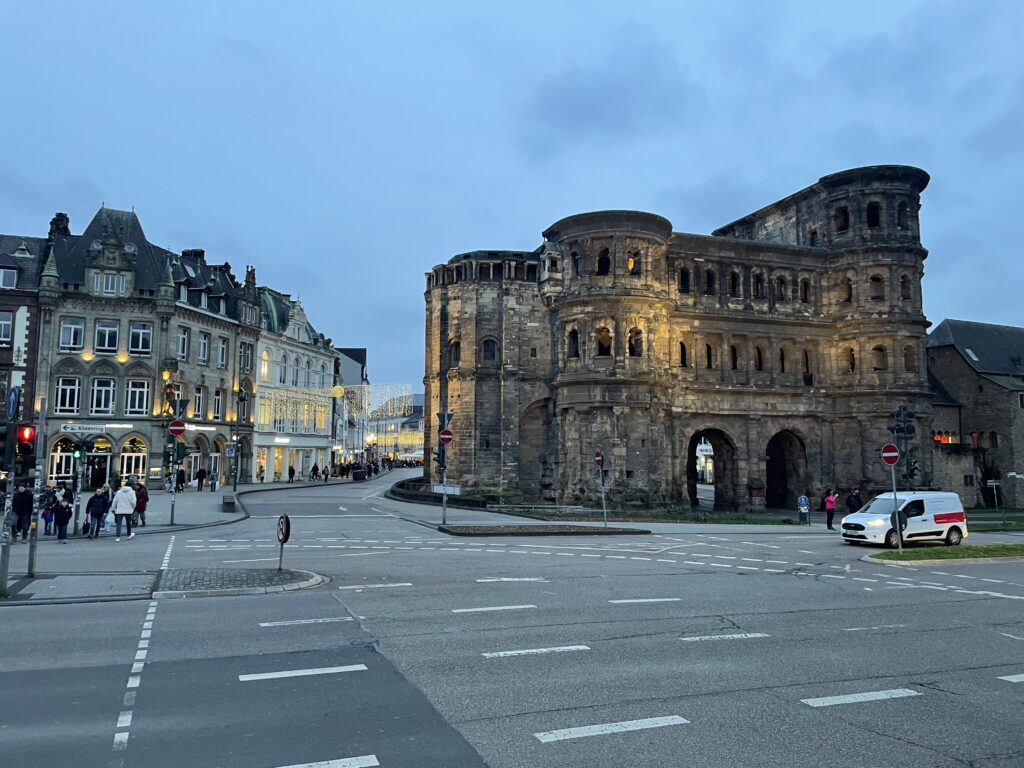
Arriving into Trier, Germany’s oldest city, at its ancient Roman Porta Nigra (“Black Gate” in Latin) with Christmas market behind.
Perhaps I am guilty of a little over romanticising this Proustian backdrop to the Cold War 1980’s Germany I once knew and had always loved as a boy. But, as my foot-based odyssey progressed, it became ever harder to recognise the Germany of my boyhood and youth. Mass immigration and other political factors had changed the face of western Europe, and the old Germany I had known growing up was now lost. I witnessed it as my walking poles click-clacked past boarded up shop fronts, graffiti-scoured villages, endless shisha or argileh cafés, halal markets and butchers, and towns and cities that no longer seemed recognizably European.
Look out of a window if you want to know what is going on, as Aristotle (basically) put it. I got to speak to endless ordinary people encountered on the trail, outside old castles, in campsites, monasteries and churches, in cafes, bakeries and, of course, in the final bastion of free debate that our leaders seem so indifferent about supporting: bars and pubs, the best and most traditional ones in Germany being known as kneipes.
“The city is dying,” I was told by a man after I had finally found a kneipe in the German city of Worms. One of the oldest cities in northern Europe, famous for its 1521 “Edict of Worms” in which Martin Luther was declared a heretic, I hadn’t expected that finding a bar in the city centre would prove so taxing as I criss-crossed streets and alleyways only to find shisha bars, betting shops, bland cocktail lounges reminiscent of a bad night in Dubai and endless Turkish-style barbers.
The man told me that various of those shisha bars had once been regular pubs as part of a bustling scene in the 1990s. But now, he added, Turkish and Muslim culture was becoming dominant. This was no “right-winger” speaking, mind you – he said he couldn’t bear Alternative für Deutschland (AfD), the right-wing German political party whose anti-immigration stance has seen its continuing rise in the polls defy all the panicking establishment’s efforts to stop it. But while he disliked the AfD’s leveraging of the issue, he couldn’t deny what was happening in front of his eyes across the decades.
“The old Germany I had known was now lost. I witnessed it as my walking poles click-clacked past boarded up shop fronts, graffiti-scoured villages, endless shisha or argileh cafés, halal markets and butchers, and towns and cities that no longer seemed recognizably European”
A moment of realisation about the scale of change was when I reached the city of Hanau, birthplace of the Brothers Grimm who gave the world their fairy tales such as Rotkäppchen – Little Red Riding Hood – Rapunzel, Hänsel und Gretel. In the city’s central square stands a bronze statue of the two brothers in long dress coats looking over one of the manuscripts in which they put down their enchanting tales drawn from Germanic folklore, culture and history.
Less Germanic, though, were the streets leading off from the square, which were full of endless kebab shops, fast-food takeaways, restaurants and grocery stores, most of them displaying signs that food is “halal” (compliant with Islamic dietary laws). As a veteran of Iraq and Afghanistan, I couldn’t help but be struck by all this – especially the presence of the Afghan Starway restaurant and the Kabul Central supermarket – as well as by all the As-Salaam-Alaikum greetings and the preponderance of Arabic spoken.
It begged the question of what to do as cities once emblematic of “German-ness” and its history morph into oases of imported Islam? Was I wrong to even ask that question, as many people don’t seem willing to ask it at all? Similarly, is there a “right” or “wrong” course of action, or is there no course of action to take? Cultures simply change and you go with the flow, as I was calmly told by a young German man sitting across the aisle from me on a train back to Berlin for an extended “pitstop”.
“As I looked out, it was hard not to wonder if the translation of the Finisterre name now holds an ominous relevance for the European continent in the 21st century”
I suggested to the young man that while he might not have a problem now with women donning the hijab or niqab – and that I agreed he was right, in principle, not to discriminate and to not have a problem with it – nevertheless, he might feel differently, and that “non-problem” could look more problematic, if a time comes when 60 per cent or higher of German women are dressed in that way, and a similar proportion of German men look and dress markedly differently to him.
Sitting next to his devoted Ukrainian girlfriend – Germany has given refuge to more than a million Ukrainians – he didn’t seem convinced by my point, but at least we were calmly talking about the issue, respectful of the person in opposition, which too often seems impossible to achieve for many. Our conversation occasionally drew interjections from the hulking shaven-headed man sitting on my right. A self-confessed former football hooligan, he swigged from a bottle of vodka stashed in his bag that also contained all the medication he was on after being injured in Afghanistan, where he did a tour with Germany’s Bundeswehr armed forces.
The verdict he gave me on the present state of West Berlin was that it is now “totally f**ked”, citing the prevalence of violent crime and gang culture. He explained that fights are no longer settled with fists – as in the good old days – but with knives and worse, meaning a person often won’t walk away from the melee alive.
“Deed, deed, deed,” he said in his best tipsy effort at English as he scrolled through his phone and showed me images of his friends that were no longer alive. It wasn’t clear if some were killed in Afghanistan, but given the small presence of the German military during that operation and the fact none of the men in the photos were in uniform, it appeared more likely that the changing face of West Berlin had taken a greater toll on his friendship circle.
“In Berlin, fights are no longer settled with fists – as in the good old days – but with knives and worse, meaning a person often won’t walk away from the melee alive”
When I crossed into France, under a cloudy December sky, the situation remained equally dire due to another facet of globalisation that has chipped away at much of Europe’s identity. The region of northeastern France I passed through during my first couple of weeks after leaving Germany had already suffered from being on the front line of two World Wars. But it’s also more recently been let down by political elites in Paris and Brussels who have, as described by the provocative French writer Michel Houellebecq in his novels, laid waste to local farming through a combination of their mindsets and policies favouring globalist trade and markets (Houellebecq earned a degree in agricultural engineering, also known as agronomy, before becoming a writer).
Hence all the posters I saw on village billboards showing a bare breasted Marianne again leading the Storming of the Bastille beneath the title “FREXIT”. It was easy to see why such BREXIT-related sentiments abound and why locals are not happy. In village after village, it was the same: no pubs, no cafes, no communal life – just residential houses, with the occasional dilapidated building displaying a faded “Café” sign, or “Stella Artois” logo. You also couldn’t miss the number of A Vendre (For sale) signs. I thought to myself: This is what the slow version of civilisational collapse looks like.
Published in 1973, Jean Raspail’s novel The Camp of the Saints offers a dystopian rendition of French society imploding after a migrant fleet one million strong is allowed to make landfall and continue into the country unimpeded. Condemned by some as a racist screed, the novel is praised by others as prophesying the mass migrations of today. In the preface to the 2011 edition of his controversial novel, defending its essential premise Raspail notes an observation made by the French opinion columnist Ivan Riouful in 2004:
“One fine day, our glorious leaders – with a shove, it is true, from the fait accompli of out-of-control and permanently established immigration – decided that the French Republic would henceforth be officially mixed-race and multiethnic. A not insignificant detail: no one was ever informed, much less consulted, about this sudden chance of identity… ”
I crossed the French-Spanish border at the so-called Somport crossing in the Pyrenees in late March 2026.Spain, by contrast, still feels and looks “Spanish”. It doesn’t have the same scale of migration-related issues as Germany and France. The majority of Spanish cities and towns I encountered typically exuded a healthy amount of economic and social hustle and bustle – and a majority of Spaniards. That said, shortly before I finished my journey, Spain’s government in April approved plans to give legal status to 500,000 undocumented migrants in the country. In the end, more than one million undocumented migrants in Spain applied for the scheme.
The BBC notes that according to the economic- and social research-focused Spanish think tank Funcas, the vast majority of undocumented migrants being granted legal asylum in Spain are from Latin America (Funcas had estimated the number of Spain’s undocumented migrants around 840,000). When I passed Spanish reception centres receiving undocumented migrant applicants, I saw young men arriving who looked to be from Africa. And now we have had the “mass swim” of over 50,000 young men from Morocco; it seems unlikely that the Spanish government’s amnesty was not a factor in their calculations.
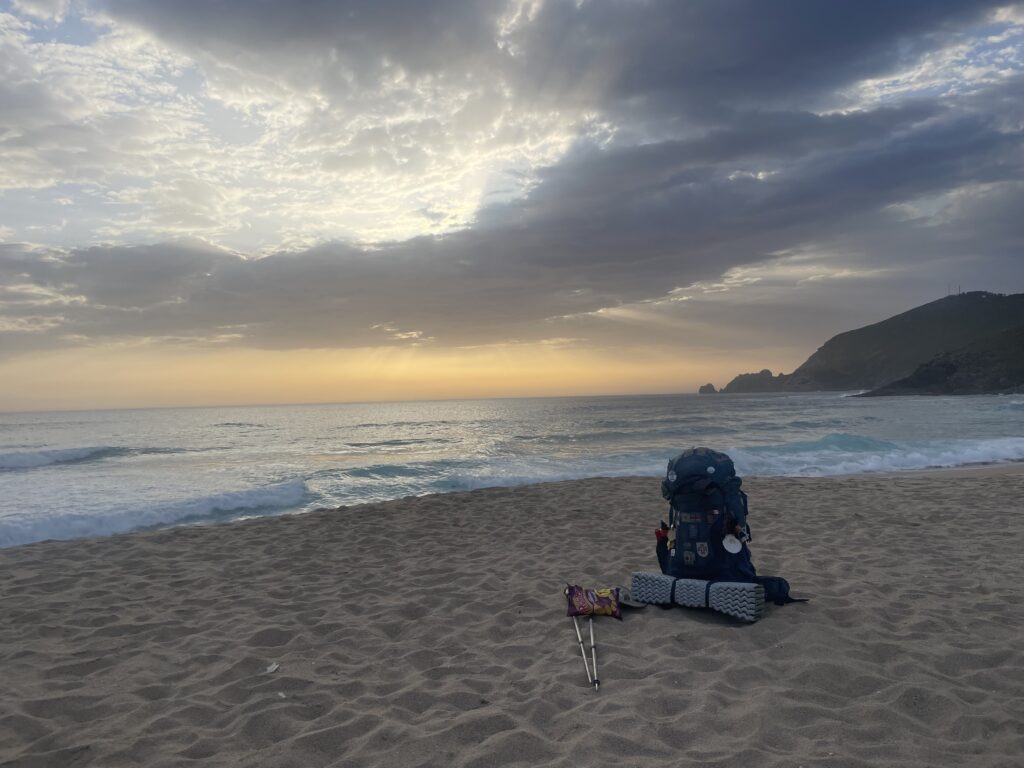
My trek across Europe finally ended at the peninsular of Finisterre, Spain’s furthest-most western point, on 23 May 2026, a few days after reaching Santiago de Compostela. The name of this far-flung corner of Europe, derived from Latin, translates as “World’s End”/“End of the Earth” (finis = end, terre = earth) and in ancient times it was indeed viewed as the literal end of the known world. Today the name has a quixotic pull for those who come to it, such as pilgrims like myself who continue on to the coast after reaching Santiago de Compostela. But that quixotic sense palled for me when looking westward to watch Finisterre’s famous sunset afforded at its Mar de Fóra beach.
Finisterre’s sunset beach – the rocks on the right are said to look like the helmet of a sleeping Roman centurion.
Sitting on that remote beach on my final day, facing the ocean at the setting sun, I thought back on all that I had seen and experienced during my travels (over 10 months in total with a few breaks). As I looked out, it was hard not to wonder if the translation of the Finisterre name now holds an ominous relevance for the European continent in the 21st century; and if the sun – which I had raced to catch each evening for so many winter months – could be setting on far more than we realise, or many wish to admit.
James Jeffrey is a former British Army officer who writes for The Spectator and Daily Telegraph. He is also a Camino de Santiago guide.
Charlie Bean warns that Rachel Reeves’s sub‑£10 billion fiscal buffer is dangerously lean compared with the £30 billion norm. He argues that such tightness forces constant adjustments and leaves no room
Rachel Reeves is considering diluting Labour’s proposed inheritance tax reforms for non-doms after a rise in wealthy individuals leaving the UK. More than 4,400 directors have resigned in
Sir James Dyson has criticised Labour’s tax and National Insurance increases, warning they could stifle innovation and deter investment. The measures, part of Chancellor Rachel Reeves’s 2025 Spending
Rachel Reeves’ first spending review sets out Labour’s fiscal priorities, committing new funds to defence, the NHS and infrastructure projects like nuclear energy and housing. Despite limited headroom
The FTSE 100 ended Tuesday at 8,254.18, narrowly missing its all-time closing high. Mining stocks and a weaker pound lifted the index, while cautious investor sentiment and upcoming
Labour has cancelled a high-priced corporate conference due to weak demand from executives and lobbyists. The £5,000-per-head event faced criticism over costs and limited ministerial access. It follows
A U.S. federal court has struck down President Trump’s global tariffs, ruling they exceed the limits of the International Emergency Economic Powers Act. The administration has appealed, insisting
Reform UK has proposed raising the personal tax allowance to £20,000, a policy expected to cost up to £80 billion. The party plans to fund it by scrapping
Renatus Tactical Acquisition Corp I marked its Nasdaq debut on 23 May 2025 following a $241.5 million IPO. Led by former DWAC executives, the SPAC targets blockchain, security,
The UK economy grew 0.7% in Q1 2025, the fastest among G7 nations, offering a political lift to the Labour government. The Bank of England upgraded its annual