PM’s right hand man criticises government comms operation

Mace | 17th January 2026 | Politics
10-downing-street-AS

A senior aide close to the prime minister has publicly criticised the government’s communications operation, highlighting internal tensions over press briefings, transparency and efforts to modernise how Downing Street engages with media and the public.

The government’s communications operation has been publicly criticised by a senior ministerial aide who also plays a central role in overseeing that work, in a rare confrontation over how Downing Street manages its messaging and engagement with the media and public. Critics inside Westminster and within government have suggested the current arrangements are outdated and fail to connect effectively with journalists and broader audiences. The intervention from a senior figure aligned with the prime minister came amid wider scrutiny of the government’s strategic communications, including the removal of daily press briefings and restructuring of how officials speak to the political press corps. Changes to the briefings system announced late last year have been contentious, with some journalists and commentators warning that reduced opportunities for direct questions undermine transparency. Downing Street has signalled its intention to hold more formal news conferences involving ministers and the prime minister as part of a shake up aimed at improving how announcements reach the public and media. The reforms included extending access beyond traditional accredited political journalists to other media creators, in part to modernise the process. The criticism from the senior aide was notable because it came from within the team that is meant to shape and defend the government’s messaging. The intervention highlighted concerns that the existing communications operation was still functioning like that of a previous era, despite the government’s pledge to modernise its engagement and narrative control. The government’s communications operation is guided by propriety and ethics standards that require objective explanation of government policy and avoidance of biased or polemical content, with the Government Communication Service tasked with ensuring those principles are upheld across departments. Labour MPs have also raised concerns about how government communications functions, particularly around decisions on where and how messages are published and the platforms used by ministers and officials. The process for reviewing the use of social media platforms has been described as informal and lacking direct ministerial oversight, prompting calls for greater political accountability. The ongoing review by the Government Communication Service into the government’s use of platforms such as X reflects broader unease over how official communications balance reach, safety and political accountability, with some MPs urging ministers to take a more active role. Concerns over government communications are not new in Westminster, but public criticism from a senior aide to the prime minister has highlighted internal tensions. Previous changes in Downing Street’s communications leadership, including turnover in senior roles, have added to perceptions of instability in messaging strategy. Observers of government communications note that the role of Downing Street’s communications leadership has historically been central to shaping how the government presents itself, and that changes in personnel and structure can have significant effects on coherence and consistency. In recent years, the communications team has been reshaped multiple times to reflect changing government priorities and approaches, but the critique from within suggests questions remain about whether current practices are sufficiently responsive to the expectations of reporters, civil society and the public. Political reporters have continued to raise questions about transparency and access, especially after alterations to daily briefing formats and the introduction of new mechanisms for engagement. Some lobby correspondents have expressed scepticism that the new system will deliver the same level of accountability. The government maintains that reforms are designed to improve efficiency and broaden access, but the senior aide’s remarks underline the difficulties of managing communication in an era of rapid technological change and media fragmentation. Any public sign of strain between the prime minister’s inner circle and the communications apparatus adds to perceptions of a broader challenge in maintaining a coherent narrative on policy and governance, especially as ministers face scrutiny over policy outcomes and public engagement. The debate over government communications comes as the prime minister’s office adapts its approach in response to shifting political landscapes, media consumption habits and pressure from both inside and outside Parliament for more direct engagement and accountability. For many observers, the senior aide’s public critique will be seen as part of a wider discussion in Westminster about how modern governments should communicate with both the public and news media in a way that is transparent, timely and aligned with democratic norms....

Subscribe to The Mace

Join the member community shaping British politics and stay ahead of what's really happening in the world of politics and public affairs, with expert analysis, breaking news, and insider insights from Westminster and Brussels. The Mace is the leading news source and resource for the government affairs industry, offering required reading and lobby intelligence for professionals.

To see what you are missing out on by not subscribing to The Mace, click here to download our full membership info-pack. This includes having no paywall on op-ed content or profiles/interviews, allowing professional profiles to be read with maximum impact and visibility by government, special advisers, MPs, peers, civil servants, and policy and political decision-makers.

Put the Donald in the Dock, says Anthony Scaramucci

Anthony Scaramucci | November 25, 2020

In 60 days, America should prosecute the outgoing president for the atrocities of his time in office, argues Anthony Scaramucci (Trump’s former head of communications), Alan Blotcky and

The End of ‘Domocracy’ at No 10

Peter Cardwell | November 15, 2020

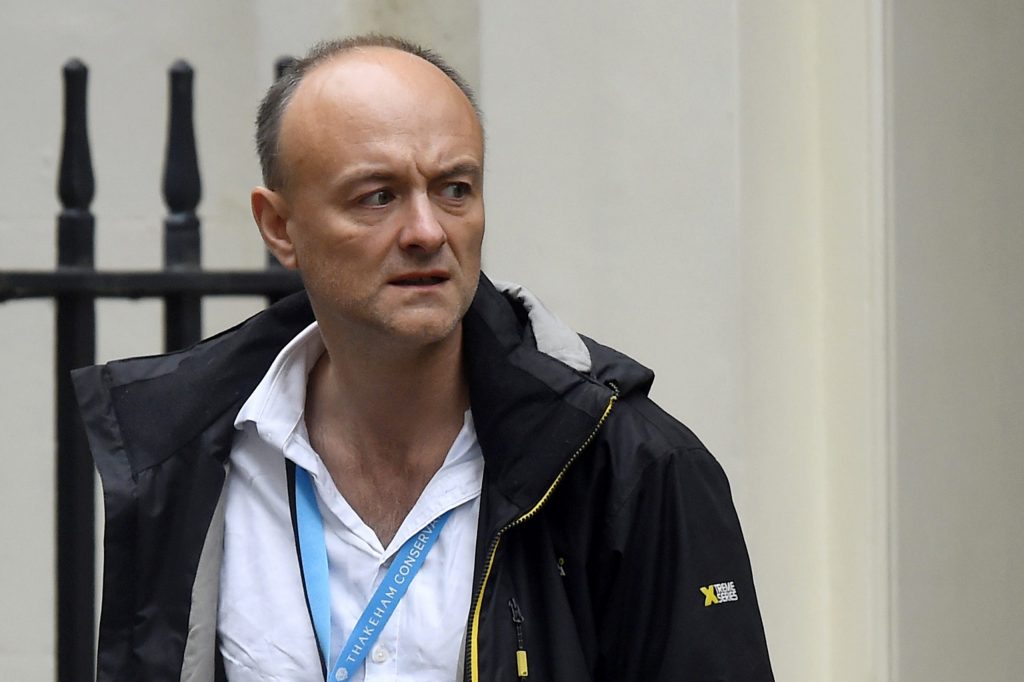
Dominic Cummings's departure from Downing Street gives Boris Johnson the chance to reshuffle his team on more democratic lines, says former SpAd Peter Cardwell
Dominic Cummings Special

The Cummings Legacy Is Not What The Pundits Think

William Cash | November 14, 2020

As Dominic Cummings leaves Downing Street for the last time, William Cash notes that his legacy will extend far beyond his own disruption of Whitehall

Dominic Cummings Special

The 2017 Campaign Exposed the Real Theresa May

Benjamin Goodwin | October 8, 2020

May at 10, by Sir Anthony Seldon, reviewed by Benjamin Goodwin

Has Covid killed the party conference?

Marie Le Conte | October 6, 2020

Marie Le Conte

The Cummings Revolution – help or hindrance?

Ed Amory | October 6, 2020

Ed Amory

Recline and sprawl

Adam Solomons | January 16, 2020

Jacob Rees-Mogg’s languid pose on the Treasury bench launched a thousand memes on social media. Five observers interpret his body language for us.

Inside the Cummings Revolution

Adam Solomons | January 16, 2020

How much can Whitehall’s antiquated government offices learn from the Palo Alto tech giants?

Dominic Cummings Special

The Jackdaw: Staffers Had It Hardest

Marie Le Conte | January 16, 2020

Over the last year we’ve seen dozens of MPs switch parties or go independent. But how does such an unexpected move affect their hard-working staff?

Diary: Harry Potter Politics with Damian Collins

Damian Collins MP | January 15, 2020

Damian Collins remembers his election victory and rejoices at the new Commons term