The APPG for One Punch Assaults should tread lightly

Bill Bowkett | 22nd March 2021 | Uncategorised
Dehenna Davison MP: official parliamentary portrait (CC BY 3.0)

Mandatory minimum sentencing is an unwise aspect of considerations made by the MPs’ lobby group led by Dehenna Davison, argues Bill Bowkett

Mandatory minimum sentencing is an unwise aspect of considerations made by the MPs’ lobby group led by Dehenna Davison Let me paint a picture of a typical Friday night (remember those?). You’re having a swift one at the pub when suddenly a pal of yours confronts a drunkard customer. What started as a petty argument between pub-goers ends up being a reckless brawl. After a police assessment, your friend is found to have committed an assault occasioning Actual Bodily Harm (ABH). A court is summoned, and the defendant is found guilty. The penalty? A fine or community service? Under worrying proposals being weighed in Westminster, it could put them behind bars for years or a decade. The APPG for One Punch Assaults – launched in February by Conservative Dehenna Davison – had its first evidence session this month to examine the current law. The Bishop Auckland MP has pulled together an impressive array of supporters including the Office of the Durham Police, Crime and Victims’ Commissioner. And last week, Davison featured in the Evening Chronicle alongside victims calling for the law to be “toughened up” in the form of ‘mandatory minimum sentencing’. Davison told me: “I've had criminal barristers get in touch to offer their input. Minimum sentencing is something that we will be looking into as part of our inquiry. [They] go down the deterrent route, which I think is an important factor.”  I understand the rationale – the right to live free from violence is a basic human right. But the idea of a one-punch law is widely misplaced. Let’s start with the suggestion that mandatory sentences act as a deterrent: people would think twice about swinging their fists, knowing it could put them in the slammer. In reality, this does not work. The uptake of minimum penalties across Australia did little to improve community safety. The threat of longer imprisonments does not deter convicts from a criminal lifestyle either. As law and order have become tougher in Britain, reoffending has remained worryingly high, so a one-punch law would add little value. Every law has unintended consequences, and one-punch legislation would be no exception. It is a recipe – rather than a cure – for injustices because the groups which  would be most affected are minorities. The Race Disparity Audit, launched by Theresa May in 2017, revealed that black and mixed race people were most likely to be both victims and suspects of crime. It  would also increase the prison population at a time when prisons are already overcrowded, as the Public Accounts Committee reported last year. I also question why this policy is even being tabled, because such attacks are extremely rare. Data from the Office for National Statistics show that intoxicated violence has declined in England: from 55% of all violent instances in 2009/10 to 39% in 2015/16. Even the most serious cases are hard to come by, with One Punch Can Kill recording less than 80 fatalities since 2007. I have sympathy for those affected, but it is not the mandate  of a single piece of legislation to constitute what is and isn’t right. That power should be left to our judges to act proportionally, as was seen this month when a man who knocked his victim out in a one-punch attack in Belfast city centre was jailed for five months. I do not wish to undermine Davison and her colleagues because, as she rightly points out, there are other issues beyond bills. She said: “[These ] are going to be down to education. Some of that's going to be down to rehabilitation and making sure that anyone who is involved in violence and ends up in prison has the best chance of getting away from that violent path and rebuilding their lives in a positive light.”  Ultimately, my faith lies in our judiciary to dispense justice. Because despite its positive intentions, a one-punch law in the UK would inflict far more harm to society than good....

Subscribe to The Mace

Join the member community shaping British politics and stay ahead of what's really happening in the world of politics and public affairs, with expert analysis, breaking news, and insider insights from Westminster and Brussels. The Mace is the leading news source and resource for the government affairs industry, offering required reading and lobby intelligence for professionals.

To see what you are missing out on by not subscribing to The Mace, click here to download our full membership info-pack. This includes having no paywall on op-ed content or profiles/interviews, allowing professional profiles to be read with maximum impact and visibility by government, special advisers, MPs, peers, civil servants, and policy and political decision-makers.

EU Forces Meta to Reshape Ads Policy After 200 Million Euro Fine

Mace | December 10, 2025

Meta agrees to overhaul its EU ad model, offering clearer data-sharing choices for users after regulators ruled its previous system breached competition rules.

EU Governments Agree Common Position on New Asylum and Migrant Return Rules

Mace | December 10, 2025

EU states back new asylum and return measures, including safe-country rules and a solidarity pool, ahead

MACE Marks Five Years with Westminster Celebration

Mace | December 4, 2025

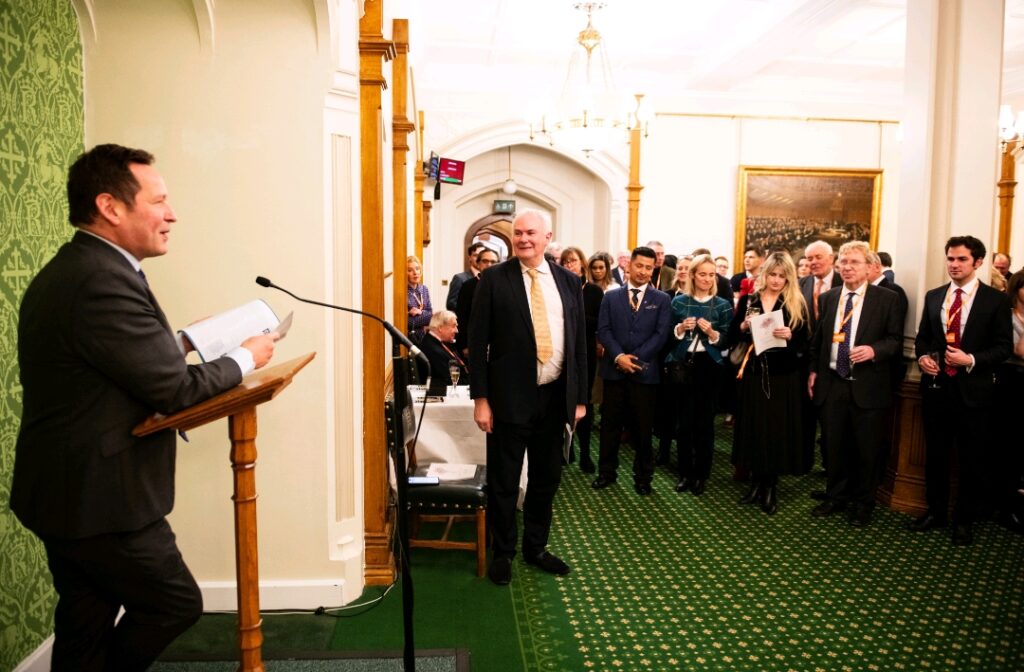
MACE marked its 5th anniversary with a high-profile Commons reception of politicians, diplomats, media figures and lobbyists, launching its influencers report
Scathing criticism

Christopher Silvester | December 3, 2025

From self-lacerating memoir to by-election madness and a Labour Together takedown, The Mace’s literary editor Christopher Silvester rounds up the latest political books.
Telling a human tale

Christopher Silvester | December 3, 2025

From self-lacerating memoir to by-election madness and a Labour Together takedown, The Mace’s literary editor Christopher Silvester rounds up the latest political books.

Ex-deputy chair among Tory defections to Reform

Mace | November 30, 2025

Three former Conservative MPs, including ex-deputy chair Jonathan Gullis, defect to Reform UK as the party capitalises on Tory unrest and declining support.

UK–EU Defence Fund Talks Collapse Over Entry Fee Standoff

Mace | November 30, 2025

Talks between London and Brussels collapsed after the EU demanded a high entry fee for SAFE, leaving the UK limited to third-country participation.

Government to Ban Asylum Seekers from Taxi Services

Thomas Edwards | November 30, 2025

The government plans to end most taxi travel for asylum seekers attending medical appointments, replacing it with public transport and tightening Home Office oversight.

Yermak’s Resignation Sends Shockwaves Through Kyiv and Europe

Mace | November 29, 2025

The resignation of Andriy Yermak after anti-corruption raids disrupts Ukraine’s leadership and triggers uncertainty across Europe during a critical phase of the war.

Autumn Budget 2025: family finances squeezed, welfare rules eased

Mace | November 29, 2025

After weeks of tax rumour and expectation-setting, the 26 November Budget landed as a welfare-first package that lifts the benefits cap but tightens the screw on household incomes,