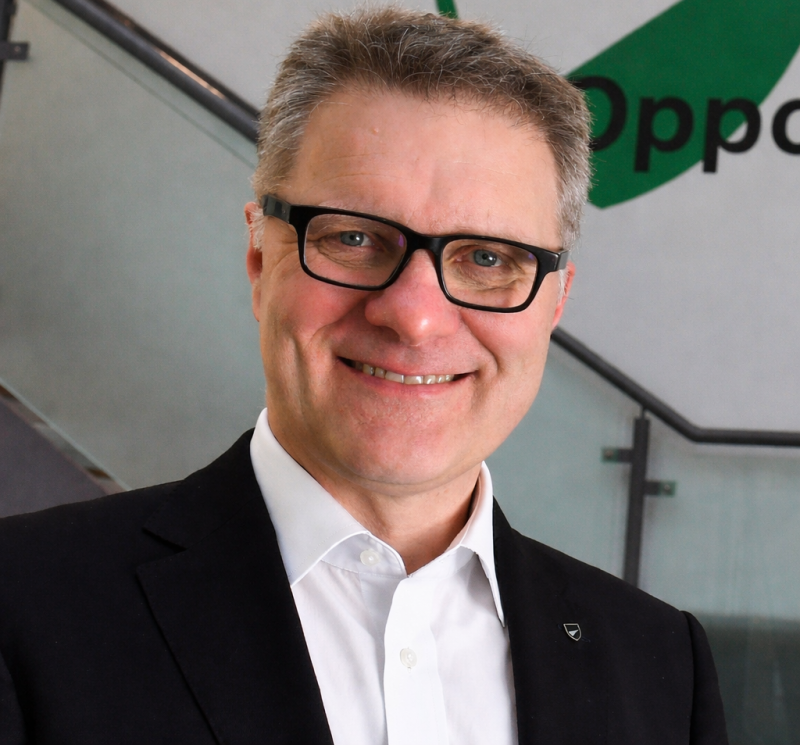
Leutert's career has included moments close to politics, including time as a speechwriter, but he concluded that he can have more impact behind the scenes.
“Collaboration between the private sector and public bodies is mutually beneficial,” says Markus Leutert. It is a principle formed early in his career, working on an International Telecommunication Union project on electronic commerce for developing countries — an introduction to multilateral institutions and the realities of complex stakeholder management.
That early exposure has shaped a career defined by operating across borders, sectors and regulatory systems. Today, as VP Corporate Affairs at PerkinElmer, he works in life sciences and technology — areas where policy, innovation and global regulation are tightly interwoven.
His current focus reflects the breadth of those challenges. “AI… the EU AI Act… Life Sciences and the EU Biotech Act… Sustainability: CSRD/ESRS mandates,” he lists, pointing to a regulatory environment that is both expanding and fragmenting. For multinational organisations, the issue is not just compliance but coherence — navigating “global inconsistencies across various national frameworks.”
That complexity underpins his view of in-house public affairs. “Better understanding of the business operations and strategy, and linking it to regulatory impact,” he says, is the central appeal. It is a role that requires translating between technical, commercial and policy worlds — and ensuring that regulatory developments are understood not in isolation, but in the context of the business.
That emphasis on outcomes is particularly important in a global organisation. He points to work in China as an example, a form of advocacy that is both technical and commercially significant, even if it remains largely unseen.
His leadership philosophy draws on a familiar but still relevant insight. “A plan is nothing, planning is everything,” he says, quoting Eisenhower. In practice, that means building teams that are adaptable and capable of operating in fast-changing environments. “You need… a team that can adopt agile methodologies and feels empowered to bring new and innovative ideas.”
That focus on adaptability is particularly important in sectors where regulatory change is constant and often unpredictable.
He is also direct about the need for reform within the industry. “More transparency… a better, more virtuous partnership between private and public sectors,” he says, supporting efforts to strengthen accountability and trust. It reflects a broader recognition that public affairs, as a profession, operates within a wider debate about legitimacy and influence.
His own career has included moments close to politics, including time as a speechwriter. But he has chosen to remain outside elected life. “Politics have become too populist, polarised, and abrasive,” he says, concluding that he can have “more impact behind the scenes.”
Quick-fire Q&A
How did you start in public affairs?
“An ITU project…”
What policy issues keep you up at night?
“AI… the EU AI Act… Life Sciences and the EU Biotech Act… Sustainability mandates.”
What’s the appeal of in-house advocacy?
“Better understanding of the business operations and strategy, and linking it to regulatory impact.”
Best piece of advice?
“Focus on outcomes, rather than outputs… under promise, over deliver… if you can’t measure it, it’s a poorly defined objective.”
View on AI?
“AI has helped with predictive intelligence… accelerated analysis… better reporting of what matters.”
Recent campaign work?
“Influencing and successfully obtaining changes to import modalities… critical to our global production footprint.”
Leadership philosophy?
“A plan is nothing, planning is everything.”
What do people get wrong about public affairs?
“That lobbyists are unethical influence peddlers.”
How do you unwind?
“Yoga, piano improvisation, theatre.”
Favourite TV?
“The Americans… Yellowstone.”
Ever considered politics?
“Yes… but I’d have more impact behind the scenes.”