Industry on notice- is the golden age of lobbying over?
William Cash | 28th February 2026 | Comment, Lobbying, Politics
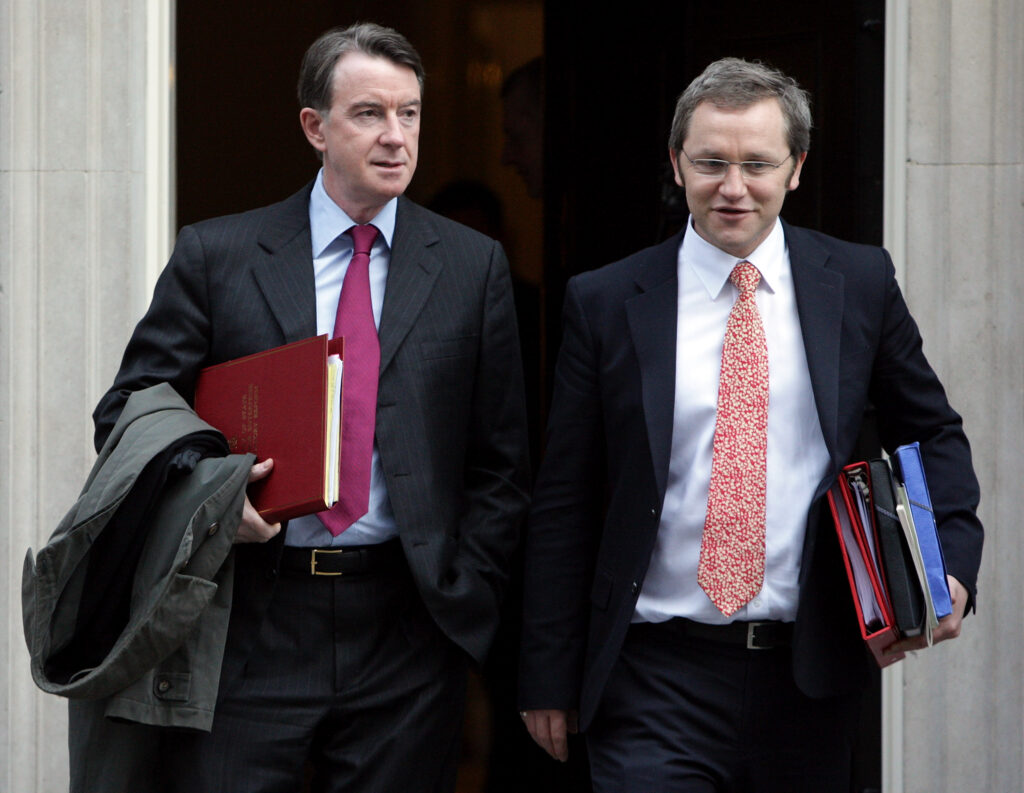
Photo by FPG/Hulton Archive/Getty Images)
William Cash asks: Will the Mandelson scandal result in real lobbying reform?
The fall out over Global Counsel's collapse has been seen as an ' end of an era' watershed for the lobbying industry. Various post-mortems have been offered - not least by GC's former managing editor Ben Brogan on LinkedIn - as to why Global Counsel sunk so quickly, like a corporate advisory Titanic. When Rebecca Park was first appointed as the new CEO on February 6th, chairman Archie Norman made a statement suggesting that he thought the 16 year old firm could shore up its client base and survive.
After all, the firm had been surpassing commercial expectations under Ben Wegg-Prosser and was expanding. But that turned out to be wishful thinking and it folded in what Politico called a week of 'dramatic and sudden disintegration' to leave around 100 employees in London, Brussels and Washington looking for new jobs.
When Rebecca Park was appointed on February 6th, a statement by Archie Norman tried to put a final line under the matter of his shares by saying his stake would be divested that very same day (with Rebecca Park and others presumably taking up the shares). But for a firm that is meant to be expert at reputation management, it seems extraordinary that it took so long for the firm to get rid of Mandelson's significant shareholding. As a result, the fervent claims by GC staff that Mandelson had nothing to do with the first failed on an optical level.
This 'optics failure' was also part of the reason Keir Starmer's head of Downing Street communications, Tim Allan, founder of Portland Communications, stepping down from his role after less than six months. Again this exist offers a cautionary tale about why lobbyists and the industry as a whole have been put on notice.
When Allan was appointed by Starmer, he still owned shares in Strand Partners, the new political lobbying company he set up, after selling his majority stake in Portland to US giant Omnicom for a reported £20 million in 2012.
This will have come as little surprise to observers of the Westminster political village. The truth, as former PM Gordon Brown set out in his recent Guardian op-ed article on government corruption, is that the lines between money, power and political access remain as blurred as they did when David Cameron infamously said - before he was PM - that the buying of political influence was the 'next big scandal waiting to happen', and vowed to fix Westminster’s lobbying loophole problem.
These words came to haunt him. After leaving office, Cameron became embroiled in a lobbying scandal involving Greensill Capital, a company that paid him very well to send embarrassing texts to former colleagues – as well as requests for games of tennis – in the hope of getting the likes of Rishi Sunak to do the bidding of his financial masters. He only got off – with his reputation tarnished before being rehabilitated in the Lords as Foreign Secretary – through a technical loophole because as an employee he was not subject to the rules required of professional lobbyists.
The recent Apco Worldwide affair has done little to suggest that anything has changed in six years. The revelation that the Labour think tank Labour Together employed the American advocacy firm to investigate two Sunday Times journalists after the paper exposed how the think tank had failed to declare £720k in donations gives only a glimpse of how murky the world of lobbying has become. Kate Forrester, a former Labour member of staff, turns out to have been a director of the US firm as well.
The mood in Westminster village suggests that some industry reforms are now inevitable. How effective they will be is another matter. Labour grandees have turned on their former colleagues. After the latest Epstein files were released, Brown savaged his former colleague by saying that his 'activities' do not only show his betrayal and duplicity. They also 'force us to examine how easy it is in our country to trade secrets – for wealth to gain access to power, how backdoor routes to decision-makers can be covered up, how lobbying for financial gain can circumvent well-meaning but insipid rules and how our laws seem to have failed to catch up with corruption'.
The former PM added, in what has been seen by some as a damning verdict on the lobby and public affairs industry: 'The case is now unanswerable for comprehensive and immediate action to clean up our politics with new rules for politicians and public servants, as well as powerful new institutions and checks to enforce them'.
The industry's reaction to the Mandelson saga has been damning. Alastair McCapra, chief executive of the trade body CIPR, told PRWeek: “The Mandelson revelations should be a watershed moment but we’ve been here before.”
“Mandelson’s case is unique in scale and influence but the underlying problem is a familiar one: our lobbying laws are designed to fail while the public’s view of the relationship between business and politics is a blurred and undemocratic one. Repeated scandals only deepen that mis...
Subscribe to The Mace
Join the member community shaping British politics and stay ahead of
what's really happening in the world of politics and public affairs,
with expert analysis, breaking news, and insider insights from
Westminster and Brussels. The Mace is the leading news source and
resource for the government affairs industry, offering required
reading and lobby intelligence for professionals.
To see what you are missing out on by not subscribing to The Mace, click here to download our full membership info-pack. This includes
having no paywall on op-ed content or profiles/interviews, allowing
professional profiles to be read with maximum impact and visibility by
government, special advisers, MPs, peers, civil servants, and policy
and political decision-makers.
Bombshell evidence reveals Burnham’s soon-to-be Chief of Staff ran a lobbying firm that hosted a multitude of undisclosed meetings with Labour officials.
After Andy Burnham's first major speech since the resignation, devolution has been the word on everyone's lips - Gill Morris explains why it's the way forward.
Introducing the inaugural Conservative Political Action Conference (CPAC) on British soil, a landmark expansion of the world's premier conservative networking brand.
Flint Global CEO James Purnell's expected appointment as Andy Burnham's chief of staff is just the latest Westminster merry-go-round job move from Public Affairs back into Downing Street.