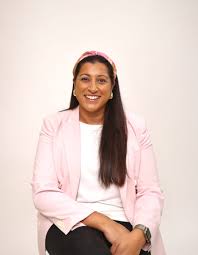
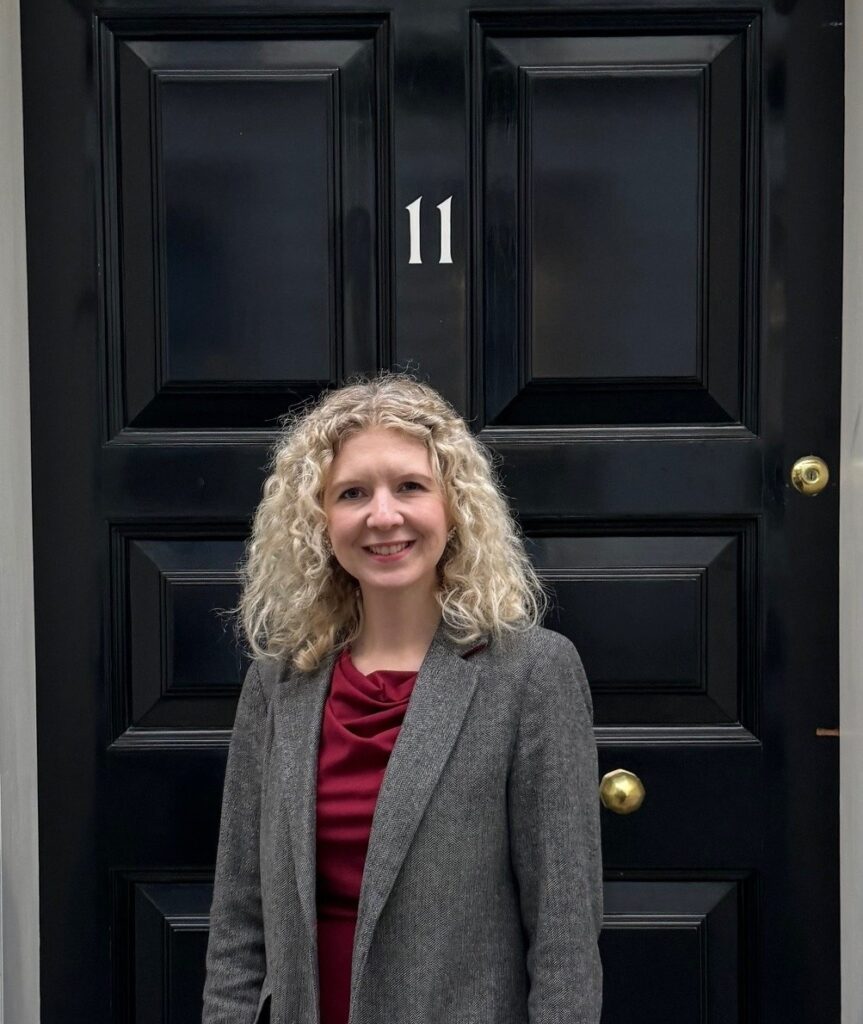
Joe Chapman, head of public affairs at the Manchester Airport Group, reveals his support for reform in the public affairs industry and why he loves being a leading in-house advocate in the aviation sector.
“I started pretty much just after Lehman Brothers went down,” says Joe Chapman — “a bit of a baptism of fire into working life.” His entry into public affairs came via Dods Monitoring, at a moment when politics, markets and policy were colliding in real time.
That early exposure to volatility has carried through into a career spent working in-house for major businesses, including Tesco and Sainsbury’s, before moving to Manchester Airports Group (MAG). “I’ve always enjoyed in-house,” he says. “I love being an advocate for a particular business and working with internal subject matter experts to craft messages to government.”
That emphasis on advocacy — grounded in the detail of how businesses operate — is central to how he approaches the role. In sectors like aviation and retail, policy is rarely abstract. It is felt directly through costs, regulation and operational constraints. For Chapman, one issue stands out. “Business rates,” he says, succinctly — a reminder that some of the most important policy debates are also the most persistent.
His career has included moments of both intensity and impact. He points to work on the proposed Sainsbury’s–Asda merger as a formative experience. “Pretty intense,” he says, “I learned a lot.” More recently, he highlights securing “a bespoke package of Transitional Relief for airports during the recent Autumn Budget” — a tangible example of public affairs delivering a commercial outcome.
Campaigning work has followed a similar pattern: targeted, outcome-focused and rooted in operational need. He cites a campaign to restore rail connectivity to Stansted Airport. “We led a campaign to restore four trains per hour on the Stansted Express,” he says, after services were reduced during the pandemic. The success of that work, he notes, was a team effort, highlighting colleague Patrick Hall as “a rising star.”
His view of the profession is pragmatic. “Public affairs will always require human skill and interaction,” he says. While AI may improve areas like research, “the advocacy and relationship-building component will ensure people remain at the core.” It is a consistent theme across the profiles — but expressed here with particular clarity.
His expectations of agencies reflect that same focus on substance. “Deep political insight and… creative flair that can differentiate a campaign,” he says, are what matter. In a crowded field, originality and understanding are what separate effective work from the routine.
Influence, for Chapman, is also shaped by the people he has worked with. He cites Andy Brown — now at Arup — as a mentor. “Great interpersonal skills… knew how to get the best out of people… a first-class communicator,” he says. It is a description that offers insight into the kind of leadership he values: not just technical competence, but the ability to bring others with you.
That emphasis carries through into his own approach. He points to Stephen Covey’s The 7 Habits of Highly Effective People as a guiding framework. “A pretty good place to start,” he says — adding that he tries to read it “at least once a year.” The appeal is in its clarity and practicality — principles that can be applied consistently over time.
He is also broadly supportive of moves to reform the profession. “I welcome reforms and more transparency,” he says, arguing that public affairs is “a really important profession that we should be proud to be involved in.” In his view, its relevance is only increasing. “Given political and economic trends… I only see PA becoming more important and desired by businesses.”
Outside work, life is shaped by family. “I have two young children — I spend most of my spare time tidying up after them,” he says, a line that will resonate with many. His cultural references are more definitive. Gladiator, he says, is “in a league of its own,” while his musical choice reflects a broader outlook: “anything involving persistence… maybe the Rocky soundtrack.”
That idea of persistence runs through his career. From entering the profession during a financial crisis to navigating complex corporate and policy challenges, his path reflects a consistent focus on delivery — and on seeing issues through to outcome.
His view of public affairs itself is equally clear. “The notion that it’s all dark arts… is nonsense,” he says. While acknowledging negative perceptions, he argues that most practitioners are “highly professional and dedicated.” In a world where politics and policy are becoming more central to business decision-making, that role, he suggests, is only set to grow.
Quick-fire Q&A
How did you start in public affairs?
“I started… just after Lehman Brothers went down… a baptism of fire.”
What policy issue keeps you up at night?
“Business rates.”
What’s the appeal of in-house advocacy?
“Being an advocate for a business… working with experts to craft messages to government.”
Proudest achievement?
“Securing a bespoke package of Transitional Relief for airports.”
Best piece of advice?
(implicit via mentor) “Great interpersonal skills… getting the best out of people.”
View on AI?
“Research will benefit… but advocacy and relationships keep people at the core.”
Recent campaign work?
“Restoring four trains per hour on the Stansted Express.”
Advice for agencies?
“Deep political insight… and creative flair that differentiates a campaign.”
Leadership philosophy?
“7 Habits of Highly Effective People… I try to apply the lessons.”
What do people get wrong about public affairs?
“That it’s all dark arts… it’s a highly professional and dedicated industry.”
How do you unwind?
“Tidying up after my two young children.”
Favourite film?
“Gladiator.”
Song that sums up your approach?
“The Rocky soundtrack… persistence.”
Ever considered politics?
“I wouldn’t want to enter public office… but I love politics.”