Holiday tax will ruin the English Summer
Despite the new 5% VAT tax break for holiday attractions, tourism trade body leaders are speaking out about how government policies may not help the sector.


A worrying trend has emerged in the UK and the US, with AI-related lobbying growing at an exponential rate.
AI lobbying engagements with UK government ministers, Scottish government ministers and MSPs (Members of the Scottish Parliament) have risen from 42 in 2022 to almost 500 in 2025. According to current analysis by Transparency International, AI-related lobbying is due to increase 15-fold between January 2022 and the end of 2026.
In reality, the actual figure is almost certainly higher. Due to the opaque nature of UK lobbying rules, most of the industry’s lobbying activity never reaches the public record. Despite these meetings being mostly held behind closed doors, they are of immense public interest. This is because ministerial decisions about AI will shape policy spanning energy, employment, education and the environment, impacting every corner of British life.
Rachel Millward, Green Party Deputy Leader, said: “Labour is diving headfirst into AI without a roadmap, charmed by corporate lobbyists while community and green voices are shut out. We need to slam the brakes on new data centres before they drain our water supplies and wreck the UK’s carbon budget.
“When policy is written by corporations, decisions benefit shareholder profits rather than the public good. It’s a dangerous lack of oversight, proven by a recent FOI showing the government doesn’t even know what current data centres are being used for.”
Despite the increase in AI-related lobbying engagements, there is only a limited perspective being presented to ministers, leading to a skewed political awareness of AI, its merits and its inevitable risks. Of the 103 AI-related lobbying meetings with Scottish ministers and MSPs reported since 2022, almost two-thirds advocated for a greater use of AI or for expanding its infrastructure, such as data centres. Only 9% discussed the risks associated with the technology. This is because ministers are mostly hearing from those who stand to benefit from AI and therefore want to draw attention away from its risks. Without a wider range of views being presented to those in power, policy risks being underbaked and structured only to benefit the few, rather than serve wider society.
However, this data only presents part of the picture. In Westminster, the statutory register of lobbyists covers only those lobbying on behalf of paying clients. Therefore, ‘in-house’ lobbyists who are employed directly by businesses, trade unions or large charities are excluded altogether.
Furthermore, UK ministers are also under no obligation to report contact with lobbyists via WhatsApp, impromptu phone calls or email. In addition, special advisers are not required to declare their interactions with lobbyists at all.
In Scotland, the so-called ‘Zoom loophole’ means that a video call with a lobbyist must be declared, but the same call with the camera switched off need not be, leaving Scotland hugely out of step with other major democracies, including the US, Canada, Ireland and the rest of the UK.
However, the AI lobbying boom is not unique to the UK but is also increasing at a rapid rate in the US. In 2026, three of the nation’s leading artificial intelligence companies spent 23% more on federal lobbying over July, August and September compared to the second quarter of this year. OpenAI, Anthropic and Nvidia spent about $7.5 million combined on lobbying the federal government in the third quarter. Since the beginning of 2024, the companies have spent $37 million on federal lobbying. Increased spending came as AI and data centres faced monumental public criticism due to concerns over mass unemployment, environmental degradation and adverse social impacts.
“Elected officials in Congress and the president and his team are in an interesting position because all of the money is on the side of no regulation, no accountability,” said Brendan Steinhauser, CEO of the nonprofit Alliance for Secure AI Action.
These AI companies are “spending huge historic amounts of money on lobbying, PR and politics,” Steinhauser said, because “the American people are demanding accountability, transparency and regulation.”
All of this leads back to a well-trodden path in the ethics of lobbying debate: where there is a lack of transparency, there is always going to be a disconnect between commercial and public interest. This investigation only reveals the tip of the iceberg, but it is the government’s utmost responsibility to push ministerial lobbying into the public eye. Now, in the age of AI, this is more crucial than ever.
Despite the new 5% VAT tax break for holiday attractions, tourism trade body leaders are speaking out about how government policies may not help the sector.
The former deputy prime minister and foreign secretary will be advising Kreab global clients on defence and intelligence-related issues, as well as international geopolitics and Westminster issues.
New legislation in the King's Speech to clamp down on large companies paying small suppliers late is long overdue, says Sarah Stone

Jonathan Brown, CEO of Centre for a Better Britain, explains why Westminster needed a new think tank for a new political era

Now Angela Rayner has been cleared by HMRC, will she stand to be the next Prime Minister? Lucy Carrier-Pilkington reveals has the financial and political backing in place.

With Wes Streeting resigning and Angela Rayner now cleared by HMRC, all eyes are on Westminster's Game of Thrones-style battle for the Labour crown
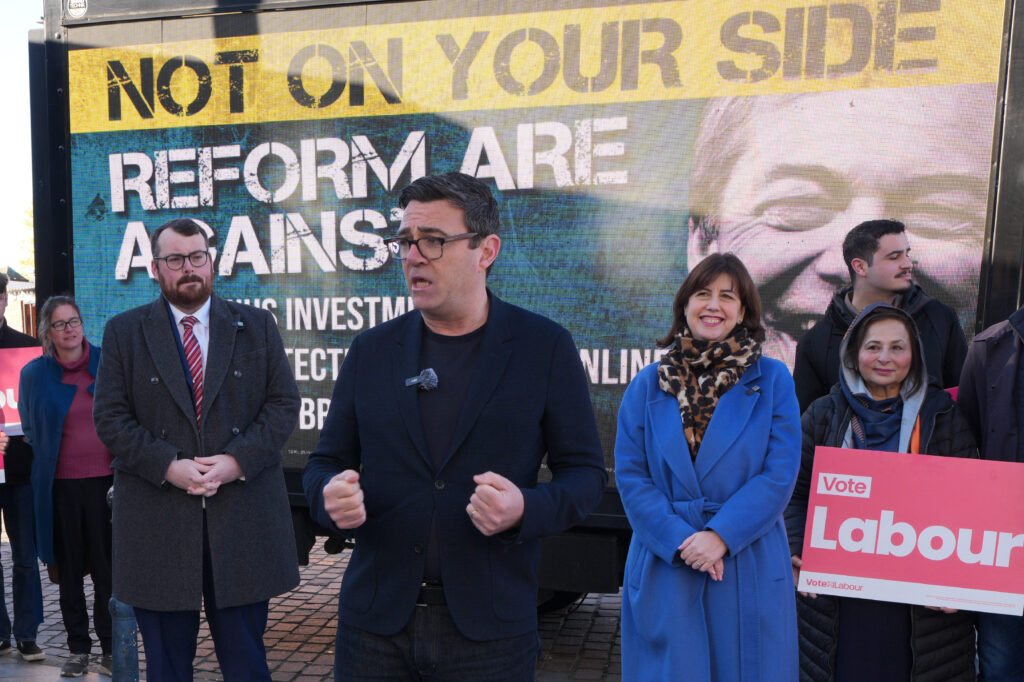
Calls for Keir Starmer to quit are getting louder, Lucy Carrier-Pilkington examines what new leadership could mean for the lobbying industry.

Following a series of lobbying scandals, the CIPR's White Paper is a tough new step to improve transparency in Westminster's lobbying laws.

The reform concerns a pre-existing law on the Regulation, Authorisation and Restriction of Chemicals (REACH) and has been in place since June 2007.

New 'global investor visa' proposed by lobby group as UK struggles to attract the super-rich
