Photo by WILL OLIVER/EPA-EFE/Shutterstock (10771977f)
George Peel examines Downing Street’s ruthless approach to civil service reform
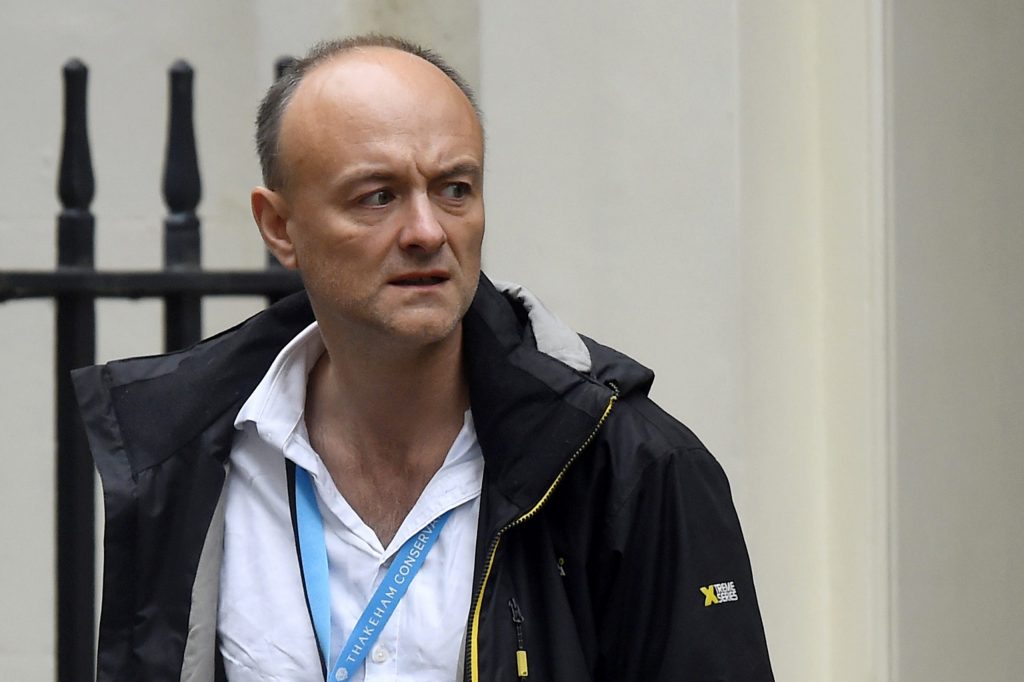
Early in July, Conservative MP Mark Francois had some clear advice for chief of the defence staff General Sir Nick Carter: “Please nip back to the department and ask them to sort their bloody selves out. Because if not, Cummings is going to come down and sort you out his own way, and you won’t like it.” The context was defence procurement, one of those perennial bureaucratic problems. The professional head of the armed forces gave a wry smile in response, no doubt already aware of what would be published in the Sydney Morning Herald hours later, that Dominic Cummings was to visit top-secret MOD sites including the SAS and Porton Down.
For those who abhor government waste, the MOD is an easy target, and although the long-promised assault on this department has been put to rest by Covid-19, there is definitely a feeling that it will resurface when the delayed integrated security, defence and foreign policy review comes out. Some action has, nonetheless, already been taken with the Department for International Development’s recent merger with the Foreign and Commonwealth Office, forming the FCDO. Such action has proved popular with certain ardent supporters of civil service reform who might view a pandemic as the perfect opportunity to reset the entire structure of government. Yet a merger is not in itself out of the ordinary.
Since the Brexit referendum alone we have seen the creation and abolition of DExEU, the establishment of the Department for International Trade and a merger creating the Department for Business, Energy & Industrial Strategy. The FCDO merger is just another example in a long list of playing around with government departments.
But by and large the FCDO merger has been interpreted as having a deeper message, at one level warning the civil service that this government is not afraid of making big changes to the make-up of Whitehall, and at another satisfying swathes of the Conservative Party who have long been cynical about the foreign aid budget. Many have been extremely critical of the move, with Sarah Champion, chair of the international development committee, tweeting that it was a “hostile takeover & hugely damaging for U.K. credibility”. By contrast, foreign affairs select committee chair and Conservative moderate Tom Tugendhat welcomed the opportunity for the UK to better coordinate its foreign policy and aid priorities. But if the FCDO were our sole data point, it would be impossible to identify any trend in shaking up the civil service, although frequent media reports have led many to identify this merger as a signal of what is to come.
Exit strategies
More striking than structural reform is the change in personnel at the highest level of the civil service. Sir Mark Sedwill’s resignation opened the door to two new appointments: Simon Case as the new cabinet secretary, and David Frost as the national security adviser. The appointment of special adviser Frost, in addition to his existing chief negotiator role in EU trade talks, sent shockwaves through Whitehall. In a further act of political patronage, Frost was ennobled, thoroughly smudging the line between impartial government officials and political appointees. Lord Frost may have served as ambassador to Denmark, more than attesting to the diplomatic credentials all his national security adviser predecessors have had, but Theresa May was excoriating in her remarks in the House of Commons, decrying the lack of neutrality such an overtly political appointment to such a senior role inevitably risks.
Sedwill’s departure appears premature, having been in the post for less than two years. He told parliament’s national security strategy committee that his resignation was by agreement between the prime minister and himself, but also took the opportunity to remark that top civil servants are now “fair game” in the media and will likely have to endure in the future hostile briefings similar to those which preceded his announcement.
Sedwill’s resignation came less than a fortnight after the country’s top diplomat, Sir Simon McDonald, also agreed to stand down. Murmurings had long surrounded his position at the Foreign Office with concerns he epitomised a pro-EU diplomatic service seeking to thwart Brexit. It is perhaps noteworthy that Sir Philip Barton, the new permanent under-secretary at FCDO, for the most part proved himself without the European Union. Perhaps his recent high commission experience in India and Pakistan is seen as a boon to a global Britain, although perhaps such thinking is spurious and there was no recruitment criteria beyond the best person for the job.
Losing two such senior securocrats in such a short space of time could perhaps be coincidental, but a third top mandarin, Sir Richard Heaton, then announced in early July he would not be seeking an extension to his five year contract at the Ministry of Justice. These departures come on the back of Sir Philip Rutnam, former Home Office permanent secretary, whose ...
Subscribe to The Mace
Join the member community shaping British politics and stay ahead of
what's really happening in the world of politics and public affairs,
with expert analysis, breaking news, and insider insights from
Westminster and Brussels. The Mace is the leading news source and
resource for the government affairs industry, offering required
reading and lobby intelligence for professionals.
To see what you are missing out on by not subscribing to The Mace, click here to download our full membership info-pack. This includes
having no paywall on op-ed content or profiles/interviews, allowing
professional profiles to be read with maximum impact and visibility by
government, special advisers, MPs, peers, civil servants, and policy
and political decision-makers.