EU Council backs tougher steel trade shield as overcapacity fears mount

Mace | 16th December 2025 | Brussels, Political Consultants
Steel_wire_rope

EU governments back tougher steel import limits, opening talks with Parliament on new rules to counter global overcapacity pressures facing

EU governments have agreed a negotiating mandate on a new trade instrument aimed at shielding the bloc’s steel sector from the effects of global overcapacity, moving Brussels closer to replacing its expiring safeguard regime. Ambassadors signed off the Council position this week, giving the presidency the green light to open talks with the European Parliament on legislation first proposed by the European Commission in October. The initiative comes as the EU sharpens its focus on industrial resilience, competitiveness and security of supply, with steel increasingly framed as a strategic input for defence, infrastructure and the green transition. Officials involved in the talks say the aim is to avoid a legal cliff edge when current safeguards lapse in mid 2026 while sending a signal to global producers that Europe intends to keep its market tightly managed. At the core of the Council mandate is a sharp tightening of import volumes and penalties, largely mirroring the Commission’s original proposal. The text endorses a cap of 18.3 million tonnes of steel that can enter the EU each year without tariffs, a level that institutions describe as a near halving compared with recent quota volumes. Once that ceiling is breached, imports would face a 50 percent duty, doubling the charge applied under the current safeguard system. Policymakers argue the tougher numbers are justified by persistent global overcapacity and state backed production in third countries, which they say has distorted trade flows and depressed prices in Europe. The measures are presented as temporary but necessary to stabilise a sector facing weak demand and heavy investment needs. Member states have also adjusted the proposal to address concerns from steel using industries and importing countries inside the bloc. The Council position strengthens references to a Union interest test, requiring the Commission to weigh the impact of restrictions on downstream manufacturers alongside the needs of producers. It also adds language on the risk of substantial price increases, reflecting pressure from sectors such as automotive, construction and machinery that rely on predictable steel supplies. Technical changes agreed by ambassadors would allow unused quota volumes to be carried over within the same year, a detail welcomed by traders and service centres that manage complex supply chains. Governments argue these flexibilities will help avoid sudden shortages while keeping the overall regime restrictive. Another sensitive element is enforcement and origin tracking. The mandate backs the introduction of a melt and pour requirement, intended to make it harder to reroute steel through intermediary countries to bypass quotas. However, application of this rule would be delayed until October 2026 to give customs authorities and businesses time to prepare. The Council also asks the Commission to assess whether future quota allocation should be based on the country where steel is melted and poured, rather than where it is shipped from, with a review clause built into the regulation. EU institutions have repeatedly warned that global steel overcapacity is expected to grow in the coming years, intensifying the challenge of monitoring and enforcement. Attention now turns to the European Parliament, where committees are preparing their response to the proposal amid competing lobbying from producers and users. Lawmakers are under pressure to reach a deal before the current safeguards expire, with industry warning that any gap could trigger a surge of imports. The debate is playing out against a backdrop of restructuring announcements and job warnings at major European steelmakers, reinforcing the political sensitivity of the file. At the same time, trading partners are watching closely, wary that stricter EU rules could divert excess steel into other markets and add to global trade tensions already shaped by US tariffs and retaliatory measures....

Subscribe to The Mace

Join the member community shaping British politics and stay ahead of what's really happening in the world of politics and public affairs, with expert analysis, breaking news, and insider insights from Westminster and Brussels. The Mace is the leading news source and resource for the government affairs industry, offering required reading and lobby intelligence for professionals.

To see what you are missing out on by not subscribing to The Mace, click here to download our full membership info-pack. This includes having no paywall on op-ed content or profiles/interviews, allowing professional profiles to be read with maximum impact and visibility by government, special advisers, MPs, peers, civil servants, and policy and political decision-makers.

Britain must take full advantage of trade outside the EU

Ted Newson | February 12, 2026

Five years since leaving the European Union, Britain has not yet taken advantage of the levers of free trade, writes Ted Newson

Access, Power, Influence: The Mace’s Top 100 Lobbyists (agencies) 2026

Sarah Richardson | February 11, 2026

Introducing The Mace’s guide to the top 100 political strategists working in UK public affairs in 2026. Peer-reviewed by industry experts, we reveal the leading agency professionals advocating

EU delays high-stakes industrial policy tool

Oliver Dean | January 23, 2026

EU institutions have postponed the release of a long-anticipated industrial policy instrument, a move that has frustrated several national governments and delayed work on broader competitiveness initiatives. Reporting

EU Parliament backs Critical Medicines Act, prompting warnings over Africa supply shocks

Oliver Dean | January 22, 2026

The European Parliament has backed its negotiating position on the EU’s proposed Critical Medicines Act, a flagship attempt to curb shortages and reduce reliance on external suppliers for

Farmers flood Strasbourg as EU Mercosur trade deal nears parliamentary vote

Mace | January 21, 2026

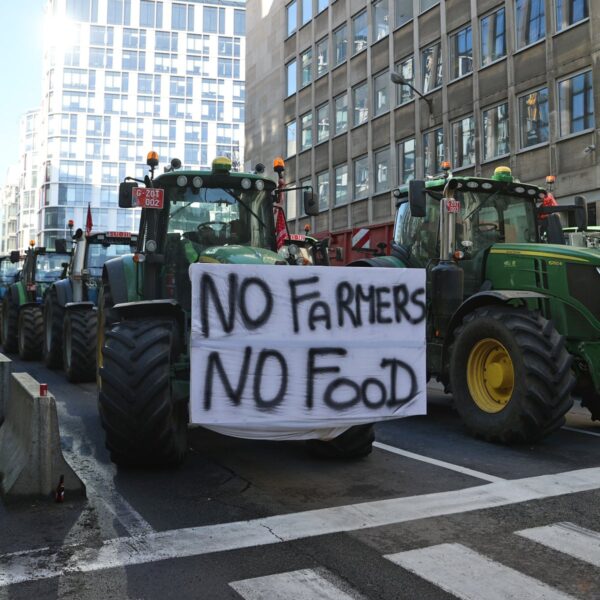
Thousands of farmers descended on the streets of Strasbourg and other European cities this week ahead of a key vote in the European Parliament on the controversial trade
Davos 2026 in the Age of Power Politics

William Cash | January 20, 2026

Davos is meant to be the place where the global public affairs class can compress a year of stakeholder management into five days, with a badge, a diary,

H/Advisors Sets Out Expansion Map for 2026 With Poland and Saudi Arabia in Focus

Mace | January 15, 2026

H/Advisors targets Poland and Saudi Arabia in 2026 expansion, alongside organic growth plans in the US and selected emerging markets.

Bayer Poised to Gain as EU Relaxes Rules on Gene Edited Crops

Mace | January 10, 2026

Bayer’s crop science ambitions gain momentum as the EU eases regulation of gene edited plants, opening pathways for agricultural innovation

The Crown Estate Opens £7.2 Million Communications Framework Tender

Mace | January 10, 2026

The Crown Estate launches a £7.2 million communications framework tender, seeking multiple agencies to deliver corporate and public affairs services.

New EU rules to streamline chemical safety assessments take effect

Mace | January 8, 2026

New EU rules aim to speed up and align chemical safety assessments, reducing duplication between agencies while maintaining health and environmental protections