‘Drill, baby, drill’ is not a long-term strategy, bodies warn.
Pablo John | 19th March 2026 | Comment, Trade Associations
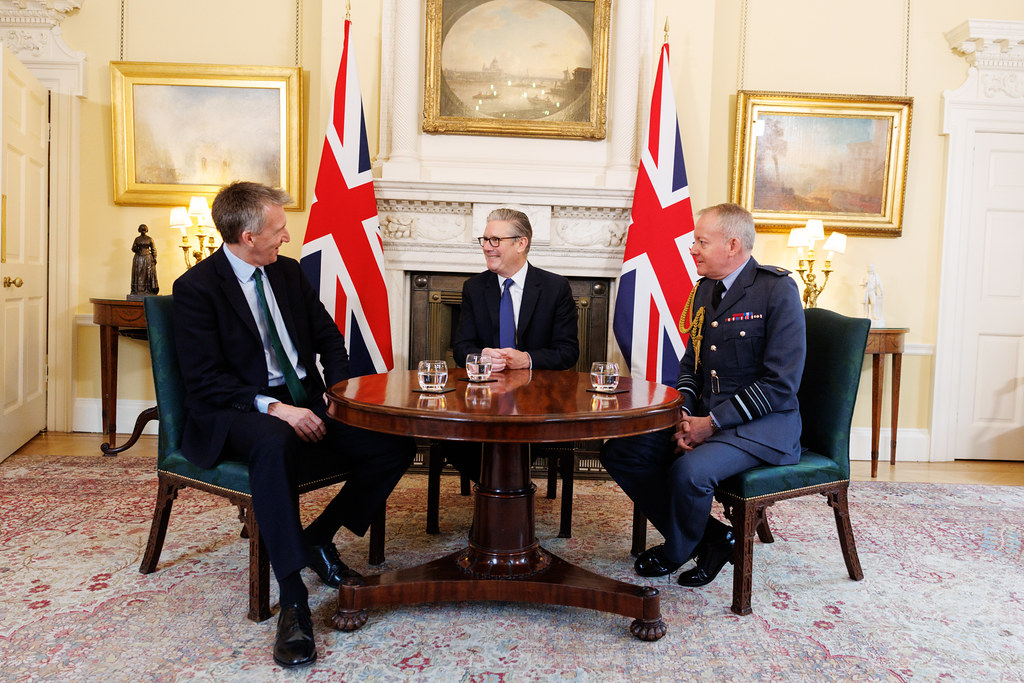
The debate around energy and energy security has grown in significance since war in Iran broke out (Photo by Christopher Furlong/Getty Images)
Whilst oil and gas may seem like seductive choices, the government must look beyond the soundbites, warns Pablo John.
Pablo John is Head of External Affairs at ADE
Walk down around any small town and you'll pass them. The food processing plant on the edge of town or the family manufacturer that's been there for three generations. These businesses don't make headlines, but they employ your neighbours and they pay taxes. But they are being left for dead.
Last week, Richard Tice stood in a Dudley steel factory and offered these towns a deal. Drill for more oil and gas, frack the lot, bring back the fossil fuel good old days. It was the same pitch Donald Trump is making to Detroit; there is no future, so dig up the past.
Tice is right about the problem, these towns are hurting. Energy bills are crushing them and good jobs are disappearing. When they look to Westminster for help, they see a government obsessed with a handful of giant industrial clusters, while everyone else gets nothing. But “drill, baby drill" won't save a food factory in the Lincolnshire or a distillery in South Yorkshire. It just chains them to the same volatile global gas prices that are killing them now.
Westminster has already picked its favourites. The government's energy strategy revolves around six big industrial clusters - places like Teesside, Humber, Grangemouth and South Wales - where heavy industry is huddled together to shelter from the (metaphorical) cold. Billions are being poured into carbon capture pipes and hydrogen plans for these sites, there are glossy brochures, ministerial visits and big promises. Yet, everyone else is left behind.
Successive governments have failed to understand the fact that British industry is not just six big clusters on the map. Half of all industrial emissions in this country come from sites that aren't in their designated industrial clusters. The food factories, the distilleries, the precision engineers, the family manufacturers, they employ 770,000 people directly – support 3.6 million indirect jobs - and they have no support whatsoever.
That's enough people to staff the Scottish health service four times over, that’s more than double the working-age population of Manchester. Fathers in Mansfield, young apprentices in Ayr, skilled engineers in Stoke who learned their trade from parents who did the same job before them. When one of those factories closes, it tears a hole in the fabric of a town, a whole community starts to unravel.
Imagine running a business in rural Britain. You want to cut costs, go green, secure your future and so you look at electrifying your processes. This is a great idea, until you ask for a grid connection. The queue stretches to up to 10 years the quote for upgrading the local network can be over £10 million before you've bought a single bit of kit. One distillery we spoke to got exactly that quote and walked away.
Or you look at the running costs, where we have built all these wonderful wind farms, but we have loaded green levies onto electricity bills. We are literally taxing the energy we want businesses to use and subsidising the fuel we want them to ditch. The big solutions the government loves - hydrogen pipelines, carbon capture networks - will never reach these places. You are not piping hydrogen to an industrial estate in rural Norfolk; they're on their own.
We know that this can work. Just look at British Sugar's factory in Wissington, Norfolk. Wissington has undergone the biggest decarbonisation project in the company's history. £43 million invested in new steam dryers, with a £7.5 million grant from the government's Industrial Energy Transformation Fund (IETF), resulting in thousands of tonnes of carbon removed from the site's footprint every single year. This project would not be possible without significant investment from the Government. Government money, targeted at a rural factory in Norfolk, delivering real cuts to emissions and real savings on energy bills. It proves that when the government shows up, rural industry can thrive. But the IETF fund that supported the project is now closed, no replacement has been announced.
So, nothing happens. Rural industry doesn’t invest, they can't compete with European rivals paying half their energy costs, eventually, they shut in a display of slow-motion de-industrialisation. This is the gap which the populists are filling. The fossil fuel industry walks through an empty factory and says, "The system failed you. Let's just turn the gas back on." It's a simple, albeit seductive, dead end. But there is another way, it requires the government to see the 770,000 workers it's ignoring.
But picture this instead; a Dumfries industrial estate where a dozen small engineering firms share one large solar array and a communal battery. They generate power together, store it together and use it together. Their energy bills drop, they’re not at the mercy of global gas markets, they're in control. When the grid is under pressure, they can even sell power back and get paid for it. The technology exists, the only thing missing is a government wil...
Subscribe to The Mace
Join the member community shaping British politics and stay ahead of
what's really happening in the world of politics and public affairs,
with expert analysis, breaking news, and insider insights from
Westminster and Brussels. The Mace is the leading news source and
resource for the government affairs industry, offering required
reading and lobby intelligence for professionals.
To see what you are missing out on by not subscribing to The Mace, click here to download our full membership info-pack. This includes
having no paywall on op-ed content or profiles/interviews, allowing
professional profiles to be read with maximum impact and visibility by
government, special advisers, MPs, peers, civil servants, and policy
and political decision-makers.
Andy Burnham has promised the ‘biggest rebalancing of power our country has ever seen’. The Mace investigates what industry insiders think of his vision.
After Andy Burnham's first major speech since the resignation, devolution has been the word on everyone's lips - Gill Morris explains why it's the way forward.
Introducing the inaugural Conservative Political Action Conference (CPAC) on British soil, a landmark expansion of the world's premier conservative networking brand.