Can Europe turn into a global digital leader?

Svenja Hahn | 21st April 2021 | Uncategorised
European,Telecommunication,Network,Connected,Over,Europe,,France,,Germany,,Uk,,Italy,

The future European legislative framework needs to be technologically open and define very clear rules, avoiding unnecessary red tape.

2021 is going to be a crucial year for our digital future in the EU. Apart from debates around connectivity and the 5G rollout or a digital tax, three areas of European digital policy are going to play a tremendous role: The Digital Services Act (DSA), the Digital Markets Act (DMA) as well as the legislative proposals on Artificial Intelligence (AI). These legislations will define Europe’s digital way for the next decades. As a liberal I want this ground-breaking legislation to be open for innovation, paving the way for a European Union that is at the forefront of digital developments in the world. Technology and digitalisation need to be human-centred and based on our European values and fundamental rights. A prosperous digital Europe needs a real Digital Single Market to rise to its full potential. Only a common European framework can avoid fragmentation of our common market. The platform economy and fair competition The platform economy has changed our lives remarkably in the last two decades. Communications between friends or at work have never been as easy. Digital platforms as well became a major arena for political debates. Customers gained access to products and sellers, which they would have never had to just a few years ago. New business models evolved – both on a large scale as well as for individuals or small companies. However, new challenges have arisen. The protection of fundamental rights, like freedom of speech online, are not only disputed in authoritarian regimes. In Europe, we are in the middle of debates around illegal and harmful content on online platforms, hate-speech, disinformation, automated content filters or censorship. Moreover, the power of big tech companies and unfair competition are centre of almost all digital discussions. A regulatory framework fit for the digital age, with clear rules for e-commerce and online services should create a real Digital Single Market in which lawmakers in the Commission and the European Parliament need to ensure a level playing field for innovative start-ups and small enterprises vis-à-vis the tech giants. This is why the European Commission presented its DSA/DMA package last December to foster the benefits and tackle online platforms’ challenges. From a liberal perspective, our two Renew Europe affiliated Commissioners Margrethe Vestager and Thierry Breton, presented proposals based on liberal principles aiming into a promising direction. Unfair practices like favouring own brands by dominant platforms at the expense of other providers must be stopped. Illegal content must be removed from platforms as quickly as possible. It is essential that the Commission follows the principle of demanding more responsibility from big platforms than smaller providers. Excessive bureaucracy for smaller platform operators needs to be avoided and the crucial aspect of limited liability will be retained, according to the DSA proposal. However, the European Parliament needs to improve some aspects of the Commission’s proposals in the further process. One of the main objectives of the DSA is to regulate illegal content on platforms and remove it according to the principals of the European Charter of Fundamental Rights. The current draft yet doesn’t come up with a solution for - a struggle, national European lawmakers faced as well in the last years: the decision of what is illegal is – at least partially – externalised to the platforms. Private companies must not take these decisions; on the contrary, it is the justice systems’ task and should not be outsourced. The view on rights and responsibilities regarding private companies is certainly something that differs in the EU and the USA in the digital transatlantic partnership. With regard to the DMA, new competition rules are important but must not lead to hidden protectionism. The EU will not become a digital player by cutting itself off from the US but by creating its own framework for innovation through fair competition. We need to work together with the Biden administration for fair standards in global digital policy. Being smart about AI Especially regarding Artificial Intelligence, we face very similar debates and challenges. Many lawmakers and governments are still not fully grasping the potential AI has to change our lives. Especially as Artificial Intelligence is not only a technology of the future. It already covers a wide range of applications and uses – from algorithms that suggest products or music according to our taste to cancer diagnostics or the development of vaccines and drugs. I am convinced that innovation through AI will be a driver for positive change for the benefit of our whole society as well as for our European economy. Nevertheless, we also need safeguards against some uses of AI, which are not in line with core liberal values. We have to avoid discrimination through AI applications such as mass surveillance or social scoring systems of human beings. I strongly oppose the use of facial...

Subscribe to The Mace

Join the member community shaping British politics and stay ahead of what's really happening in the world of politics and public affairs, with expert analysis, breaking news, and insider insights from Westminster and Brussels. The Mace is the leading news source and resource for the government affairs industry, offering required reading and lobby intelligence for professionals.

To see what you are missing out on by not subscribing to The Mace, click here to download our full membership info-pack. This includes having no paywall on op-ed content or profiles/interviews, allowing professional profiles to be read with maximum impact and visibility by government, special advisers, MPs, peers, civil servants, and policy and political decision-makers.

The Clown Prince Ascends to his Throne

Mace | January 29, 2020

There’s plenty of egg-on-face - or just embarrassed silence - for the many pundit hacks, often former Tory colleagues of Boris, who wrote him off as a priapic
Meet the Class of 2019

Mace | January 28, 2020

George Peel surveys the best of the new crop and finds much to celebrate in all the parties

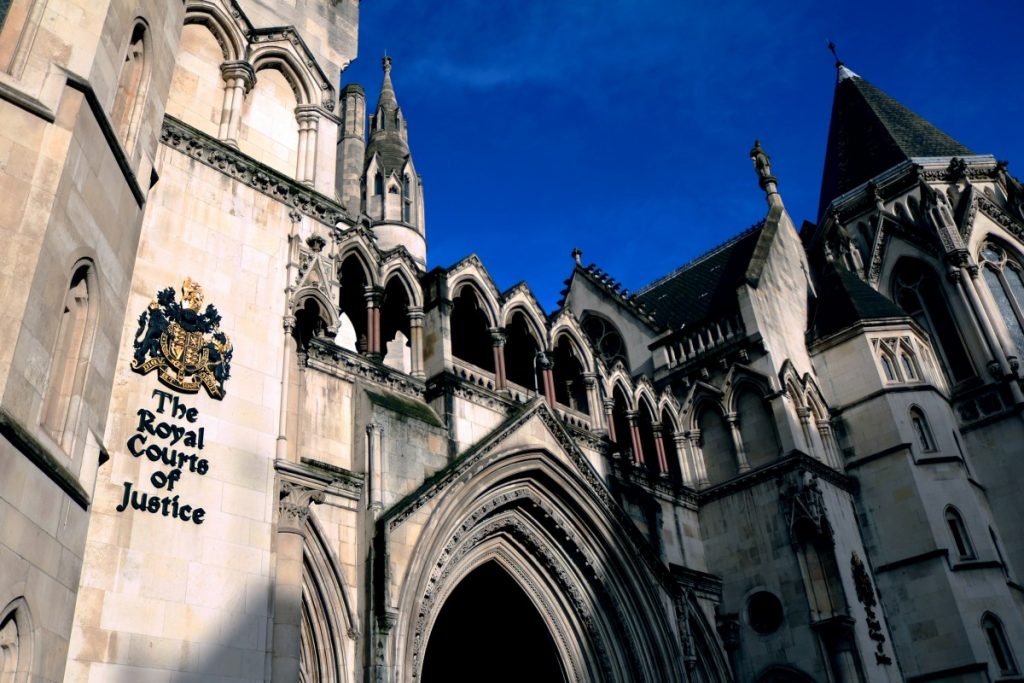
Who are the key players in justice today?

Christopher Jackson | January 21, 2020

Christopher Jackson provides an update of a department about to enter a period of considerable flux.
A New Magazine for a New Parliament

Mace | January 16, 2020

When the clocks struck 11pm on 31 January, it was the end of our 45-year relationship with the EU.