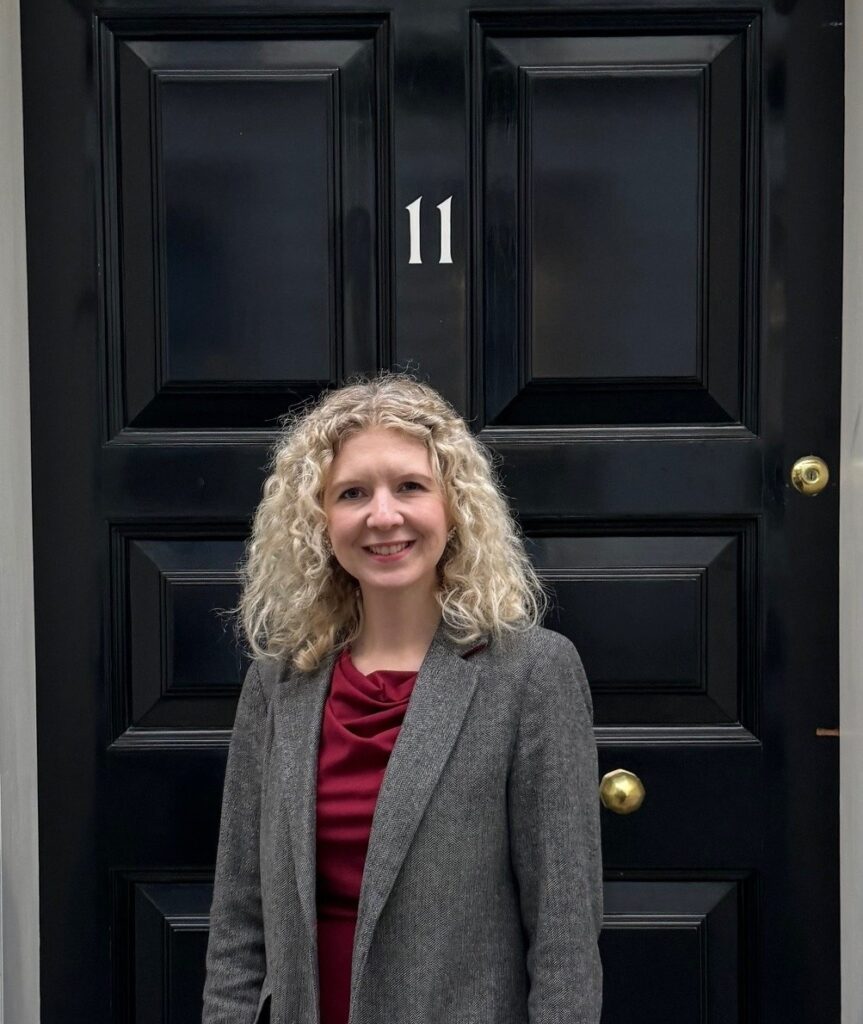
Alastair McCapra has spent much of his career arguing that lobbying should be treated like any other profession: properly regulated, properly understood, and properly respected. As Chief Executive of the Chartered Institute of Public Relations, he sits in an unusual position — both part of the public affairs industry and one of its more persistent critics.
Public affairs was never a separate career choice for McCapra. It simply became part of the job. “Public affairs is a natural part of the CEO role,” he says, explaining that he first became directly involved in lobbying and government relations when he moved into his first chief executive position around twenty years ago. That perspective still shapes how he sees the profession today — not as a mysterious specialism, but as something any organisation leader eventually has to engage with.
As head of the CIPR, McCapra now sits at the centre of debates about professional standards, regulation and the future of the lobbying and communications industry. The institute represents thousands of practitioners across public relations and public affairs, and increasingly positions itself as a professional body rather than simply a membership organisation.
That distinction matters to him. One of his proudest achievements has been moving the CIPR “decisively towards becoming a predominantly chartered profession,” with the organisation set to charter its thousandth practitioner. In his view, chartership is not just a credential but part of building credibility and public trust in a profession that often struggles with its reputation.
Reputation, in fact, is a recurring theme when he talks about the industry. One issue in particular continues to frustrate him: the UK’s lobbying legislation. He describes the current Lobbying Act as “hopeless” and believes it has done significant damage to how both parliamentarians and businesspeople are perceived. The problem, as he sees it, is not transparency itself but badly designed transparency.
His position is slightly unusual in the industry. Rather than arguing against regulation, he believes lobbying regulation should actually be expanded and properly designed so that all lobbying activity falls within scope. In his view, the current system captures only a narrow part of the profession while leaving most lobbying activity outside the formal register, which in turn undermines public trust.
This slightly contrarian stance reflects his broader approach to the profession. He is less interested in defending the industry than in professionalising it. Turning public affairs into something closer to a recognised profession — with standards, qualifications and ethical expectations — is clearly one of his long-term goals.
That professionalisation agenda also shapes how he thinks about technology. Like many leaders in the sector, he recognises the growing role of artificial intelligence in communications and public affairs work, but he is sceptical about how far automation can go. “The human factor is essential in all professional services,” he says. “If you can automate something entirely it isn’t a professional service, it’s just a glorified supermarket checkout.”
It is a characteristically blunt way of putting it, but it captures his view that public affairs ultimately relies on judgement, relationships and interpretation rather than simply information processing.
One of the campaigns he highlights from recent years is the CIPR’s “Lobbying for Good Lobbying” campaign, which aimed to improve public understanding and the reputation of lobbying as a legitimate part of democratic decision-making. The campaign formed part of a broader effort to shift the narrative around the profession and explain what public affairs actually involves.
McCapra often returns to the idea that lobbying is misunderstood from both directions. Some people assume it is simply about access and influence, while others assume it is inherently corrupt. In reality, he argues, it is mostly about providing information, expertise and arguments to policymakers who are making complex decisions under time pressure.
His own leadership philosophy is perhaps best summed up by a piece of advice he once received from a board chair: “Never overestimate what people know.” It is a reminder, he says, that communication — whether in politics, business or professional organisations — often fails because people assume too much prior knowledge.
Outside work, McCapra’s interests are a mixture of the cultural and the slightly eccentric. He sings in a local choir, spends time with his French bulldog, and — perhaps most unusually — spends much of his spare time editing Wikipedia. It is a hobby that fits quite neatly with his professional interests: accuracy, information, and the public understanding of complex topics.
One of his favourite memories connected to politics comes from many years ago, when he took his Japanese parents-in-law to the House of Lords. They were simply tourists and had no idea who the people around them were, but he remembers being struck by how courteous and welcoming the peers they encountered were — holding doors open, ushering them forward and making space for them. He found it both amusing and reassuring that senior politicians behaved with such natural courtesy toward people who had no idea who they were.
He has never seriously considered entering politics himself, although he says he has great admiration for those who do, given the demands the job places on them. Instead, his career has focused on the systems and professions that surround politics rather than politics itself.
When asked which historical figures he admires, his list is eclectic: Voltaire, Bismarck, Edmund Dene Morel and Abu’l Alaa al-Maari. It is not an obvious combination, but perhaps that reflects his own career path. By his own admission, he has “kind of wandered through life, enjoying reading as I went along,” rather than following a rigid career plan.
That wandering path has nonetheless left him in a position where he is helping shape how an entire profession sees itself — and how it is seen by others.
Quickfire Q&A
How did you get into public affairs?
“Public affairs is a natural part of the CEO role, so I had to take it on when I moved into my first CEO role twenty years ago.”
What regulatory issue keeps you up at night?
“The hopeless nature of the current Lobbying Act and the damage it causes to the reputation of parliamentarians and businesspeople.”
Proudest career achievement?
“Moving the CIPR decisively towards becoming a predominantly chartered profession — this year we will charter our 1000th practitioner.”
Best piece of advice you’ve received?
“Never overestimate what people know.”
Has AI changed public affairs?
“The human factor is essential in all professional services. If you can automate something entirely it isn’t a professional service, it’s just a glorified supermarket checkout.”
Leadership philosophy?
“I admire Bismarck.”
Best experience in Parliament?
“Taking my Japanese parents-in-law to the House of Lords… they had no idea who they were encountering, but every peer we met was wonderfully polite and hospitable.”
How do you unwind?
“I sing in a local choir, spend time with my French bulldog, and edit Wikipedia.”
Favourite films or TV?
“The Leopard, To Live, The Godfather, Apollo 13 and the Elizabeth films.”
Historical figures you admire?
“Voltaire, Bismarck, Edmund Dene Morel, Abu’l Alaa al-Maari.”
Would you go into politics?
“Never seriously thought about it. I admire people who do it, but I don’t really want to venture there myself.”