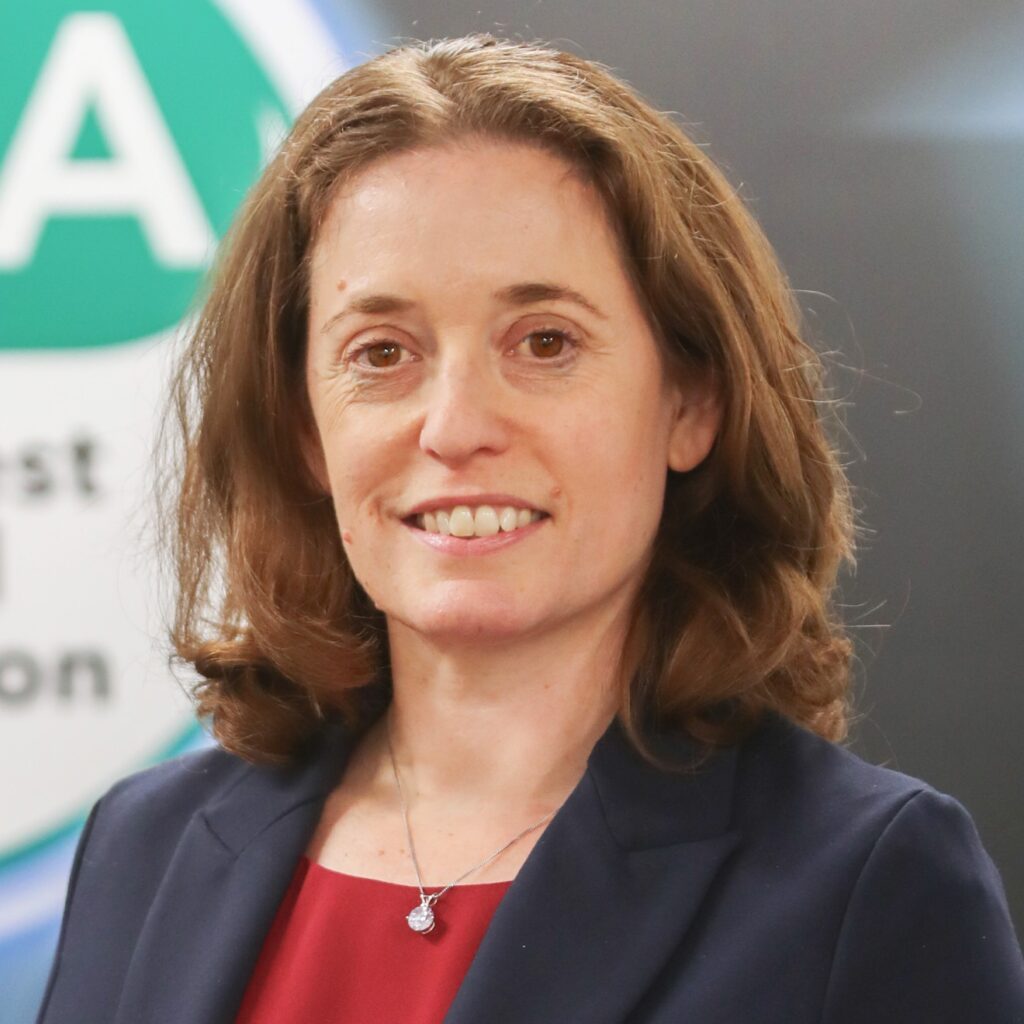
“Good public affairs is always about relationships and understanding how decisions are really made,” says Emily Cheyne-Guess. It’s a principle that has held true across a career which has taken her from global construction firms to government communications in Abu Dhabi, and now into one of the most operationally grounded parts of the public sector: fire and rescue.
Her route into public affairs was not conventional. “I started in corporate communications and marketing roles in the private sector… before moving to the UAE,” she says, where she led communications for a government-owned organisation. That experience offered a different lens on how power and influence operate. “While the context was different to the UK, the fundamentals still apply,” she says. “Good public affairs is always about relationships.”
She moved into the fire and rescue sector in 2015 — a decision that brought her closer to frontline public service and the realities of policy in action. “The policy decisions you’re working on affect frontline public safety, the resilience of communities and the people delivering those services,” she says. In that environment, public affairs “stops being theoretical.”
Her role today sits close to the top of the organisation, advising the Chief Fire Officer and Police, Fire and Crime Commissioner on political risk, stakeholder relationships and funding reform. It is a position that reflects a wider shift in how public affairs is understood in public services. “Public affairs leadership at director level is still relatively rare in UK fire and rescue services,” she notes. “Most services place it within communications functions rather than treating it as a strategic discipline. That is starting to change.”
At the heart of her work is a challenge that is both technical and political: how to secure sustainable funding for a service whose role has evolved far beyond firefighting. “Fire and rescue services do far more than respond to fires,” she says. Prevention, protection, community safety and civil resilience are now central — but “the policy and funding frameworks don’t always fully reflect that broader role.”
That gap between reality and policy is where public affairs becomes critical. “We need to translate operational reality into language policymakers and elected representatives understand,” she says. It is about “demonstrating the value of prevention, the complexity of risk, and the consequences of underinvestment.” In a sector shaped by devolution, local government reform and shifting political priorities, that translation role is becoming more important.
Her career has also been defined by organisational transformation. She joined Essex County Fire and Rescue Service at a difficult moment, following a critical culture review and a period of special measures. “The challenge wasn’t just about communications,” she says. “It was about supporting a wider programme of organisational reform and rebuilding confidence.” The progress since then has been significant. “Achieving Fire Service of the Year in 2024 was a milestone,” she says — a marker of how far the organisation has come.
More recently, she led the development of the Community Risk Management Plan for 2025–2030 — the strategic blueprint for how the service will respond to risk over the next five years. “The strategy was shaped through extensive consultation and engagement,” she says, ensuring it reflects the real risks facing Essex. For Cheyne-Guess, strategy is not something that sits on a shelf. “It only really comes to life when people across the organisation understand it, believe in it and see their role in delivering it.”
That belief in engagement — both internal and external — runs through her leadership style. “Leadership is about bringing people with you and connecting to a purpose,” she says. “That starts with being clear about the why.” She describes herself as leading “through influence rather than power,” bringing together colleagues across different departments and disciplines.
Her approach to influence is grounded in awareness. “Understanding the context you’re operating in — or reading the room — is critical,” she says. It means recognising “the personalities in the room, the pressures shaping the decision and the wider context around it.” Trust and credibility, she adds, are what determine whether people will listen when it matters.
On artificial intelligence, she is pragmatic. “AI can’t read the room (!), but it is a useful tool for gathering insights,” she says. The core of public affairs, she argues, will remain human. “Influence still depends on relationships, trust and understanding how decisions are made.”
Outside work, life is shaped by family and a slightly chaotic schedule. “A lot of my time… is spent running the kids around to various activities,” she says, alongside “good food” and long walks with Albert, the family’s cocker spaniel — “who would probably argue he’s my favourite child.”
Her early influences point to a long-standing interest in public life. “Emmeline Pankhurst,” she says, recalling a childhood fascination with the suffragette movement. “For a while I asked the other children at school to call me Emmeline.”
Quick-fire Q&A
How did you start in public affairs?
“I started in corporate communications and marketing… before moving to the UAE… good public affairs is always about relationships and understanding how decisions are really made.”
What policy issue keeps you up at night?
“The sustainability of funding alongside the evolving risk picture.”
What’s the appeal of in-house advocacy?
“Public affairs stops being theoretical… bridging the gap between operational expertise and political decision-making.”
Proudest achievement?
“Achieving Fire Service of the Year in 2024… and leading the development of the Community Risk Management Plan 2025–2030.”
Best piece of advice?
“Understanding the context you’re operating in… reading the room.”
View on AI?
“AI can’t read the room (!)… influence still depends on relationships, trust and understanding how decisions are made.”
Leadership philosophy?
“Leadership is about bringing people with you and connecting to a purpose.”
What do people get wrong about public affairs?
“Public affairs is about more than lobbying Westminster… influence happens well beyond this space.”
How do you unwind?
“Running the kids around… good food… long walks and the occasional sofa nap with our cocker spaniel.”