Cabinet Secretary’s exit brings turmoil to Downing Street
Oliver Dean | 13th February 2026 | Comment, Politics
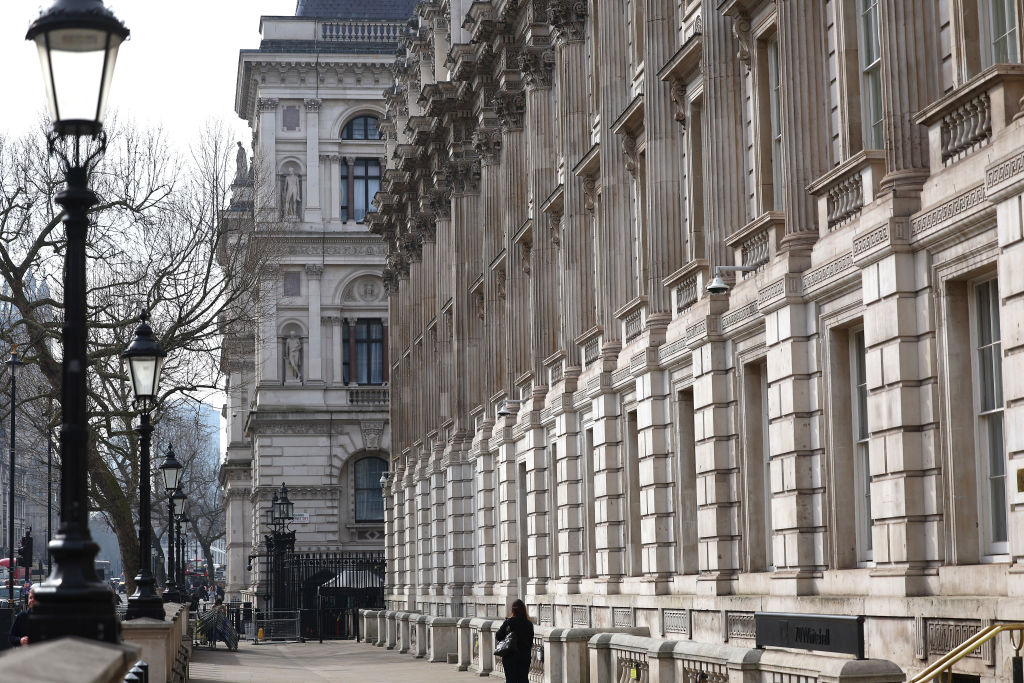
Wormald was appointed to the post of Cabinet Secretary in December 2024 (Photo by Peter Nicholls/Getty Images)
With Wormald being the third senior figure to exit government in recent days, questions are being raised over the long-term stability and survivability of this government
Sir Chris Wormald has been ousted as Cabinet Secretary. While Downing Street insists the departure was "by mutual agreement," the picture this situation paints is dire. For those watching from the public affairs world this is a sign that the machinery of government is malfunctioning at the highest level.
Wormald is the third senior figure to exit in days, following Morgan McSweeney and Tim Allan. His departure leaves a vacuum at the heart of the Civil Service, with responsibilities temporarily split between three permanent secretaries: Catherine Little (Cabinet Office), Dame Antonia Romeo (Home Office), and James Bowler (Treasury).
This fragmentation matters. In public affairs terms, it means there's no single point of contact for cross-government strategy, no clear line of authority for major decisions, and no one with the institutional memory or mandate to drive through the supposed ‘re-wiring of the British state’ that Starmer promised.
The official line is that Wormald left over performance concerns, though others have said that his departure was far messier, defined by anonymous briefings and backstabbings. This matters because it reveals a government that operates through leaks rather than leadership. For lobbyists and public affairs professionals, it is a warning sign. If this is how Downing Street treats its own cabinet secretary, what does it say about how policy decisions are being made? Who's actually in charge?
The revelations surrounding Mandelson made Wormald’s position difficult to justify. Wormald had ultimate responsibility for the due diligence on Lord Mandelson's appointment as US ambassador. He was also overseeing the release of documents demanded by Parliament about that appointment. His departure, before that process is complete, raises serious questions about accountability.
Kemi Badenoch had called for Wormald to remain in post until the documents were published and for a "full new process" to select his replacement. Instead, he's gone with a £250,000 payout.
Dame Antonia Romeo is the frontrunner to replace Wormald. If appointed, she'd be the first female cabinet secretary. But her candidacy isn't without controversy. Lord McDonald, former head of the Foreign Office, has called for a "full process" starting "from scratch," referencing an investigation Romeo faced over spending allegations in 2017.
With no permanent cabinet secretary, cross-government coordination will suffer. For a short period of time, there will almost certainly be slower decision-making, inconsistent messaging, and a higher risk of policy U-turns.
There is also the problem of difficulties regarding navigation. With three permanent secretaries temporarily sharing Wormald's responsibilities, there's no clear entry point for strategic conversations. That fragmentation will persist even after a new cabinet secretary is appointed, as they'll need months to establish authority.
Finally, and perhaps most importantly, it shows that this government is unstable. A government that is this chaotic is less able to engage constructively with outside voices. But it's also more vulnerable to pressure from outside sources such as Parliament and the media.
But this departure points to a bigger picture. Wormald's exit is not just about one man. It's a symptom of a government that's lost control of its own narrative, alienated its own Civil Service, and failed to establish a functioning operating model just months into office.
For lobbyists, public affairs consultants, and anyone trying to engage with the government, the message is clear: this is not a stable environment. The usual rules of engagement may not apply. And if you're banking on long-term policy commitments from this administration, you may want to think again....
Subscribe to The Mace
Join the member community shaping British politics and stay ahead of
what's really happening in the world of politics and public affairs,
with expert analysis, breaking news, and insider insights from
Westminster and Brussels. The Mace is the leading news source and
resource for the government affairs industry, offering required
reading and lobby intelligence for professionals.
To see what you are missing out on by not subscribing to The Mace, click here to download our full membership info-pack. This includes
having no paywall on op-ed content or profiles/interviews, allowing
professional profiles to be read with maximum impact and visibility by
government, special advisers, MPs, peers, civil servants, and policy
and political decision-makers.
For 10 months, ex-army officer James Jeffrey trekked 3500 km across Europe by foot. The scale of migration he witnessed may not have been as dramatic as the
After heading the Makerfield by-election comms team, Grace Pritchard was singled out by Andy Burnham as being a key part of his northern campaign team. The self-styled 'Yorkshire
The Civil Service is ready to support Dame Antonia Romeo's flagship changes to government machinery - notably relating to AI and devolution - under new prime minister Andy
Andy Burnham is shaking up government with more changes than by any incoming prime minister in memory. But, asks Sir Bernard Jenkin MP, does he understand why the
UK aviation can decarbonise while meeting growth ambitions, but urgent government action is needed to prevent costs increasing for passengers and the sector losing its competitive edge.
The news that former Home Secretary Sir Grant Shapps has failed to make the new Tory candidate list has put fear into dozens of former Conservative MPs. Whether
Cameron Brown, a former special advisor to the Chancellor of the Exchequer, explains why Burnham's VAT cut on energy bills is a measure people will actually notice.