Why Germany Needs to Elect a Jamaica Coalition

Daniel Kaddik | 24th September 2021 | Uncategorised
2

Instead of laying the ground for the future, Merkel’s politics has been administering for today based on the successes of yesterday: a 'Jamaica' coalition could change the country's future.

In the 1990s and early 2000s, German was known as the sick man of Europe. Really, it was only in remission. Thanks to bold reforms implemented by the early noughties Schröder Social Democrat-led government, Germany was able to navigate the turbid waters of 2010s’ successive crises. However, Schröder’s ‘Agenda 2010’ was a short-lived change of pace. Instead of boldly pressing on and making Germany future proof, the Merkel administration has offered a stability that some could call stagnation. Since 2005 Merkel has been leading a grand coalition of conservatives made up of the Christian Democratic Union (CDU), its sister party Christian Social Union (CSU) and the Social Democrats. It was only briefly interrupted by the failed project of a Conservative-Liberal Alliance from 2009 to 2013 that almost led to the complete demise of the Free Democratic Party (FDP). Over these years, the Merkel administrations might have been successful as crisis managers but they have failed to prepare the country for upcoming (and widely anticipated) challenges.   Wherever the dart lands, it hits a problem Germany is lagging in digitalization and the creation of new businesses online. Thanks to the Energiewende – a less-than-carefully-planned switch to sustainable energy sources combined with the winding down of nuclear power – industries and lower-income families suffer with the most expensive energy prices in Europe. The burden of the pension system still looms large with a hole shaped by billions of Euros. A failure to reform the electoral code could see an increase from 598 members of parliament to between 700 and 1000.  Migration is still ‘the issue that shall not be named’, but provokes social unrest and political turmoil. Bureaucracy is throwing the figurative wrench in the German engine, stifling the performance of businesses and the creation of more jobs.  Erratic decision making (for and against key industries) is adding up to the deindustrialisation of Europe’s economic powerhouse. All this without even factoring in the expected fallout from the pandemic, which required some €450 billion of new debt.   The end of the Merkel era: exciting times? The election campaign certainly is - even if for the wrong reasons. Like in the old days of German politics, Conservatives and Social Democrats are in a close race polling in the 20 rather than the 40 per cent realm each. This is a clear sign that era of two-party coalitions has ended. A disastrous election campaign, grave communication errors and pre-election backstabbing between representatives of the Conservative family have meant Conservative candidate Armin Laschet’s reputation crashing.    Like a phoenix from the ashes Despite previously polling below 20 per cent, Olaf Scholz of the Social Democrats has continued to drive a calm and calculated campaign. Even scandals that directly affect him - such as in and around the Ministry of Finance (which he has been running since 2018) have barely affected him.    Incoming: a new governing style  No two parties together will be likely to hold a majority. Instead, we will probably see a three-party coalition. The paradigm shift in German politics is further underlined by TV debates between the lead candidates now including the Green frontrunner as well. Such is the fever dream of the German left, a red-red-green alliance of Social Democrats, Greens, and the Socialists – the legal and spiritual successor of the German Democratic Republic’s ruling party.    Beware Berlin The red-red-green alliance has been tried and tested in Berlin turning it into nothing less than a failed state. Rent controls instead of building permits, month-long waiting lists, alimentation through the rest of Germany, a mass loss of some 700 teachers and rampant organised crime, among other mounting problems, impoverish the city. Berlin’s ruling coalition is living proof of why a three-party left-leaning alliance would be a disaster for the entire country. Fortunately, it seems unlikely due to the SPD’s historic low electoral influence.    The SDP: a shadow of its former self They were once a beacon of pragmatism and progress in society but now have lost their place. The SDP are guilty of telling people what their problems are, instead of actually listening. Time spent outside government could give the Social Democrats time to renew and look at the workers of today and tomorrow - instead of those from the 19th century. However, their unexpected revival ahead of the elections might prevent this. The ongoing internal struggle about the direction of the party under and after Schröder - and a preference in the current parliamentary group to go into bed with the Socialists - could end with Scholz leading the next government after all.   Jamaica: a coalition of Conservatives, Greens, and Liberals In 2017 an attempt to form a government between these groups failed after weeks of negotiations. In the next elections, the revival of such ...

Subscribe to The Mace

Join the member community shaping British politics and stay ahead of what's really happening in the world of politics and public affairs, with expert analysis, breaking news, and insider insights from Westminster and Brussels. The Mace is the leading news source and resource for the government affairs industry, offering required reading and lobby intelligence for professionals.

To see what you are missing out on by not subscribing to The Mace, click here to download our full membership info-pack. This includes having no paywall on op-ed content or profiles/interviews, allowing professional profiles to be read with maximum impact and visibility by government, special advisers, MPs, peers, civil servants, and policy and political decision-makers.

Kemi’s true blue purge, with help from Sir Philip May

William Cash | July 26, 2026

The news that former Home Secretary Sir Grant Shapps has failed to make the new Tory candidate list has put fear into dozens of former Conservative MPs. Whether

UK ‘global investor’ visa proposed by lobby group to bring back UK’s non-doms

Lucy Carrier-Pilkington | April 23, 2026

New 'global investor visa' proposed by lobby group as UK struggles to attract the super-rich

London Elections latest polling: Green gains and Labour out

Lucy Carrier-Pilkington | April 22, 2026

Latest polling from YouGov suggests major gains for Greens and Reform UK in the capital.

Greens win Gorton and Denton

Oliver Dean | February 27, 2026

The Green's victory reflects a changing mindset in British politics
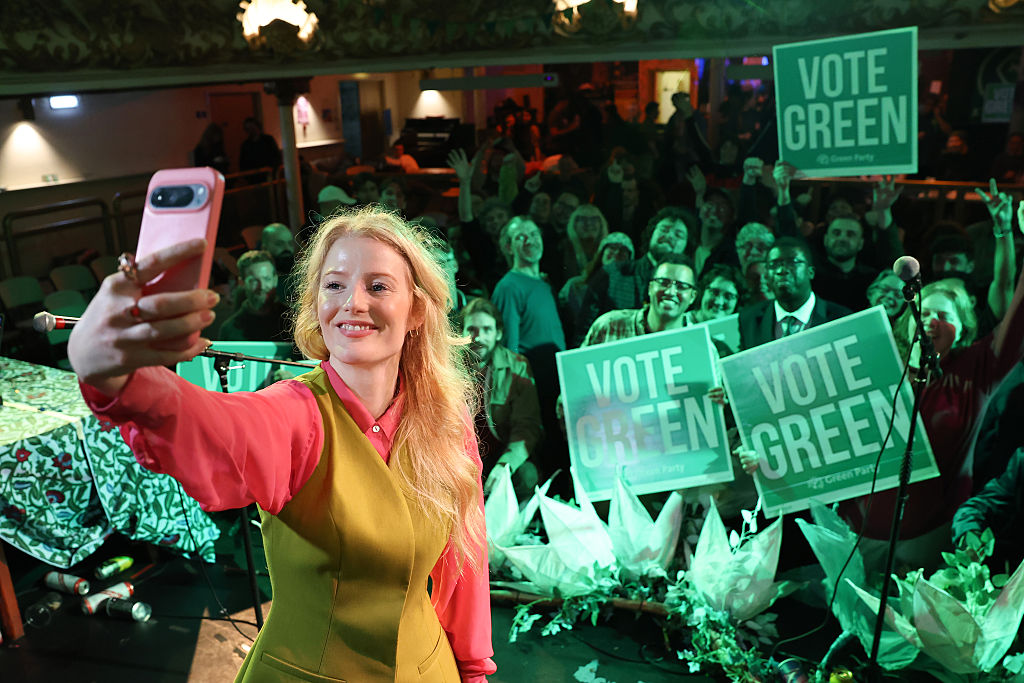
Green Party leader gets new communications advisor

Oliver Dean | February 17, 2026

Polanski's new communications advisor shows that the Green Party leader is serious about his public image.

Trade body describes the Government’s new electric HGV plan as a ‘monumental challenge’

Oliver Dean | February 17, 2026

With only 1 in 70 new HGV's being electric, the government must assist with infrastructure investment says industry leader

Blakeney bolsters its team with new additions

Madeline Dabbah | February 13, 2026

Blakeney has welcomed former drinks company Oatly managing director Tim Knight and pro-Brexit MEP Lucy Harris, in an effort to strengthen their position, the public affairs and strategic

Hanbury goes global

Oliver Dean | February 13, 2026

Hanbury's decision to erect offices in Washington and Sydney showcases the firms' strong public image.

Mandelson’s lobbying firm in disarray as CEO departs

Oliver Dean | February 6, 2026

Benjamin Wegg-Prosser, who co-founded the lobbying firm Global Counsel alongside Peter Mandelson has today resigned following significant backlash regarding the firm’s link to Jeffrey Epstein.

Russell Group turns to public policy veteran for next phase of university lobbying

Thomas Edwards | January 21, 2026

The Russell Group has picked Professor Libby Hackett, an Australia based public policy specialist, as its next chief executive, handing the UK’s most influential research university lobby to