Back to school chaos: first day of term report as Burnham faced the Commons
Andy Burnham addressed the House of Commons for the first time as Prime Minister as MPs returned to Parliament. How did he do at the dispatch box and



It sounds like a straightforward fix: fewer young people on benefits, more in work. But is the reality so simple?
Local leaders will be told to move young people on benefits into work under groundbreaking devolution plans. This is part of an agenda to tackle the long-standing youth unemployment crisis and reduce the welfare bill. With welfare spending skyrocketing in recent years, and an urgent need to move funds into defence projects and the prospective National Care Service, youth benefits are going to be the first major area targeted for cuts.
This policy comes in the midst of almost one million young people aged 16–24 classified as not in education, employment or training, otherwise known as NEETs.
It is understood that combined and local authorities will be granted upfront funding from the Treasury to tackle youth unemployment in their areas. Former Labour cabinet minister Alan Milburn is leading a review into the NEETs crisis and is due to recommend a major new “participation” system which is run with a “tough-love approach”. Milburn has previously called the NEETs crisis a “scar on this country”.
However, the NEETs crisis does not exist in a vacuum – and the impact of AI on job availability, social media on mental health, and a suffocating cost-of-living crisis are all contributing factors that ‘tough love’ on a beset generation won’t fix.
Sulaiman, 28, told Mace: “I think it’s just a rehash of stuff that we’ve seen from the Cameron government as a lot of it feels like austerity.
“But when you look deeper into it there’s just been so much technological change within the last few years.
“And when you look at a lot of companies’ ability to use generative AI as a way to replace their workforce and how that’s cut off a lot of entry-level jobs as a whole, I think it’s a bit tough to look at the generation that’s struggling to get into work and point the finger at them.”
“Graduate recruitment at the UK’s hundred leading employers has fallen by almost a quarter since 2022”
Regarding the impact of AI on the graduate employment market, the figures are staggering. High Fliers Research reports that graduate recruitment at the UK’s hundred leading employers has fallen by almost a quarter since 2022 – a sharper decline than in either the pandemic or the 2008 recession. Furthermore, the Institute of Student Employers recorded an 8 per cent fall in graduate hiring in its latest annual survey, the first fall since 2020.
Milburn is taking some inspiration from the Netherlands in its approach to tackling the NEETs crisis. The Netherlands has the lowest level of NEETs in Europe at 4.1 per cent of young people, compared to the UK’s 13.5 per cent. In the Netherlands, students who fail to turn up for school or training are contacted by staff working at local “youth points”. Those not attending are requested to go to in-person meetings with career advisers and mental health staff.
To this, Sulaiman said: “I quite like the idea of that Dutch system. It is a way of not just introducing accountability, but making sure that there is an almost caring undertone to it.
“I think the current approach that the government wants to take doesn’t do enough to actually address the root cause of the issue. As a society right now, especially when we’re looking at NEETs, there is a huge amount of social isolation. If the solution doesn’t attack the root cause of that, then I just don’t believe it could be that effective.”
One of the main groups that has been lobbying the government to tackle the youth unemployment crisis is the British Retail Consortium (BRC). The BRC, alongside retail leaders like the CEOs of Marks & Spencer, Tesco, Sainsbury’s, Asda, Morrisons and Primark, has previously called for a joint retail-government taskforce to scale up regional and national support for young workers.
“Government cooperation with major employers is essential to give the young people of today their long-awaited, and much-deserved, chance to start their lives.”
Employment and financial independence for youths are not only economic necessities but are essential for individual wellbeing. For a generation that has suffered tremendously from its early years due to the detrimental effects of unregulated social media, and an incomplete education due to the pandemic, government cooperation with major employers is essential to give the young people of today their long-awaited, and much-deserved, chance to start their lives.
Andy Burnham addressed the House of Commons for the first time as Prime Minister as MPs returned to Parliament. How did he do at the dispatch box and
Britain’s farmers have battled repeated heatwaves and droughts, but MP John Cooper says the government’s Family Farm Tax is piling further pressure on an industry that desperately needs

September and October usually mark the most intense period of political activity in the UK, here is what to expect.
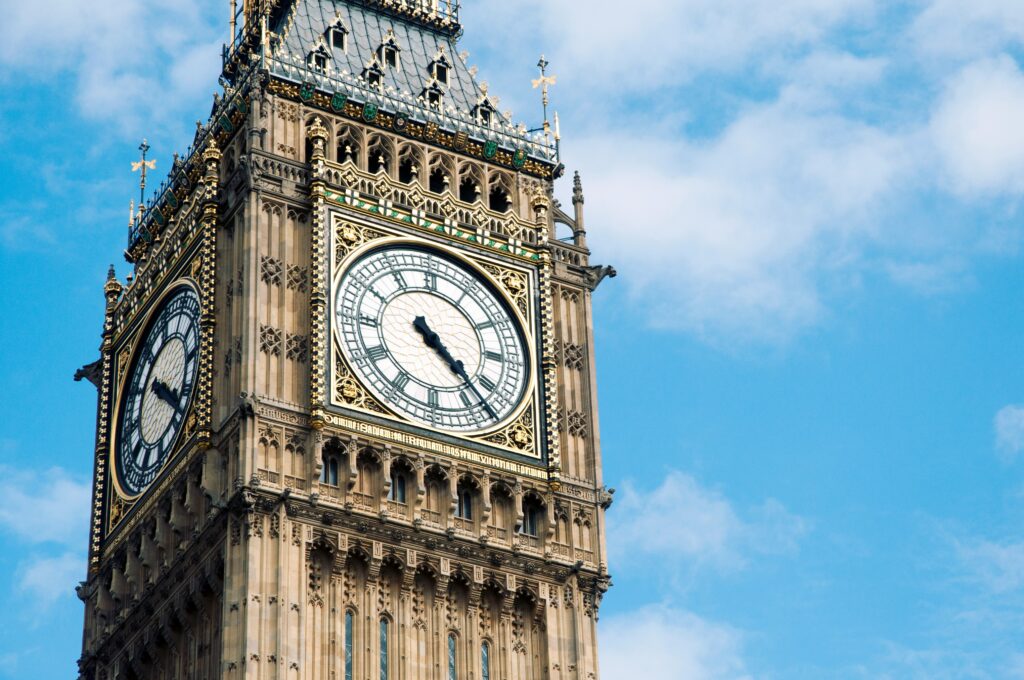
The former Downing Street communications chief believes “there are hard truths coming” for Burnham.

John Gill's promotion at Reform UK, just before the party launches its inaugural Business Day at its September NEC conference, is indicative of how the party is ramping

Wiliam Cash reflects on how the myth of Clacton and its reality has created media distortion when it comes to reporting on Farage’s seaside spiritual HQ.

Ahead of the Clacton-on-Sea by-election this Thursday, Mace went to the constituency to hear what local businesses make of the media circus that has descended on the seaside town, and the changes they want

Andy Burnham is shaking up government with more changes than by any incoming prime minister in memory. But, asks Sir Bernard Jenkin MP, does he understand why the

As a parliamentary Boz of modern times, Quentin Letts has recently found himself under fire in the Commons press gallery. He tells us why sketch writers don't need

For 10 months, ex-army officer James Jeffrey trekked 3500 km across Europe by foot. The scale of migration he witnessed may not have been as dramatic as the