The British public needs more practical advice on diet and nutrition
Updating the UK's Eatwell Guide to include practical tips, could provide evidence-based, actionable advice in the fight against obesity



As the Charity for Civil Servants marks its 140th anniversary, Neil Woollard argues that the officials who keep Britain functioning are too often caricatured, underpaid and overlooked — even as their work becomes central to national resilience.
In 1886, a small group of public servants in Victorian Britain gathered to solve a problem that remains stubbornly persistent today: what happens to the people who keep the country running when their own lives fall apart? In its first year, the fledgling Civil Service Benevolent Fund supported just one widow. Fast forward one hundred and forty years to 2026, we now support more than just widows and orphans, we help all current, former and retired civil servants; and the scale of the challenge has transformed. We know that one-in-ten civil servants will apply to us for help in their lifetime. Last year alone, the now renamed Charity for Civil Servants provided over 73,000 instances of help—a figure that would sell out 14 nights of the BBC Proms at the Royal Albert Hall.
“Every 16 minutes, a civil servant reaches out to the charity for support”
Every 16 minutes, a civil servant reaches out to the charity for support. They are not the “faceless bureaucrats” or the “Whitehall blob” so often lampooned in our media. They are the kennel managers for Border Force, the marine biologists protecting our coastlines, and the scientists at the UK Health Security Agency monitoring sewage to stop the next pandemic before it hits our hospitals.
As the Charity marks its 140th anniversary, we are faced with a startling paradox. We rely on these individuals to settle our small business disputes, protect vulnerable children, and ensure the National Grid keeps the lights on. Yet, as a society, we have allowed the people behind these essential services to feel undervalued and sometimes fall into a state of quiet crisis.
The Myth of the Whitehall “Blob”
The popular characterisation of the Civil Service is one of comfortable London offices and shielded privilege. The reality is more complicated—and more precarious. Over 80% of civil servants work outside of London. They are part of your local community, and they struggle, just like anyone else.
In April 2025, the median gross annual earnings for full-time employees in the UK stood at £39,039. For civil servants, despite a 5.0% increase over the last year, that figure drops to £35,680. At the junior level, the median is just £28,390. When adjusted for inflation, every grade has seen a real-terms pay reduction of between 12% and 26% since 2010.
This isn’t just about numbers on a spreadsheet; it is about the erosion of a public service community. A recent survey of 12,000 individuals found that 35% of civil servants have skipped meals because they had no food. Eight per cent have used a food bank. When 52% of the people running our national infrastructure are worried about losing their homes, we have a problem that transcends politics. It is a matter of national resilience.
Accountability Without an Armoury
Having worked across the public, private, and charitable sectors, our CEO Jonathan Freeman will testify that the accountability of the Civil Service is of an order beyond almost any other field. They are accountable to managers, Ministers, Parliament, watchdogs, taxpayers, and a media that relishes every perceived slip-up.
We frequently hear that officials need to be “less risk-averse” and “more entrepreneurial.” But innovation requires a safety net. As our CEO wrote in Civil Service World recently, that a former trustee of his charity once said to a group of private sector leaders: “If this stuff was so easy, you’d all be doing it and making a profit out of it by now.” Government is tough. It involves choices between “bad” and “not-so-bad” options, often with imperfect information and under intense public scrutiny.
When that pressure becomes too much, the Charity for Civil Servants steps in. We provide a free umbrella of support for the “unimaginable pressures” that rarely make the evening news. Consider the Border Force and Coast Guard officers tasked with retrieving dead bodies from the English Channel before going home to have tea with their families. Or “Colin” from the Ministry of Defence, whose budget was thrown into chaos by unexpected bills. The Charity provided supermarket vouchers so he could shop with dignity, ensuring his children had packed lunches without having to resort to a food bank.
Don’t Be So Sure: The Gilded Sunset
Critics will argue that the “gold-plated” Civil Service pension is a fair trade-off for lower pay. However, the data shatters this stereotype. The average annual Civil Service pension in 2024/25 was just £10,200. For women, the figure is a staggering £7,502. Many retired public servants are living in “pensioner poverty,” depending on the State Pension just to survive.
Others might suggest that departments should handle these issues internally. While departments do provide excellent support, the Charity offers something unique: we can provide free financial assistance to complement our wellbeing offer, for life. An impartial, confidential lifeline funded by civil servants, for the civil service community. We “get” them because we were founded by them.
A Social Value of Stability
The Charity is not just an umbrella of support; it is an engine of social value. Independent research shows that for every £1 we spend, we deliver £4.73 of social value. By helping a civil servant stay in their home or manage their mental health, we are ensuring that the local court stays open, the environmental leakage is prevented, and that crucial benefit assessment is processed.
In 2025, 60% of our support was related to financial assistance. We spent £6.18 million to support those most in need. This is the “smooth running” of the state in action. When mental ill health accounts for 47% of long-term sickness absence in the Civil Service, providing access to bereavement support or wellbeing tools isn’t just “nice to do”—it is essential for the functioning of the country.
“When 52% of the people running our national infrastructure are worried about losing their homes, we have a problem that transcends politics.”
The Charity for Civil Servants is not unique in this regard. Like many professions, civil servants have the charity. We are a former benevolent fund. Much like Firefighters, Armed Forces, Nurses and Journalists have. In fact, the Journalist’s Charity was founded by Charles Dickens in 1864. 22 years before our Charity was established in 1886 during the reign of our first Patron Queen Victoria, establishing a proud tradition of over a century of unbroken Royal Patronage up to King Charles in 2026.
140 Years of Standing with Our Community
Our history is a testament to this enduring commitment. In 1943, we said goodbye to our first-ever pensioner, a woman we had supported for 36 years following her husband’s death in 1907. During the Second World War, the Charity’s work continued uninterrupted, ensuring that the families of those serving on the home front were not left behind.
Today, that mission is more critical than ever. We are here for life; providing free support for current, former and retired civil servants. Whether it is “Irene” at the DWP, who found solace through our bereavement services after the sudden death of her husband, or the thousands of others who apply for help every year, the Charity remains at the heart of this community.
Effective and efficient public servants are the bedrock of strong, vibrant, and economically healthy communities. They do the difficult, often invisible work that allows the rest of society to thrive. They don’t do it for the “big bucks,” but out of a powerful commitment to public service.
As we celebrate 140 years of the Charity for Civil Servants, let us look past the caricatures and the political footballing. Let us recognise the policy makers, the engineers, the prison leaver specialist, and the kennel manager for what they are: the essential threads in our national fabric.
It is only right that those who dedicate their professional lives to supporting others know there is a charity ready to catch them if they fall. After nearly a century and a half, our message remains unchanged: This Charity stands for civil servants. This Charity stands with the Civil Service community.
And as a nation, we should be celebrating the work they do, today and every day.
Updating the UK's Eatwell Guide to include practical tips, could provide evidence-based, actionable advice in the fight against obesity
"When goods don’t cross borders, Soldiers will"

The Green Deal – the flagship priority of the von der Leyen Commission for the past 4 years – is suddenly up for debate.

Ensuring a Healthy Start: As school season begins, it's essential to consider the often-overlooked connection between oral health and academic success

Messi’s transfer to Inter Miami CF is an intricate business deal, a landmark media agreement, and a testament to the burgeoning soccer culture in North America.

With the military running out of options, could the assassination of Imran Khan be on the cards?

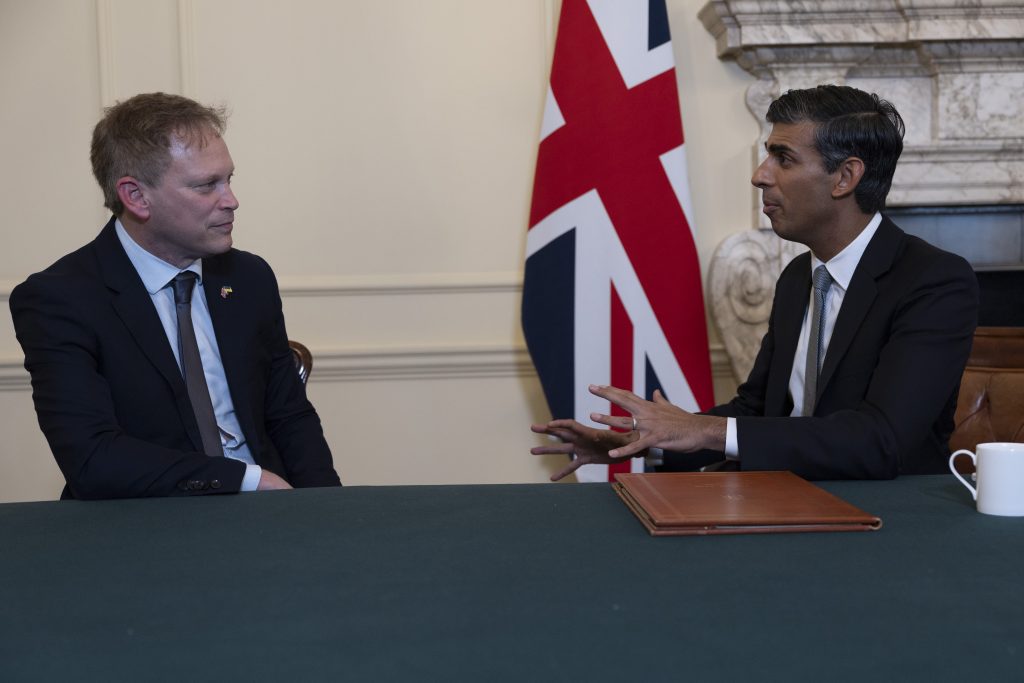
Rishi Sunak's splitting of BEIS and the creation of a dedicated Department for Energy Security and Net Zero under Grant Shapps brings new hope to the UK’s energy
The EU needs to play a more active role in Central Asia with regard to both energy security and connectivity

Exam season is considered to be one of the most demanding of the academic year, often having a detrimental effect on students' mental health.

Many of us have no time for long-form oration, but there are good reasons why political speeches are still important
