The 2017 Campaign Exposed the Real Theresa May
May at 10, by Sir Anthony Seldon, reviewed by Benjamin Goodwin
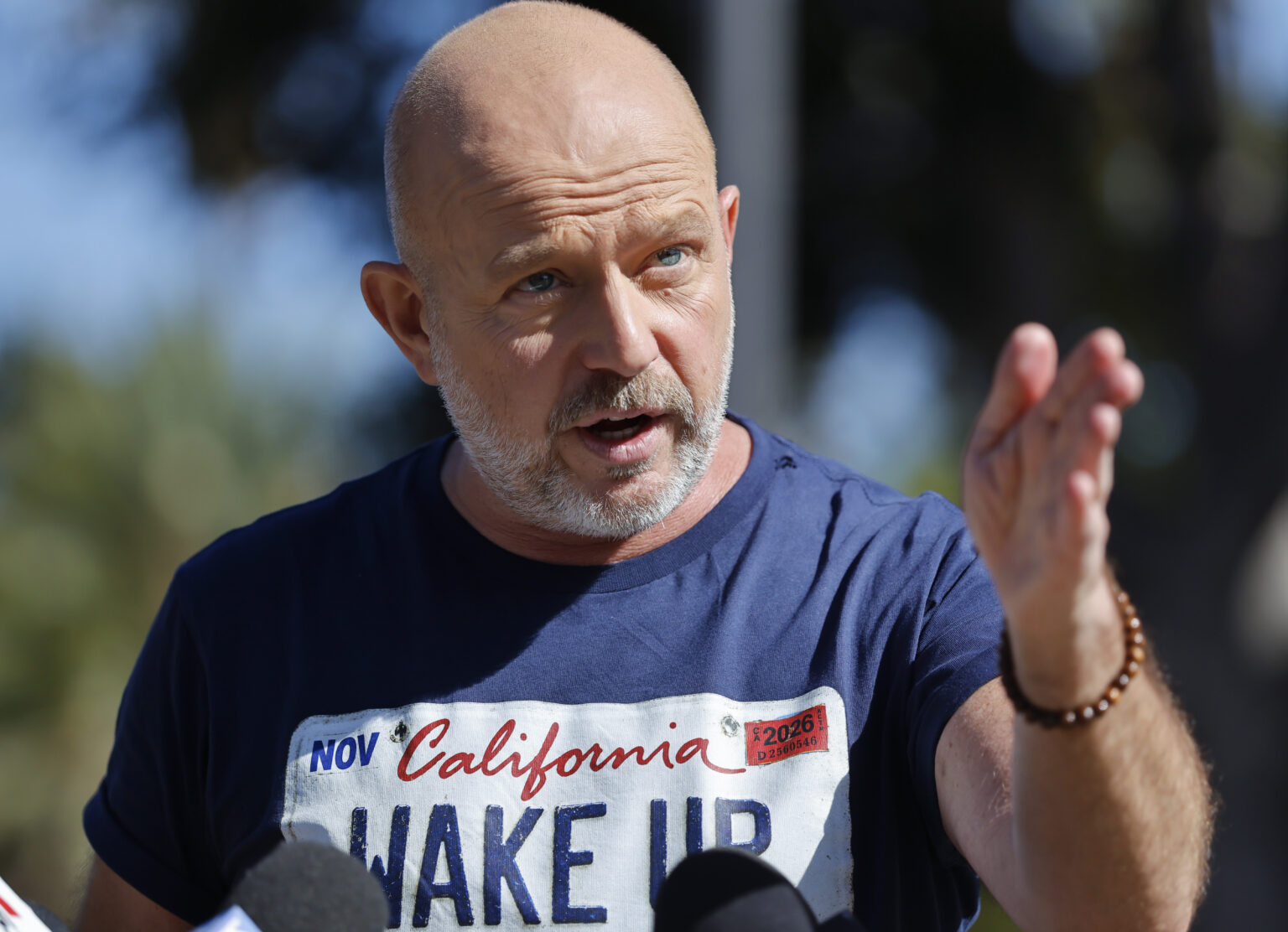
Steve Hilton, David Cameron's one-time guru, has lost his bid to become California's first Republican governor in 20 years. So where does a man of so many reinventions turns next?
The end came quickly. Hilton’s loss was projected, as the BBC put it, “within minutes of polls closing” at 8pm on Tuesday, with the Associated Press calling the race for Xavier Becerra, the Democratic former state attorney general and Biden administration health secretary. With roughly half the vote counted, Becerra led by about 64 per cent to 36, according to a Newsmax tally. He becomes the state’s first Latino governor in more than 150 years.
On a stage in Garden Grove, Orange County, Hilton conceded with a wry nod to the national mood. “Maybe this isn’t the best year to be running for office as a Republican,” he told supporters, the BBC reported. “The change we hoped for may be delayed, but the change is coming,” he said, calling California “the greatest place in the greatest nation on earth”. In Sacramento, a jubilant Becerra declared: “We fought and we won!” His supporters, he said, had “now entered the Becerra era”.
It was an emphatic end to a campaign that tried almost anything. In its final days, at a gas station in the Central Valley town of Sanger, Hilton stood at the pump in a T-shirt reading “$3 Gas Is On Me”, his campaign paying the difference for the first 150 drivers. It was, as Laurel Rosenhall of The New York Times wrote, “the latest stunt in Mr. Hilton’s lively campaign, a long-shot bid to win in this heavily Democratic state.” “You absolutely have to be creative to get attention,” he told her. Creativity was not enough.
Hilton was born in London in 1969 to Hungarian parents who fled the 1956 revolution. A bursary took him to Christ’s Hospital, then to PPE at New College, Oxford. At Conservative Central Office he worked on the 1996 “demon eyes” poster of Tony Blair.
His real influence came with David Cameron. Hilton was the modernising mind behind the Tory rebrand: the torch logo swapped for a tree, “vote blue, go green” and the “Big Society”. From 2010 to 2012 he was Cameron’s director of strategy in No 10.
Whitehall never quite knew what to make of him. He cycled to work, reportedly padded about Downing Street barefoot, and fired off blue-sky ideas that collided with the coalition’s spending priorities. Vince Cable dismissed his economic ideas as a sideshow; critics on the left saw the Big Society as cover for cuts. The BBC’s The Thick of It immortalised him as Stewart Pearson, the herbal-tea-sipping strategist, and Cameron’s memoir calls him “a disruptive force”. The journalist Isabel Oakeshott has called him “deeply divisive” while crediting his restless appetite for reform.
In 2012 he left for California, where his wife, Rachel Whetstone, had taken a senior role at Google. Four years later he flew back to campaign for Brexit, against his old boss.
In America, Hilton reinvented himself again. He taught at Stanford, co-founded the start-up Crowdpac, and from 2017 to 2023 hosted The Next Revolution on Fox News, preaching “positive populism”. That drew him into Donald Trump’s orbit; he called for an audit of the 2020 election.
He became a US citizen in 2021 and later renounced his British citizenship, telling The Spectator that “California reminds me of 1970s Britain” and that he did not want “this state that I love to become the country I left”. The Telegraph reported him calling Britain’s tech tax “vindictive”. His 2015 book, More Human, backed a living wage and caps on chief executive pay; neither featured in his manifesto. “I’m not an ideologue, I’m very pragmatic,” he told CalMatters.
Trump endorsed him in April, and in June’s 61-candidate primary, upended by the collapse of the Democrat Eric Swalwell’s campaign, Hilton took about 26 per cent to Becerra’s 28. His platform was built for bumper stickers: no state income tax on the first $150,000 of earnings, $3 gas through more drilling, ten new cities and an end to high-speed rail. In The Wall Street Journal he argued that California “needs a pro-business governor”.
He cooked dinners in voters’ homes, faced Los Angeles Times political writers at a candidate forum and promised an “Office of Fun and Freedom”. He told Rosenhall he was inspired by Zohran Mamdani’s New York mayoral campaign: “I liked the freshness and simplicity.” His riskiest moment was “Just Try It, California”, an innuendo-laden ad in which one young woman dares another, in front of a Pride flag, to vote Republican. The Los Angeles Times reported furious conservatives; one pastor called it “grotesque”. Becerra simply replied: “Steve, just try it!”
Becerra’s camp portrayed Hilton as all noise, “throwing anything he can against the wall to see what sticks”, as a spokesman told the Times. The Republican strategist Mike Madrid said his messaging sounded out of touch: “He’s literally saying, ‘I’m not one of you.'” The charge that stuck hardest was Trump. At their only debate Becerra warned of “Trump results” and accused him: “You seem to welcome immigrants who look like you, but deport immigrants who look like me.” Hilton called it “disgraceful”, though he had earlier praised Trump’s deportations as “perfect” on Fox News. British observers had older doubts. Writing in The New World, Matthew d’Ancona called his disdain for officials “glib”: “policies, however well-designed, do not deliver themselves.” Yet even sceptics conceded his energy. “He’s run a good race,” said the Republican consultant Tim Rosales.
Hilton campaigned to “save” California from what he called overbearing bureaucracy and economic decline. But the arithmetic was forbidding. California has nearly twice as many registered Democrats as Republicans, and Trump lost it by 20 points in 2024. The president’s endorsement carried Hilton through the primary but became baggage afterwards; an Emerson poll before the vote found just 33 per cent of Californians approved of Trump. The Iran war pushed up pump prices, handing Hilton his best issue while letting Becerra blame the White House. Becerra ran a cautious front-runner’s campaign, agreeing to a single debate; Hilton’s gambles won attention but unsettled parts of his own base. And on what the BBC called a night of “historic wins” for Democrats, he ran into a national tide.
Hilton has not said what he will do next. The options are easy to sketch, and none looks like retirement. The first is the microphone: he remains a Fox News contributor. The second is Golden Together, the policy institute he founded in 2023 with his running mate, Gloria Romero, and Lanhee Chen, from which he can keep pushing cheaper gas and starter homes. The third is Washington, where a loyalist who carried Trump’s banner into hostile territory might expect a reward, though any post needing Senate confirmation would face a Congress these midterms may have soured. The fourth is a rematch against Becerra in 2030, when Hilton would be 61.
One door is shut. Having renounced his British citizenship, he can no longer stand for Parliament. Whatever comes next will be American.
In May d’Ancona predicted that Hilton would probably lose but “could be on to a winning formula” for a post-Trump Republican party. Tuesday settled the first half of that judgment. The second remains open, and few are better placed to test it than a man who has gone from Tory ad strategist to Cameron’s guru, Fox host and Trump-endorsed nominee. California said no. Hilton, characteristically, says the argument is not over.
May at 10, by Sir Anthony Seldon, reviewed by Benjamin Goodwin
Marie Le Conte
Australia’s top envoy in London reflects on moving from politics to diplomacy and on the deep historical ties that bind his country with the United Kingdom.
Jacob Rees-Mogg’s languid pose on the Treasury bench launched a thousand memes on social media. Five observers interpret his body language for us.

How much can Whitehall’s antiquated government offices learn from the Palo Alto tech giants?
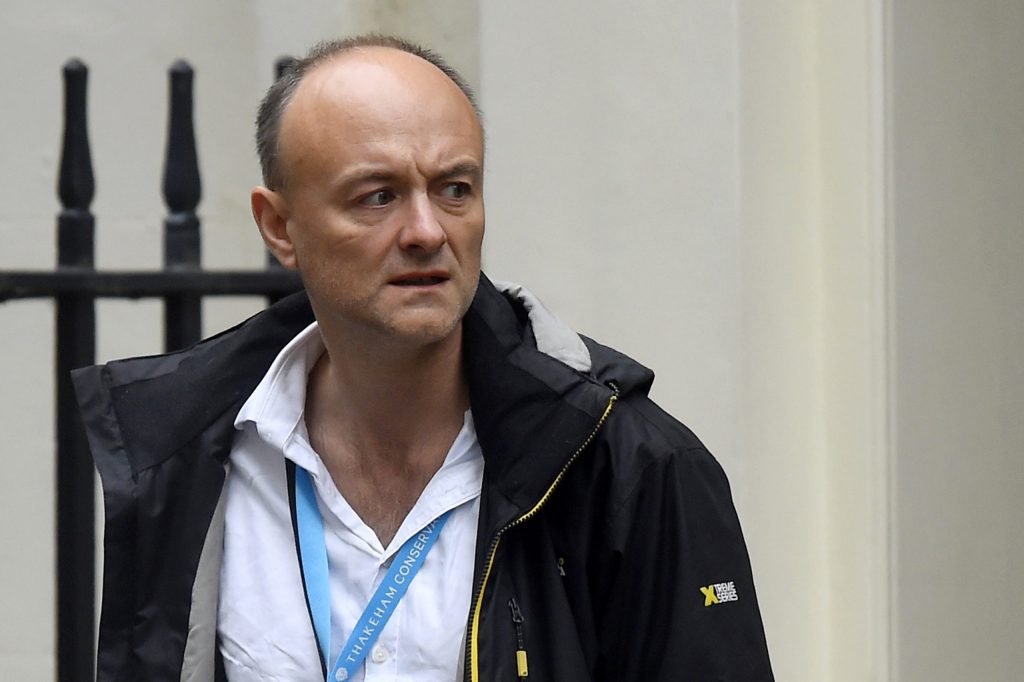
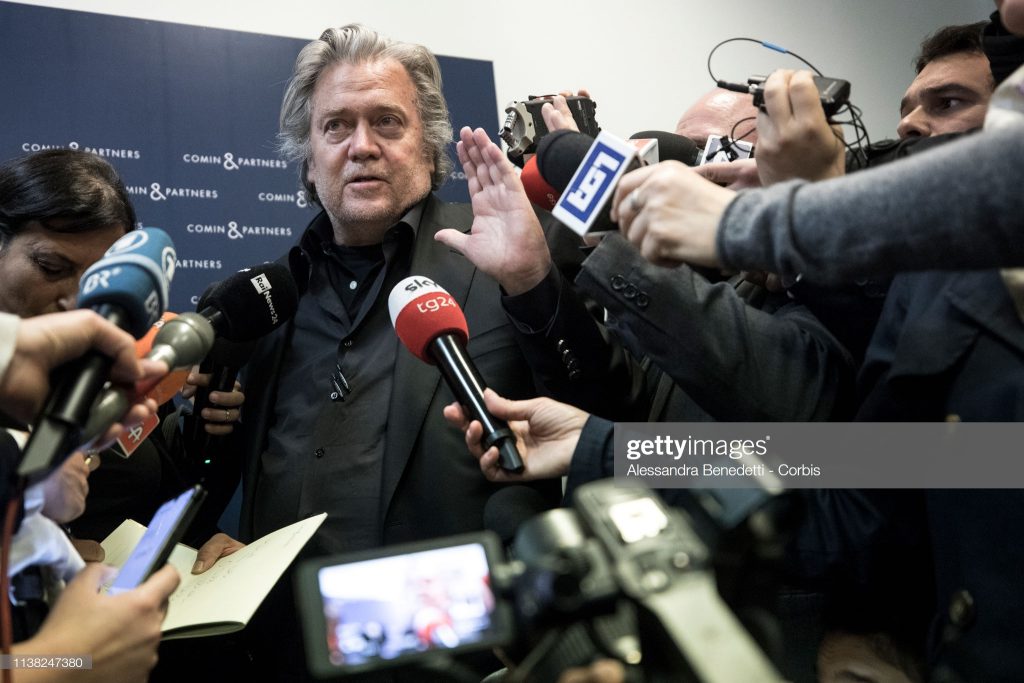
In an exclusive from DC, William Cash finds Steve Bannon in combative form as he reveals what he’s learnt about strategy from Thucydides
Over the last year we’ve seen dozens of MPs switch parties or go independent. But how does such an unexpected move affect their hard-working staff?

Damian Collins remembers his election victory and rejoices at the new Commons term