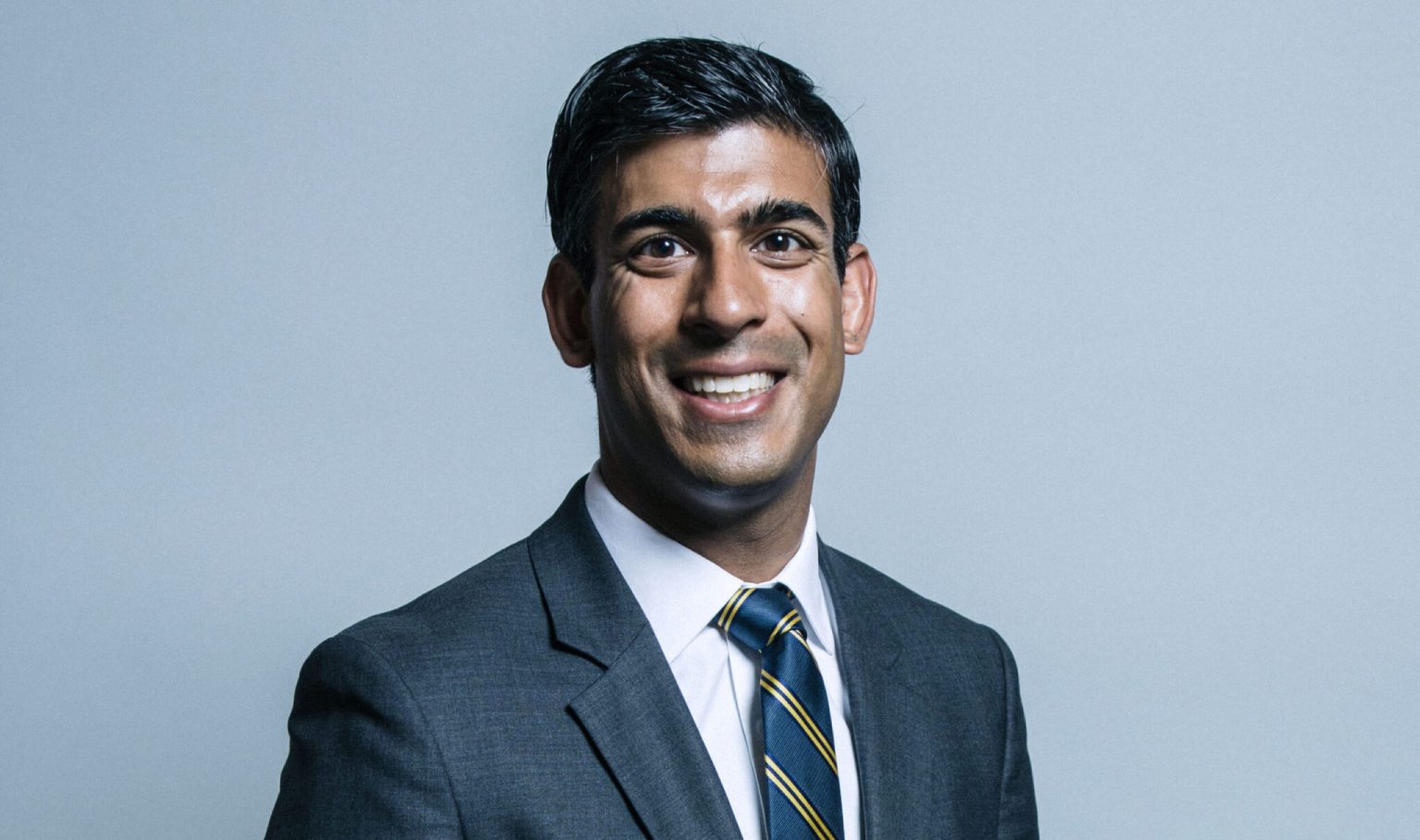
Official parliamentary portrait of Rishi Sunak. Chris McAndrew
The Chancellor must make this an economic budget, not a political one, argues Eliot Wilson
This Wednesday is Rishi Sunak’s second budget, and the circumstances under which he will deliver it could not be more different from a year ago. Then, he was only weeks into the job of chancellor after the surprise departure of Sajid Javid, and lockdown was a buzzword for the future. Now, there is a feeling that the decisions he announces will be critical to the future direction of the economy and to how the UK makes its way out of its Covid-induced slump.
Budgets are traditionally closely guarded, but nothing is really secret now, and its provisions, or possible provisions, have been heavily trailed in the media. One target is likely to be pensions: the chancellor is expected to freeze the lifetime allowance, which dictates how much money you can save before incurring tax, at £1 million. As a headline figure, it seems generous, but this will move something like 10,000 savers into a position in which they are liable for more tax. It will be portrayed, gently but insistently, as asking the more wealthy to contribute a little bit more.
Another probable target is capital gains tax (CGT). As a levy on income generated by the sale of assets which have increased in value, this is very much a penalty on the better-off. And it has been pointed out that many people do not even reach their tax-free allowance level on CGT, so the Treasury may deem it a low-risk, low-impact change. But it is low-impact also in the sense that the overall sums generated will be relatively low: compared to income tax, CGT is a small part of the government’s take. It is as much declaratory as effective, contributing, like pension changes, to a sense that the rich are shouldering their share of the burden.
And what a burden that is. The combination of the financial support measures introduced to help sectors affected by the pandemic, and the economic slowdown which the pandemic has brought, means that the government has spent nearly £300 billion this financial year, and borrowing is higher than it has ever been in peacetime. Sunak has been — probably rightly — open-handed in using public money to ease the pain of the pandemic, but there was always going to be a financial reckoning. That reckoning is beginning with the 2021 Budget.
Worryingly for the government, despite its comfortable 80-seat majority in the House of Commons, there are rumours of backbench unease. Mel Stride, the chair of the Treasury select committee and a former cabinet minister, has described potential changes to capital gains tax as “extremely problematic”, arguing that this is a very bad time to discourage investment with higher levies. Stride is no low-tax, small-state outlier: he was a Treasury minister for two years under Theresa May and is generally regarded as a safe, if uninspiring, pair of hands.
The former prime minister David Cameron has also weighed in, unusually for a man who sometimes seems set on forgetting he ever entered politics. He told CNN that, given the fragile state of the economy, “piling, say, tax increases on top of that before you’ve even opened up the economy wouldn’t make any sense at all.” Instead, he argues, the government and the electorate should recognise the extraordinary nature of the circumstances and be willing to suspend the normal rules, as a wartime administration would do.
Downing Street has not sought to lower the temperature. The prime minister’s press secretary, Allegra Stratton, confirmed that Conservative MPs voting against the budget would face withdrawal of the whip, setting the government’s face against any kind of compromise. This is not a surprising move: voting against a budget is seeking to deny the government supply, and is regarded as a very grave move. Were it to extend to every clause of the ensuing Finance Bill as it proceeded through the House, that might be regarded as a tighter straitjacket than usual.
In fairness to Stratton, she was responding to a question rather than making a spontaneous statement of whipping policy. But Downing Street must calm its nerves. It has a majority in the House almost twice that of Thatcher’s first term, and the chances of major budget provisions being lost are slight. The prime minister and his advisers, however, retain a death grip on party discipline, one which exhibits not mastery but terror. Sunak’s personal ratings remain high and, though that may not be welcome news in Number Ten, there is still public understanding that these are extraordinarily tough times.
The government has a choice: it can be brave, or it can seek the quieter waters of easy popularity. The prime minister’s instinct is assuredly towards the latter — he is a ‘people pleaser’, a fine quality in a person but a disastrous one in a leader — and is like Macavity the Mystery Cat when bad news is being broken. The chancellor therefore has the chance to do what he thinks is necessary, while retaining the ability to weather most likely storms. Let him make this an economic budget, a financial budget, rather than...
Subscribe to The Mace
Join the member community shaping British politics and stay ahead of
what's really happening in the world of politics and public affairs,
with expert analysis, breaking news, and insider insights from
Westminster and Brussels. The Mace is the leading news source and
resource for the government affairs industry, offering required
reading and lobby intelligence for professionals.
To see what you are missing out on by not subscribing to The Mace, click here to download our full membership info-pack. This includes
having no paywall on op-ed content or profiles/interviews, allowing
professional profiles to be read with maximum impact and visibility by
government, special advisers, MPs, peers, civil servants, and policy
and political decision-makers.
Voters across England headed to the polls in a major electoral test for all parties. Labour aims to defend recent gains, while Reform UK eyes breakthroughs in Runcorn,
President Trump marked 100 days of his second term with sweeping policy changes, including a record number of executive orders, mass deportations, major education reforms, and a 145%
The European People's Party (EPP) Congress in Valencia opened today amid political tension and disruption following major power outages across Spain and Portugal. Originally intended to celebrate the
Mark Carney, former Governor of the Bank of England, has led Canada’s Liberal Party to a minority government following the 28 April 2025 federal election. The Liberals won
A massive power outage hit Spain, Portugal, and parts of France, disrupting transport, hospitals, and daily life. Authorities suspect grid failures linked to interconnections and rare atmospheric conditions.
The European Commission has launched formal proceedings against Apple over suspected breaches of the Digital Markets Act, focusing on restrictive App Store policies. Developers claim Apple’s compliance measures
Swiss pharmaceutical giant Roche plans a $50 billion U.S. investment over five years, creating 12,000 jobs and building new facilities. Driven by Trump-era tariffs, it aims to protect
Pope Francis, the first Pope from the Americas, passed away on Easter Monday, aged 88, at Casa Santa Marta in the Vatican. Despite enduring lifelong health challenges, including
Hungarian Prime Minister Viktor Orban announced plans to finalise a U.S. business deal within six months to counter tariffs on steel, aluminium, and cars threatening Hungary's car-reliant economy.
The European Central Bank (ECB) cut its key interest rate by 25 basis points to 2.25%, citing deteriorating growth due to trade tensions and global uncertainty. This marks