The existential threat AI poses for the free press
What happens when the technology that could one day threaten humanity begins to destroy the institution responsible for warning us about it?



With a new five party electoral choice on May 7th, Labour has not adapted its local campaigning strategy effectively.
For party activists of any political persuasion, the month of May is always a double-edged sword. There is often good weather and summer is just around the corner, but to get to the promised land you’ve first got to do penance for your politics by pounding the pavement ahead of elections that are always happening somewhere in the first week of May.
This year’s contingent are particularly significant with elections on May 7th in large swathes of England – including London – as well as elections to both the Senedd and the Scottish Parliament. But the disparate nature of this year’s elections are reflected in the campaign themes of the major parties, with Labour in particular having to straddle different themes in different parts of the country and struggling to marry them with what is happening in Westminster.
Election campaigns generally fall into one of two categories: Incumbency (i.e for those already in power, usually with a message of ‘let us finish the job’) or Insurgency (i.e for those in opposition, with a message of ‘it’s time for change’). We have classics of each genre this year with Reform going big on how a vote for them will “Get Starmer Out” whilst Labour is focused on how it is “Delivering Change” by listing all of its achievements since the 2024 general election.
What is interesting about each of these campaign themes is that neither relates to the actual mandates of the elections being contested i.e. a Reform-led Barnsley Council won’t have the authority to topple the prime minister, and the Labour government’s 5 million extra NHS appointments apply to England and not Wales.
Of course, actual politics intervenes and is interconnected – Labour MPs in Yorkshire or Cardiff may well become insurrectionist against the PM if they find their comrades in their local parties decimated. But for Labour campaign strategists, this just highlights the challenges of being a recent party of government in Westminster, a historic party of government in Cardiff Bay, and being the challenger in Holyrood. This challenge is even more acute in having to face multiple parties in multiple locations as your messaging and framing has to pivot to particular audiences.
“And this is all without considering the Mandelson scandal which has occupied all of Labour’s bandwidth”
Any decent election campaign strategy will have an overall messaging framework from which individual candidates on the ground can utilize and adapt, but for Labour the sheer number of different parties it is facing in different locations and with different governing contexts makes this challenge almost impossible to navigate. And this is all without considering the Mandelson scandal which has occupied all of Labour’s bandwidth, preventing the party from communicating its core campaign messaging to the electorate.
The fragmentation of Labour’s overall framing leaves it particularly vulnerable to more nimble nationalist parties that can narrow their arguments. Scottish Labour has gone big on how “Scotland needs change” and for Scottish voters concerned about long NHS waiting lists that may well ring true. But the SNP can afford to be more agile, for example, by prosecuting an argument that conflates energy independence with national independence and holding the Labour government ‘down the road’ in Westminster responsible for the lack of progress.
‘To govern is to choose’ is a phrase frequently quoted by politicos when in a tough spot. For Labour right now, it seems ‘to campaign is to choose’ is also proving difficult.
Max Wilson is a director at Whitehouse Communications
What happens when the technology that could one day threaten humanity begins to destroy the institution responsible for warning us about it?
One of the world’s richest men has been accused of ‘harbouring stolen lemurs’: The Mace reveals a cautionary tale in fake news.

As speculation mounts over further tax rises, Britain’s ultra-rich investors and job creators are choosing to take their wealth elsewhere.

In an exclusive op-ed for Mace, hospitality industry leader Robert Richardson sets out why the sector must do more to become accessible to young families.

End Fuel Poverty Coalition coordinator Simon Francis examines the four stories politicians hear about electricity and gas, and argues that the fight over which story shapes the agenda

Seasoned Farage aide-de-camp Gawain Towler reflects on Reform's first ever Business Day at the NEC - and what it's like when a media grenade goes off during the
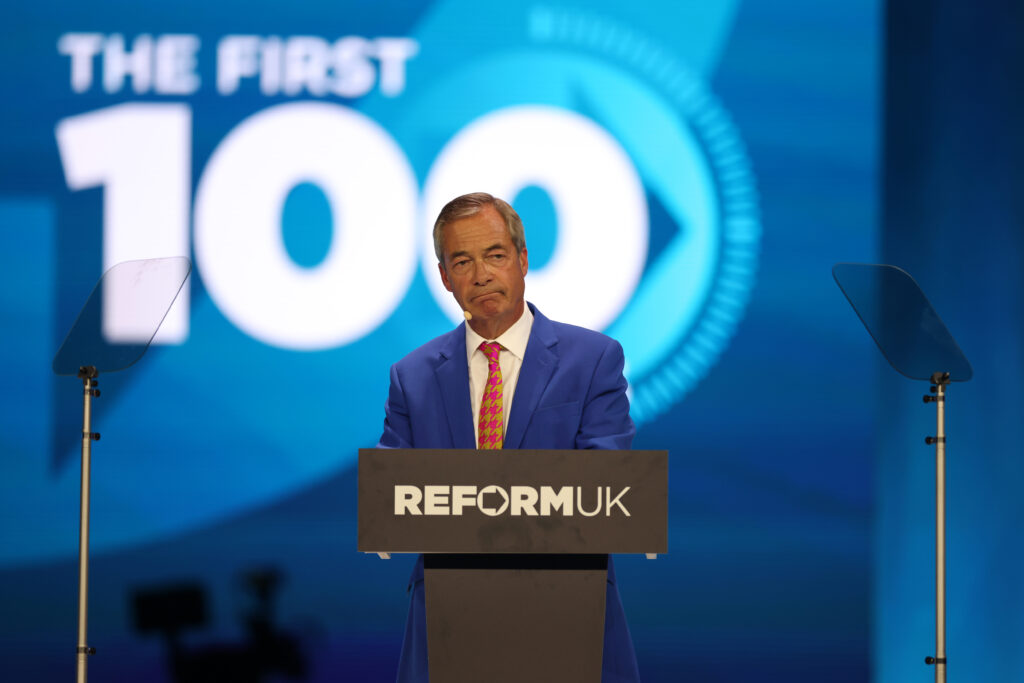
With a new team behind her, the latest Tory reshuffle has put the party on early election watch as well as showing her ruthless side.

Andy Burnham addressed the House of Commons for the first time as Prime Minister as MPs returned to Parliament. How did he do at the dispatch box and

Britain’s farmers have battled repeated heatwaves and droughts, but MP John Cooper says the government’s Family Farm Tax is piling further pressure on an industry that desperately needs
September and October usually mark the most intense period of political activity in the UK, here is what to expect.