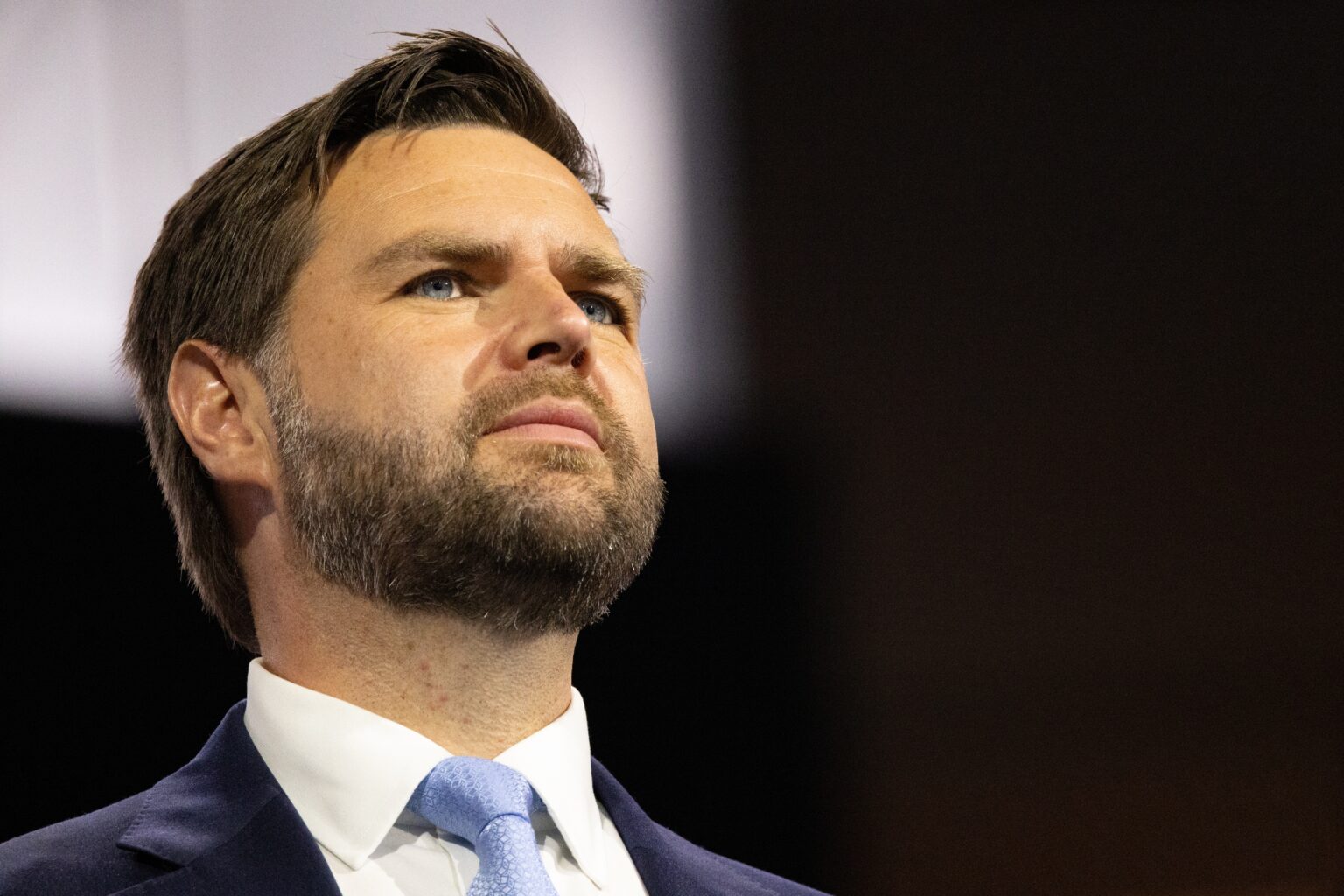
Vice President JD Vance arrives in Paris this week for the AI Action Summit, marking his first major foray into international diplomacy.
Vice President JD Vance arrives in Paris this week for the AI Action Summit, marking his first major foray into international diplomacy. The high-profile gathering, co-hosted by French President Emmanuel Macron and Indian Prime Minister Narendra Modi, has drawn world leaders, tech CEOs, and policymakers to shape the future of artificial intelligence. But while European officials focus on AI safety and regulation, Vance is here to make the case for an innovation-driven, American-led approach—one that prioritises business over bureaucracy.
Vance's participation signals a strategic pivot in US foreign policy, emphasising a more assertive approach to technological diplomacy. His presence at the summit highlights the administration's prioritisation of AI infrastructure development, exemplified by the recent $500 billion joint venture, Stargate, involving OpenAI, Oracle, and SoftBank to build data centres in Texas.
Upon arrival at Paris Orly Airport, Vance, accompanied by his family, was seen carrying his daughter, Mirabel—a gesture that humanised the otherwise high-stakes diplomatic engagement.
At the summit, Vance is expected to advocate for a more open, innovation-driven approach to AI, opposing tighter European regulations.
The summit also serves as a platform for Vance to engage in bilateral discussions. Speaking to Breitbart News, he stated, “I think there’s a lot that some of the leaders who are present at the AI summit could do to, frankly—bring the Russia-Ukraine conflict to a close, help us diplomatically there—and so we’re going to be focused on those meetings in France.” It is expected that he will take the opportunity of the summit to conduct high-level diplomatic meetings with foreign leaders.
France is set to receive €109 billion in artificial intelligence investments over the coming years, President Emmanuel Macron announced on Sunday. Speaking on the eve of the summit, he emphasised the importance of substantial investment to strengthen Europe's position in the sector.
Macron also highlighted the need for Europe to maintain technological independence, acknowledging that the region has fallen behind in data centre infrastructure. He pointed out that these facilities require advanced semiconductors and significant energy resources. While Europe has resumed semiconductor production, France, with its strong nuclear sector, benefits from a substantial supply of low-carbon energy to support AI development.
Whilst the event has, on the whole, been well received, a leaked version of the summit's draft declaration has faced criticism for lacking progress on safety commitments. Leading expert Professor Stuart Russell expressed concerns about the omission of critical safety measures, highlighting potential negligence. Russell particularly pointed to the absence of reaffirmed commitments from the Bletchley Park declaration to tackle the significant risks AI models pose in areas such as cybersecurity, biotechnology, and disinformation.
Join the member community shaping British politics and stay ahead of
what's really happening in the world of politics and public affairs,
with expert analysis, breaking news, and insider insights from
Westminster and Brussels. The Mace is the leading news source and
resource for the government affairs industry, offering required
reading and lobby intelligence for professionals.
To see what you are missing out on by not subscribing to The Mace, click here to download our full membership info-pack. This includes
having no paywall on op-ed content or profiles/interviews, allowing
professional profiles to be read with maximum impact and visibility by
government, special advisers, MPs, peers, civil servants, and policy
and political decision-makers.
The news that former Home Secretary Sir Grant Shapps has failed to make the new Tory candidate list has put fear into dozens of former Conservative MPs. Whether
Blakeney has welcomed former drinks company Oatly managing director Tim Knight and pro-Brexit MEP Lucy Harris, in an effort to strengthen their position, the public affairs and strategic
Benjamin Wegg-Prosser, who co-founded the lobbying firm Global Counsel alongside Peter Mandelson has today resigned following significant backlash regarding the firm’s link to Jeffrey Epstein.
The Russell Group has picked Professor Libby Hackett, an Australia based public policy specialist, as its next chief executive, handing the UK’s most influential research university lobby to