Cavendish report shines a backstage light on the reality of the Green Party
With the Green Party polling ahead of Labour in Gorton and Denton, PA agency Cavendish recommends a 'more nuanced' C-Suite approach to political risk

With the battle for Labour's leadership far from over, Lucy Carrier-Pilkington analyses what a change in leader could mean for policymaking.
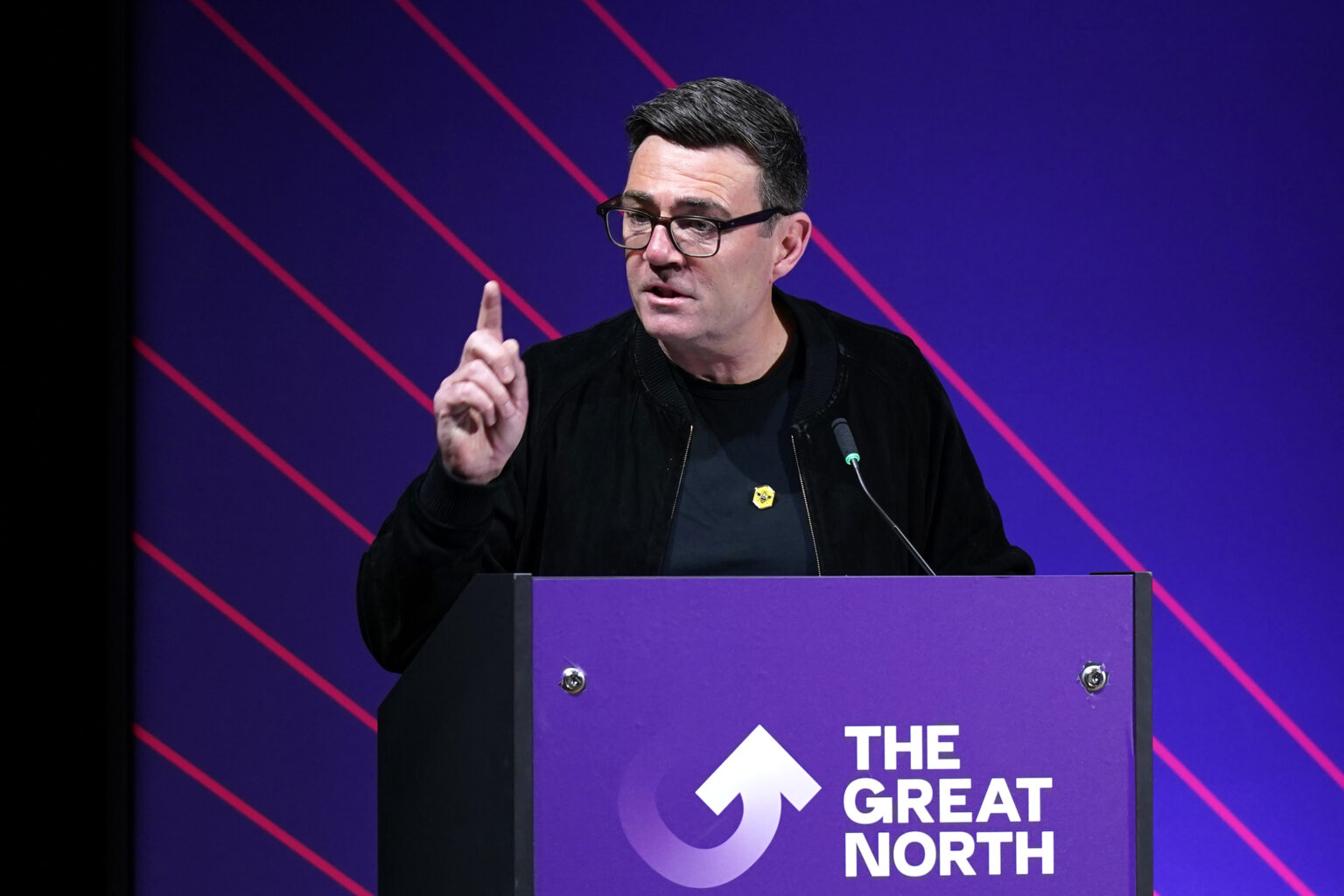
The Green Party has said they will potentially back Andy Burnham in the Makerfield by-election as he is inching his way closer to a seat in Westminster. If he is successful in the Greater Manchester constituency, the Labour crown is likely to follow.
But is this merry-go-round of UK prime ministers through the doors of Number 10 really such a good thing? We have not had a Prime Minister come in by a general election and leave by one since Edward Heath. Not only does this raise red flags as to the robustness of our democracy, but also makes long-term policymaking inefficient – if not borderline impossible.
One only has to look at how Italy’s political reputation and economy was damaged by having a series of shaky coalitions with five prime ministers since 2016. Only with Georgia Meloni, who has lasted a record three and a half years, has stability been restored. Her flagship proposal has been to stabilize the Italian government with the “premierato” (premiership) reform, which involves the direct election of the Prime Minister for a fixed five-year term and guarantee their supporting coalition a stable parliamentary majority.
Back in Westminster, each time a new leader walks into Downing Street, they bring with them a new vision, new advisors, and a whole new set of priorities. Even if those might be more popular than the incumbent, the change results in preexisting policy getting adjusted, delayed or abandoned entirely. If this happens enough times (which it has), nothing gets done.
Take HS2. During the Cameron years, HS2 was seen to be an “unparalleled opportunity” with the potential to generate jobs, rebalance the economy and secure the country’s future prosperity. Under Cameron, the government unveiled a plan for a 211-mile northern route – known as “Phase 2” – which included five stations: Manchester, Manchester Airport, East Midlands, Sheffield and Leeds. Cameron said his project aimed to be: “Linking communities and businesses across the country and shrinking the distances between our greatest cities, High Speed Rail is an engine for growth that will help to drive regional regeneration and invigorate our regional economies. It is vital that we get on board the high-speed revolution.” HS2 was, like it is now, controversial in the House of Commons, but Cameron said he hoped Labour would “see sense, stop talking about pulling the plug on [the project] and get behind it” and that “we do need some national consensus over this, we need everyone to get behind it.”
“The revolving door of government priorities due to changing Tory leadership meant the HS2 vision became scattered, purposeless, and a huge sinkhole for public money”
However, plans changed when Boris Johnson came to power. While he announced that the high-speed railway would still be built, he criticised the HS2 company’s management of the scheme. Johnson said: “I cannot say that HS2 Ltd has distinguished itself in the handling of local communities. The cost forecasts have exploded, but poor management to date has not detracted from the fundamental value of the project.” Later in his premiership, he scrapped the eastern leg of HS2 which was going to link Manchester and Leeds. Johnson was then accused of “betraying the north”.
HS2 was cut down further by Rishi Sunak who scrapped the northern leg of HS2, linking Birmingham to Manchester. He said in a speech at the Conservative Party conference that £36bn would be spent on alternative rail, road and bus schemes. He said: “Every region outside of London will receive the same or more government investment than they would have done under HS2, with quicker results.” However, HS2 Ltd then revealed more than £2 billion in costs linked to Sunak’s decision to downgrade the line, as the project claimed it had written off £1.1 billion in costs incurred from the Birmingham to Manchester leg. They also disclosed a further expenditure of £1 billion in accounting charges relating to the project’s reduced ambitions. The revolving door of government priorities due to changing Tory leadership meant the HS2 vision became scattered, purposeless, and a huge sinkhole for public money.
Similarly, recent governments have been pulled in entirely different directions regarding net zero. The revolutionary environmental initiative, which was introduced by Theresa May, was a hugely relevant project during the Johnson administration. In the plans he set out, net zero was due to secure 440,000 well-paid jobs and unlock £90 billion in investment in 2030. Furthermore, it laid out a plan to end the UK’s contribution to climate change by 2050. Johnson proclaimed at the time: “Our strategy sets the example for other countries to build back greener too, as we lead the charge towards global net zero.”
However, when Johnson was replaced by Truss and then by Sunak, the net zero revolution was scaled back significantly. Sunak insisted he was committed to reaching net zero by 2050, however, said he would delay the ban of new diesel and petrol vehicles to 2035 and pledged to scrap policies that would force landlords to upgrade energy efficiency. Environmental policy was not on Sunak’s list of priorities, after being left with the devastating consequences of Trussonomics.
“Endless changes in leadership and vision has meant investment projects have been constantly altered or abandoned”
A similar jolt was experienced in industrial policy between the May and Johnson administrations. May introduced a flagship “Industrial Strategy” with the aim of making the UK the world’s most innovative nation by 2030. Her government committed to investing £725 million over three years in the Industrial Strategy Challenge Fund (ISCF). This included £170 million to the construction sector and up to £210 million to improve early diagnosis of illnesses and develop precision medicine. However, the “Industrial Strategy” was scrapped by Boris Johnson in favour of his “Plan for Growth”. He argued that the “conditions of 2017 do not apply to 2021.” His plan instead prioritised levelling up, net zero, skills and education, and infrastructure investment.
These endless changes in leadership and vision has meant investment projects have been constantly altered or abandoned. Fundamentally, investment takes time in order to produce results and incessantly scrapping investment plans just results in public money getting washed down the drain in eye-watering sums.
Labour is currently at risk of continuing this dangerous cycle as Andy Burnham may come in to government with a totally different vision to Starmer. So far, we know his philosophy rests upon his “Manchesterism” – built on ideas of devolving power and money to regional leaders, gaining public control of transport infrastructure and partnering with private industry. This week, Burnham condemned “40 years of neoliberalism” and a vote for him “will be a vote to change Labour.” But is radical change, constantly, really the best path forward? Or is it better for the parties we elect to finish what they started?
With the Green Party polling ahead of Labour in Gorton and Denton, PA agency Cavendish recommends a 'more nuanced' C-Suite approach to political risk
As the dust settles on the sudden collapse of Global Counsel, the lobbying industry faces a defining moment says The Mace.

Liz Truss' planned glitzy private club - the Leconfield - is facing challenges from Westminster City Council and local residents.
With Reform receiving 600 new candidate applications in 48 hours, it's clear some people still want to become an MP. Our Westminster insider reveals how to get selected

After mounting pressure from clients terminating their relationship with the firm, Global Counsel is set to enter administration tomorrow.

The former Prince was arrested by Thames Valley Police on the morning of the 19th February, following allegations of misconduct in public office.
Polanski's new communications advisor shows that the Green Party leader is serious about his public image.

A literary cross between School for Scoundrels and McMafia, William Cash enjoys George Cottrell and Burke Files's guide to money laundering aimed at policymakers

With Wormald being the third senior figure to exit government in recent days, questions are being raised over the long-term stability and survivability of this government
Five years since leaving the European Union, Britain has not yet taken advantage of the levers of free trade, writes Ted Newson