Europe’s Last Chance in Venezuela

Ryan C. Berg and Jorge González-Gallarza | 28th May 2021 | Uncategorised
31435326494_ff021cd5b0_o

The following months are a make-or-break window of opportunity for the EU to accelerate Nicolás Maduro’s demise and a democratic restoration in the country, argues a new report.

Barely five months into 2021, the year keeps precipitating the European Union into ever more foreign policy conundrums. Notwithstanding the “Covid nationalism” denounced elsewhere, the Commission’s vaccine debacles continue to delay the wished-for humanitarian victory lap when much of the Third World would reach immunisation through EU-supplied jabs. Earlier on in the pandemic, the cutthroat race for medical supplies elevated “strategic autonomy” over and above the single market orthodoxies of old and Germany’s geo strategic penchant for managed neutrality. The buzzword has since been used as cover for a series of miscalculations wholly at odds with the principles outlined by Emmanuel Macron, its chief cheerleader. The European Parliament resolution from late April condemning Russia’s military buildup along Ukraine, its involvement in the 2014 blast of a Czech munition depot, and its treatment of Alexei Navalny is a welcome course correction to the appeasement signaled by Josep Borrell’s infamous meeting with Sergei Lavrov back in February, though a belated and costly one. Dissonant blunders like these have narrowed the realm of possibility for the EU’s diplomatic re-assertion. If the bloc is sincere about taking up Joe Biden’s offer of renewed multilateral engagement, it should look West. EU's firm posture on Venezuela Venezuela’s free fall into authoritarian chaos under the yoke of Nicolás Maduro’s entourage is a challenge for the transatlantic community like no other, and the EU’s posture remains, at least on paper, driven by the imperative of democratic restoration. To the extent allowed by the regime’s door-slam on aid, the plight of Venezuelans inside and out the country has been markedly alleviated by the Commission’s record sums of assistance. With the further precarity wrought by Covid and competing demands in host countries, the EU admirably stepped up to the plate by convening a donor conference in May last year that drummed up an additional €2.5 billion. No humanitarian drive of this scale is open-ended, and the EU’s palliative efforts remain premised on a political solution. Its attempts at policing Maduro’s electoral shenanigans, human rights abuses and crimes against humanity are all driven by a clear-eyed assessment of the profound source holding the once prosperous country in a stalemate of one-party rule and socio-economic catastrophe. Maduro will stop at nothing to keep a monopoly on power, and the EU is right to refuse accommodating a dystopian narco-state embedded with criminal networks plundering the country’s wealth for the benefit of a crony few. Neither Borrell’s team nor the member-state diplomacies it channels want to make do with another Cuba, more perilous for the region and the wider world this time. Much like Biden, they see an urgent return to democratic normalcy through international pressure as the only possible endgame. And yet the European External Action Service and its sanctions architecture keep falling short in several ways. Its latest misstep had a way of summing up all that’s wrong with the EU’s diplomacy vis-à-vis Venezuela. When Borrell set out to offer the bloc’s rubber-stamp as election observer back in December, the basket of concessions he demanded in exchange was meagre for a race known in advance to be rife with fraud. Coupled with the equally paltry 19 ex post additions to the EU’s list of only 55 sanctioned individuals, Borrell’s diplomatic adventurism looked a worrying lot like appeasement. US diplomats have taken notice on both sides of the Trump-to-Biden transition. The Powder Gold Route Despite the regime’s threat to European security growing starker every day, the EU’s sanctioning record has in fact been woefully unfit all along relative to that of comparable democracies. A shocking volume of the global cocaine trade is known to have realigned along Venezuela-to-Europe routes, and still the EU remains skittish to see in it the hand of Maduro’s narcos. Whether as a wilful enabler or an active participant through the Cartel de los Soles, flooding the West with drugs was part of Chavismo’s playbook all along. Toughened prosecutorial crackdowns and anti-narcotics raids in Colombia and the US, however, are yet to find enough imitators east of the Atlantic. Drugs are not the worst means that Venezuela’s despots are deploying to destabilise their transatlantic foes. Besides the long-haul effort at grand-fathering Europe’s progressives into their Bolivarian alliance, Venezuela has gradually become a haven for terrorists of all stripes. Since a slew of ETA and IRA members took refuge in the country in the early 2000s, their allies from FARC-D and Hezbollah have similarly found a friendly hub from which to conduct operations, with European targets often in their crosshairs. This has happened just as the full disarmament and rehabilitation of Colombia’s guerrillas remains a roadblock in that country’s peace process—which the EU has spent inordinate amounts to he...

Subscribe to The Mace

Join the member community shaping British politics and stay ahead of what's really happening in the world of politics and public affairs, with expert analysis, breaking news, and insider insights from Westminster and Brussels. The Mace is the leading news source and resource for the government affairs industry, offering required reading and lobby intelligence for professionals.

To see what you are missing out on by not subscribing to The Mace, click here to download our full membership info-pack. This includes having no paywall on op-ed content or profiles/interviews, allowing professional profiles to be read with maximum impact and visibility by government, special advisers, MPs, peers, civil servants, and policy and political decision-makers.

EU Forces Meta to Reshape Ads Policy After 200 Million Euro Fine

Mace | December 10, 2025

Meta agrees to overhaul its EU ad model, offering clearer data-sharing choices for users after regulators ruled its previous system breached competition rules.

EU Governments Agree Common Position on New Asylum and Migrant Return Rules

Mace | December 10, 2025

EU states back new asylum and return measures, including safe-country rules and a solidarity pool, ahead
MACE Marks Five Years with Westminster Celebration

Mace | December 4, 2025

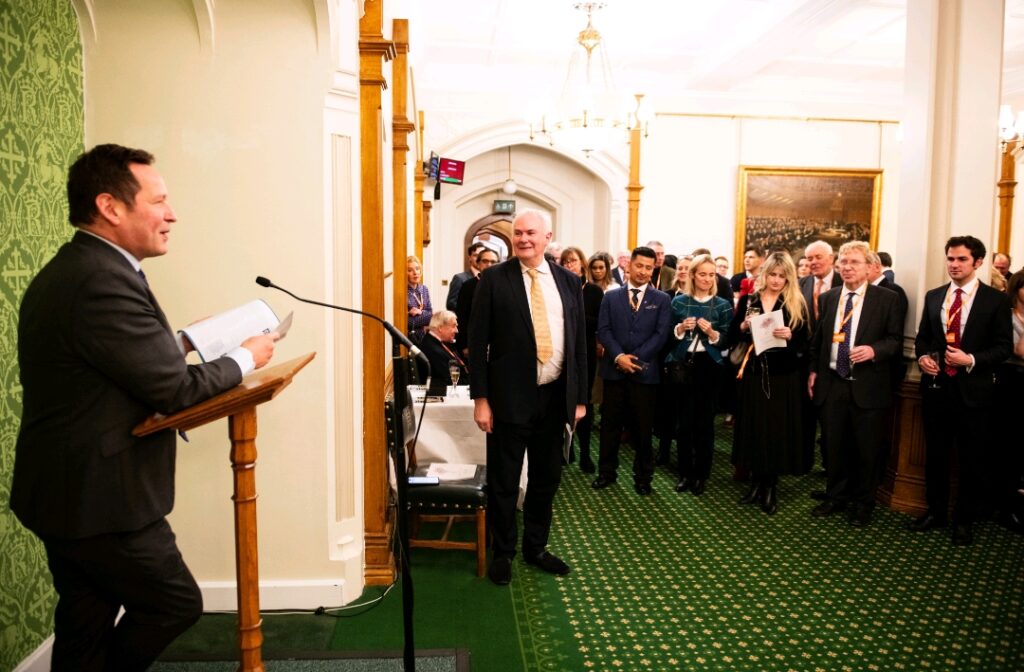
MACE marked its 5th anniversary with a high-profile Commons reception of politicians, diplomats, media figures and lobbyists, launching its influencers report
Scathing criticism

Christopher Silvester | December 3, 2025

From self-lacerating memoir to by-election madness and a Labour Together takedown, The Mace’s literary editor Christopher Silvester rounds up the latest political books.

Telling a human tale

Christopher Silvester | December 3, 2025

From self-lacerating memoir to by-election madness and a Labour Together takedown, The Mace’s literary editor Christopher Silvester rounds up the latest political books.

Ex-deputy chair among Tory defections to Reform

Mace | November 30, 2025

Three former Conservative MPs, including ex-deputy chair Jonathan Gullis, defect to Reform UK as the party capitalises on Tory unrest and declining support.

UK–EU Defence Fund Talks Collapse Over Entry Fee Standoff

Mace | November 30, 2025

Talks between London and Brussels collapsed after the EU demanded a high entry fee for SAFE, leaving the UK limited to third-country participation.

Government to Ban Asylum Seekers from Taxi Services

Thomas Edwards | November 30, 2025

The government plans to end most taxi travel for asylum seekers attending medical appointments, replacing it with public transport and tightening Home Office oversight.

Yermak’s Resignation Sends Shockwaves Through Kyiv and Europe

Mace | November 29, 2025

The resignation of Andriy Yermak after anti-corruption raids disrupts Ukraine’s leadership and triggers uncertainty across Europe during a critical phase of the war.

Autumn Budget 2025: family finances squeezed, welfare rules eased

Mace | November 29, 2025

After weeks of tax rumour and expectation-setting, the 26 November Budget landed as a welfare-first package that lifts the benefits cap but tightens the screw on household incomes,