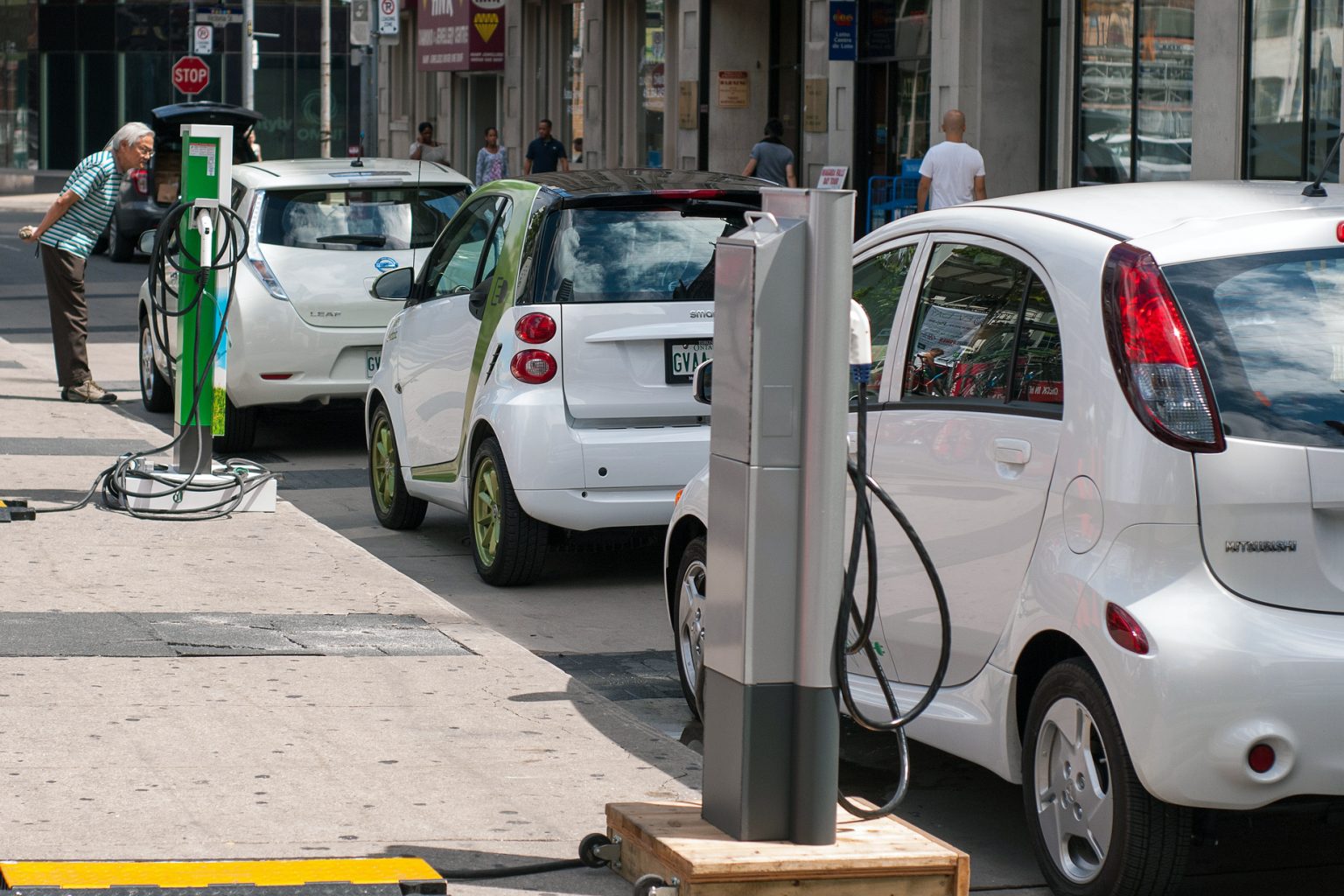
Greater incentives are needed to make electric cars more attractive to UK drivers
They were popular in the early 20th century, yet ousted by the internal combustion engine, with its competitive pricing and longer driving range. But electric vehicles (EVs) are making a comeback.
Becoming acutely aware of rising global temperatures and the transport sector’s significant contribution to climate change, society has gone full circle on EVs. Bans on the sale of new petrol and diesel cars have been established by governments on both sides of the Atlantic, and here in the UK via the 2030 phase-out date. Manufacturers are responding by developing electric models across the board. Most recently, car giants such as Jaguar and Ford have commited to be all-electric within the decade.
While 2020 saw the market for passenger vehicles decline in the UK, growth in EV registrations was up more than 180 per cent on the previous year. And in April and December last year, the Tesla Model 3 was the UK’s best-selling new car.
But it’s important not to get lost in the hype. In the UK last year, EVs only accounted for 6.6 per cent of new passenger vehicle registrations. Concerns regarding their higher upfront price, a lack of charging infrastructure and range anxiety remain leading barriers to EV uptake. Evidently, substantial progress is required if we wish to see no new petrol or diesel cars on the market in less than nine years.
In February, green think tank Bright Blue published a report “Driving uptake: Maturing the market for battery electric vehicles”, which put forward eight policy recommendations for the UK, based in part on policies adopted in other countries which have displayed positive trends in EV uptake. For example, we called for the establishment of a used vehicle plug-in car grant, the roll- out of a demand-led on-street charge point scheme administered by local authorities, and a requirement on all petrol stations to have at least three rapid charge points.
Norway and Iceland, two Nordic countries which have some of the highest rates of EV uptake in the world, both exempt EVs from VAT, making them price competitive with their petrol and diesel counterparts. In addition to tax incentives, Norway caps charges for toll roads, ferries and public parking at 50 per cent for those who drive electric. In Iceland, the city of Reykjavik aims to reduce the number of fossil fuel pumps by 50 per cent by 2030, and almost entirely eradicate them by 2040.
The Netherlands has the third highest percentage of new EV passenger vehicle registrations in Europe. Dutch drivers purchasing a new or used EV are eligible for a €4,000 and €2,000 grant respectively to help reduce the upfront price of EVs. The same level of grant is available for the lease of a new or used EV, with the monies paid monthly into the leaseholders bank account over a four-year period.
Municipalities in the Netherlands also facilitate a demand-led on-street charge point scheme. EV drivers have the right
to request a public charge point to be installed near their place of residence or work via their municipality. Each request is assessed against its location, other nearby public charge points, the walking distance to nearby public charge points and their occupancy rate. If the request is approved, the charge point will then be installed,published on digital maps and nearby EV drivers notified of its location. Such a scheme ensures that households with no off-street parking can still recharge their EV near their home, and that public charge points will be located in areas where they will be utilised. With over 55,000 public charge points, the Netherlands now has the greatest density of charge points in Europe.
Across the Atlantic, California has experienced a much higher proportion of EV uptake than the United States as a whole. In 2019, 5.3 per cent of new passenger vehicle registrations were EVs – considerably more than the UK, which only saw 1.8 per cent of new passenger vehicle registrations being EVs in the same year.
California’s EV uptake is predominantly driven by the state’s unique flagship regulatory policy, the Zero Emission Vehicle (ZEV) mandate. This requires manufacturers to sell an increasing proportion of ZEVs (encompassing EVs) each year, measured in terms of credits which equate to a percentage of total vehicle sales, which increases annually. For instance, in 2018, the credit requirement was 4.5 per cent. By 2025, it will be 22 per cent.
In addition to the ZEV mandate, California uses high occupancy vehicle (HOV) lane access to incentivise EV uptake. Drivers of EVs are eligible to purchase a sticker for their vehicle which permits them to use HOV lanes, regardless of whether they are taking additional passengers.
EV uptake in California is also driven by tax rebates, offering a state-level rebate of $7,000 for the purchase or lease of an EV and a $7,500 rebate from the US government for the purchase of an EV.
While Norway, Iceland, the Netherlands and California have a high market share of EVs as new passenger vehicl...
Subscribe to The Mace
Join the member community shaping British politics and stay ahead of
what's really happening in the world of politics and public affairs,
with expert analysis, breaking news, and insider insights from
Westminster and Brussels. The Mace is the leading news source and
resource for the government affairs industry, offering required
reading and lobby intelligence for professionals.
To see what you are missing out on by not subscribing to The Mace, click here to download our full membership info-pack. This includes
having no paywall on op-ed content or profiles/interviews, allowing
professional profiles to be read with maximum impact and visibility by
government, special advisers, MPs, peers, civil servants, and policy
and political decision-makers.
There’s plenty of egg-on-face - or just embarrassed silence - for the many pundit hacks, often former Tory colleagues of Boris, who wrote him off as a priapic